


Stonehenge Photography Tours: Best Experiences for Capturing the Stones (2026 Guide)
20th May 2026
📸 Stonehenge Photography Tours: Best Experiences for Capturing the Stones (2026 Guide)

Capture Stonehenge at its most dramatic — from misty sunrise to golden sunset — with specialist photography tours and expert timing
📸 Why Stonehenge Is One of the World’s Most Photographed Landmarks
Stonehenge is one of the most recognisable and mysterious monuments in the world — and for photographers, it offers something few locations can match: changing light, open landscapes, and a timeless atmosphere that transforms throughout the day and across the seasons.
From soft sunrise mist to dramatic sunset silhouettes, the stones provide endless creative opportunities. But capturing the perfect shot isn’t just about luck — timing, positioning, and access make all the difference. This is why many visitors now specifically choose photography-focused tours to maximise their experience.
That’s where choosing the right Stonehenge tours from London becomes essential.
🌅 Best Time of Day for Stonehenge Photography
For truly standout images, timing is everything.
- Sunrise: Soft light, fewer crowds, atmospheric conditions
- Golden Hour (Sunset): Warm tones, long shadows, dramatic contrast
- Midday: Bright but flat light — best for documentary-style shots
Most standard visitors arrive during peak hours, which limits your angles and compositions. Photography tours — especially those timed around sunrise or sunset — give you a significant advantage.
For a deeper breakdown across seasons, months, and conditions, see our full guide to the best time to visit Stonehenge.
Choosing between sunrise and sunset can dramatically change your results — here’s a full comparison of Stonehenge sunrise vs sunset photography conditions.
Photographers may also find our Stonehenge weather guide useful for understanding seasonal light, cloud cover and typical conditions throughout the year.
Compare Stonehenge Tours for the Best Photography Times
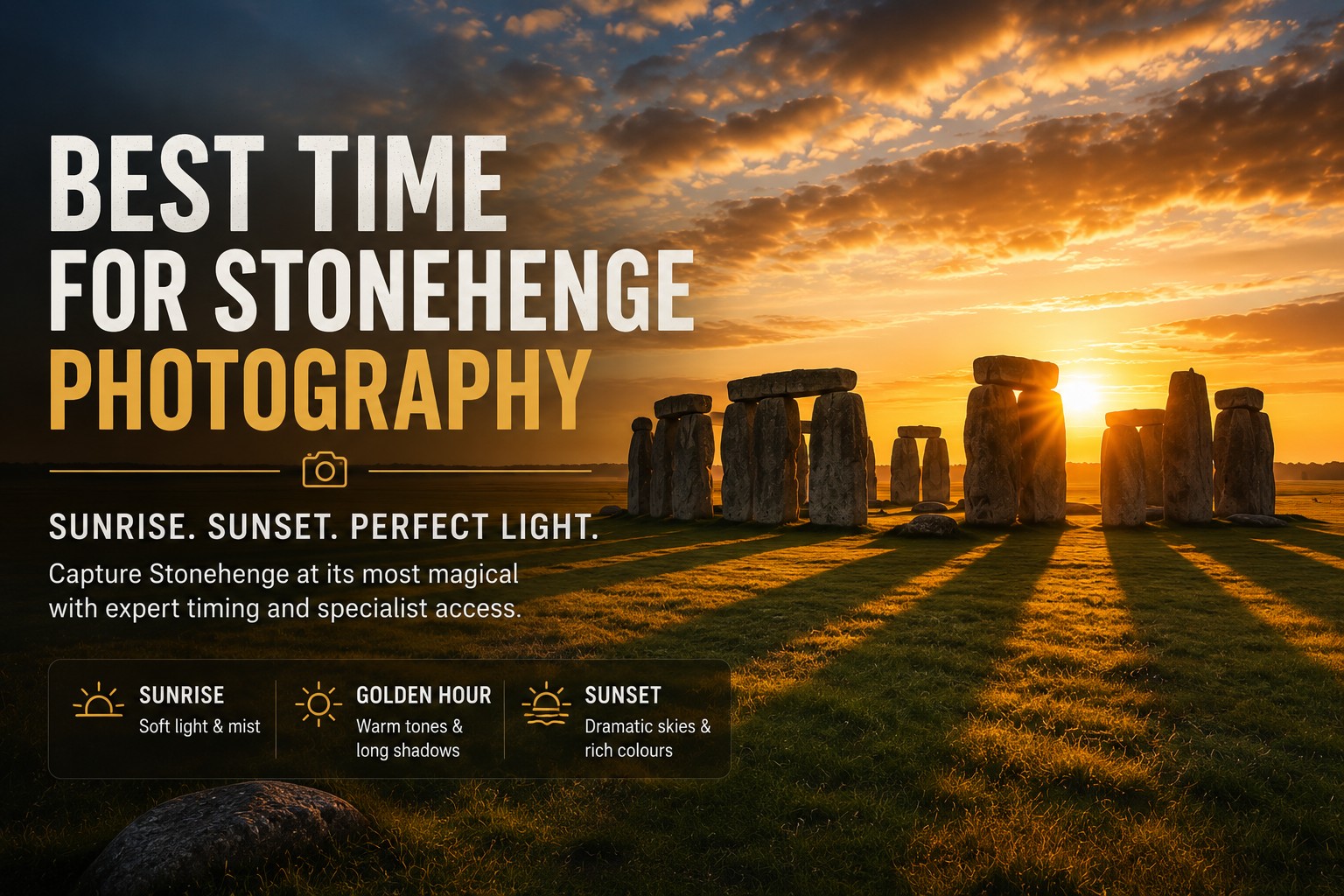
Golden hour is one of the best times to photograph Stonehenge, with warm light and long shadows adding depth and atmosphere
🚐 Why Choose a Photography-Focused Tour
A dedicated Stonehenge photography tour isn’t just about transport — it’s about maximising your shooting conditions.
Key advantages include:
- Early or late access aligned with the best light
- Smaller groups for better positioning
- Time to set up tripods and compose shots
- Knowledgeable guides who understand viewpoints and angles
If your goal is more than just a quick snapshot, these tours can dramatically improve your results.
If you’re unsure how these experiences differ in practice, this guide explains exactly what to expect on a Stonehenge day tour from London.
Group size can also make a big difference to your photography experience — especially when it comes to positioning and time at each viewpoint — so it’s worth comparing small group vs large group Stonehenge tours.
🔭 Best Photography Viewpoints at Stonehenge
Even within the standard visitor route, positioning matters.
Top viewpoints include:
- The classic front-facing alignment (iconic composition)
- Offset side angles for depth and perspective
- Wide landscape shots incorporating the Salisbury Plain
However, standard access keeps you at a distance — which limits close-up detail and creative framing.
🔐 Inner Circle Photography Opportunities
For serious photographers, Stonehenge Inner Circle access is a game-changer.
You are allowed inside the stone circle itself — something regular visitors cannot do — giving you:
- Close-up textures and stone details
- Unique framing angles not possible from outside
- Clear shots without large crowds in the background
This is especially powerful at sunrise or sunset, when lighting conditions are at their best.
If you’re considering upgrading your experience, it’s worth understanding whether Stonehenge Inner Circle access is truly worth it for photography.
If you’re comparing access levels, this guide explains the key differences between Stonehenge Inner Circle vs a standard visit.
Availability is limited and often sells out quickly, so it’s worth checking current Stonehenge Inner Circle access dates and availability in advance.

Photography-focused tours give you the time, space, and positioning needed to capture the perfect shot at Stonehenge
📅 Planning Your Visit for the Best Shots
Good photography at Stonehenge starts before you even arrive.
Consider:
- Season: Winter offers mist and mood; summer offers longer golden hours
- Weather: Light cloud can enhance skies dramatically
- Crowds: Early and late tours reduce distractions
If you’re visiting during peak periods — especially summer — planning ahead is essential. A great example is understanding how to plan your Stonehenge Summer Solstice visit, when access, crowds, and lighting conditions are very different from a standard day.
If you’re working out logistics, transport, or timing, this guide on how to visit Stonehenge from London breaks down the best options.
You may also want to consider how long you spend at the site, as this affects your chances of capturing different lighting conditions — see half-day vs full-day Stonehenge tours for a clear comparison.
It’s also useful to check current Stonehenge opening times and visitor information when planning your shoot.
Photographers may also enjoy our guide to Stonehenge Inner Circle sunrise vs sunset dates, which compares lighting conditions and the atmosphere of both experiences.
🌄 Combining Photography with a Wider South West Journey
Many visitors choose to extend their trip beyond Stonehenge, combining it with other visually striking and historic locations across South West England.
Popular additions include:
- Bath’s Georgian architecture
- Glastonbury Tor and surrounding landscapes
- Tintagel and the dramatic Cornish coastline
These destinations offer a rich mix of photography styles — from landscapes to history and legend. One of the best ways to explore this is through a Stonehenge & King Arthur sites tour, which connects some of the most iconic locations in the region.
📊 Photography Tour vs Standard Visit: What’s the Difference?
| Feature | Standard Visit | Photography-Focused Tour |
|---|---|---|
| Access Time | Midday peak | Sunrise / Sunset |
| Crowds | Busy | Reduced |
| Tripod Use | Limited | More flexibility |
| Positioning | Fixed paths | Better flexibility |
| Experience | General sightseeing | Photography-focused |
If capturing high-quality images is your goal, the difference is significant. If photography is a priority, a photography-focused tour offers a clear advantage in both timing and creative flexibility.
🧭 Is a Photography Tour Worth It?
If you’re serious about photography — even as a hobby — the answer is almost always yes.
A well-timed visit with the right access can turn an average photo into something exceptional. For many visitors, this becomes one of the highlights of their entire UK trip.
If capturing high-quality images is your goal, the difference is significant — and choosing the right tour can completely transform your results. To find the best options for timing, access, and photography conditions, explore the full range of best Stonehenge tours from London before booking.
For options and availability, it’s worth browsing the full range of Stonehenge tours from London before booking.
View Stonehenge Tours & Secure the Best Photography Time Slots
For a complete overview of all options, timings, and tour types, see the Stonehenge tours complete guide.
Visitors planning a summer photography trip may also enjoy our detailed guide to the best Stonehenge Inner Circle dates in July for capturing unforgettable images.
❓ FAQ: Stonehenge Photography
Can you take photos at Stonehenge?
Yes — photography is allowed, but access is restricted to paths unless you book special access.
Are tripods allowed?
Generally restricted during busy hours, but more feasible on specialist tours.
What is the best time for photography?
Sunrise and sunset offer the best lighting and atmosphere.
Can you photograph inside the stone circle?
Only with special Inner Circle access.