


Winter in Britain: The Complete Travel & Visitor Guide
29th October 2026
❄️ Winter in Britain: The Complete Travel & Visitor Guide
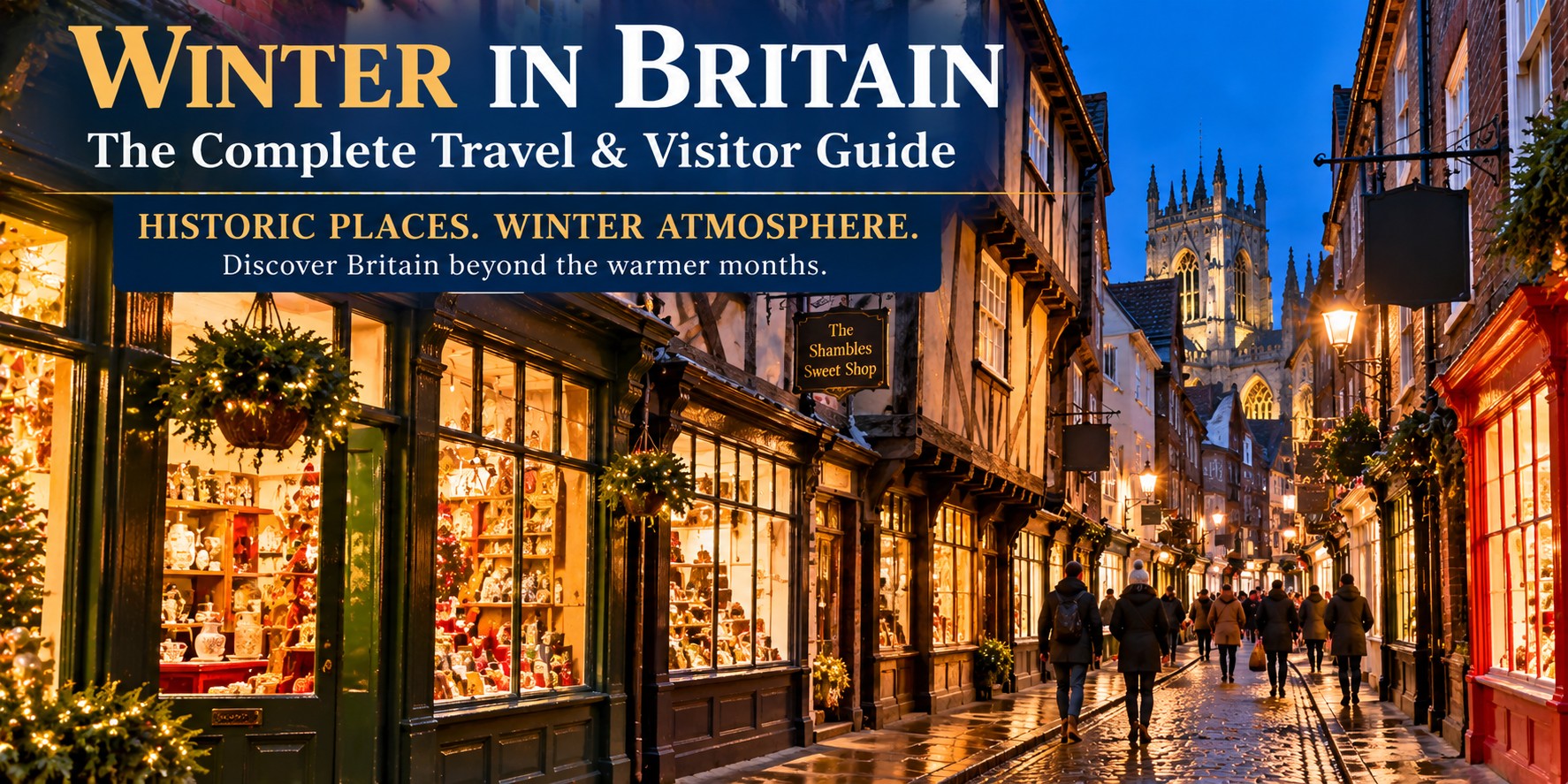
Historic places, winter atmosphere. Britain’s colder months bring illuminated streets, atmospheric architecture and rewarding cultural experiences, offering visitors a different perspective on historic towns and cities from December through February
Winter reveals a different side of Britain. Historic streets glow beneath early evening lights, ancient castles stand against dramatic skies, and countryside landscapes take on a quieter, more atmospheric character. From London’s museums and theatres to the rugged scenery of the Scottish Highlands, the colder months offer experiences that can be every bit as rewarding as summer travel.
Yet visiting Britain in winter requires a different approach. Daylight is limited, weather can change quickly, and some attractions operate shorter opening hours or close for part of the season. A journey that feels straightforward in June may need considerably more planning in January.
December brings festive celebrations and Christmas traditions, while January offers opportunities for cultural discovery beyond the holiday season. February remains firmly within winter, although early signs of seasonal change can begin appearing in some parts of the country.
The key is choosing experiences that suit the season rather than attempting to recreate a summer itinerary.
This guide explores what winter in Britain is really like, the differences between December, January and February, where to visit, and how to plan a rewarding journey through England, Scotland and Wales.
🌨️ What Is Britain Really Like in Winter?
Britain’s winter is defined less by continuous freezing conditions than by variation. A bright, crisp morning can give way to rain and wind, while conditions in a sheltered southern town may be very different from those in the Scottish Highlands.
Understanding these differences is essential when deciding where to travel and how much to include in an itinerary.
🌡️ Winter Weather Across Britain: What Should Visitors Expect?
British winters are generally cool, often damp and sometimes windy, but conditions vary considerably between regions.
Southern England and many coastal areas frequently experience relatively moderate winter temperatures compared with northern and upland locations. However, this does not guarantee pleasant weather. Rain, strong winds and occasional cold spells can make outdoor sightseeing uncomfortable even when temperatures remain above freezing.
Across northern England, Wales and Scotland, altitude becomes increasingly important. Mountainous areas can experience snow, ice and significantly more demanding conditions than nearby towns and cities.
The Scottish Highlands may offer spectacular snow-covered scenery during suitable conditions, but visitors should not assume that every Highland destination will be snowy throughout winter. Equally, snowfall occasionally affects southern Britain without becoming a regular or predictable feature.
For most visitors, waterproof clothing, suitable footwear and flexibility are more useful preparations than planning around an expectation of snow.
Weather also affects the kind of experiences worth prioritising. A museum visit or historic city break can remain enjoyable during persistent rain, whereas an exposed coastal walk or mountain excursion may need reconsideration.
The most successful winter journeys acknowledge these differences from the outset.
🌅 Shorter Days, Daylight and Winter Sightseeing
Daylight is one of the most important differences between winter and summer travel in Britain.
Around the December winter solstice, daylight reaches its annual minimum. Days gradually lengthen afterwards, although January and February still offer substantially less daylight than the summer months.
The difference is particularly noticeable in northern Britain, where winter days are shorter than in southern England.
This has practical consequences. Travellers hoping to explore several countryside destinations, photograph scenic landscapes or visit attractions with extensive outdoor grounds need to plan carefully.
A summer itinerary involving multiple villages, gardens and scenic stops may become rushed in winter if much of the afternoon is spent travelling.
A better approach is to schedule the most important outdoor experience earlier in the day, allow realistic journey times and reserve museums, galleries or other indoor activities for later.
Winter evenings are not necessarily wasted sightseeing time. Illuminated streets, theatre performances, restaurants and cultural venues can become an enjoyable part of the experience.
The essential distinction is between available daylight and the overall length of a rewarding visitor day. Britain offers plenty to enjoy after dark, but daylight-dependent activities need more deliberate planning.
🏙️ Is Britain Worth Visiting During Winter?
For many travellers, Britain is absolutely worth visiting in winter. The question is whether its seasonal strengths match the experiences they want.
Winter can be particularly rewarding for visitors interested in historic cities, museums, architecture, cultural performances and atmospheric landscapes. Some destinations may also feel less crowded outside major celebrations and school holidays, although this varies considerably.
There are limitations. Certain historic houses, gardens and rural attractions reduce their opening schedules, while poor weather can disrupt outdoor plans. Travellers seeking long countryside walks, extensive garden visits or several distant attractions in one day may find spring or summer more convenient.
Winter therefore rewards selectivity.
Rather than trying to experience everything, visitors can build a journey around a smaller number of meaningful places, balancing cultural discovery with carefully chosen outdoor experiences.
For travellers who value atmosphere, history and a more measured pace, that can be one of winter’s greatest attractions.
📅 December, January or February: When Is the Best Time to Visit?
Choosing when to visit Britain in winter can make as much difference as choosing where to go. Although December, January and February share shorter days and changeable weather, each month offers a different travel experience.
December is closely associated with festive celebrations, while January provides opportunities to explore Britain’s cultural attractions beyond the Christmas period. February brings its own character, with continuing winter landscapes, school holidays and occasional early signs of the approaching spring.
There is no universally best winter month. The right choice depends on whether you value seasonal festivities, cultural sightseeing, scenic landscapes or a more flexible travel itinerary.
🎄 December: Festive Atmosphere and Winter Celebrations
December is Britain’s most recognisably festive winter month. Christmas lights illuminate historic streets, seasonal markets appear in selected towns and cities, and theatres, concert halls and heritage attractions may offer special programmes.
London, Edinburgh, York, Bath and other historic destinations can be particularly atmospheric, although the nature and scale of celebrations vary.
For travellers seeking Christmas traditions, December offers experiences that cannot simply be recreated in January or February.
However, the festive calendar does not operate uniformly throughout the month. Some Christmas markets begin in November, others finish before Christmas Day, and individual attractions follow their own schedules.
The period around Christmas and New Year also requires particular care. Transport services may be reduced or suspended on certain dates, some attractions close, and accommodation or popular experiences can attract substantial demand.
December is therefore best suited to visitors who actively want festive experiences and are prepared to organise their journey around confirmed opening dates and events.
Those less interested in Christmas celebrations may find other winter months better aligned with their priorities.
🏛️ January: Cultural City Breaks and Quieter Winter Experiences
January offers a different perspective on Britain. Once the main festive celebrations have finished, attention shifts towards historic cities, cultural attractions and the everyday character of destinations beyond the holiday season.
London’s museums and galleries, the historic streets of York, and the architectural heritage of cities such as Bath and Oxford can provide rewarding winter experiences.
For travellers interested in history, art, architecture and cultural discovery, January can be an appealing time to visit.
Some destinations experience reduced visitor demand after the festive period, potentially creating a more relaxed atmosphere. However, this is not universal. Popular attractions, special events and individual accommodation markets follow different patterns.
January also has practical limitations. Certain country houses, gardens and seasonal attractions may be closed or operate reduced schedules. Daylight remains limited, and wet or icy conditions can affect outdoor excursions.
The strongest January itineraries generally focus on experiences that remain worthwhile regardless of the weather.
A city break combining museums, historic architecture, cultural performances and carefully chosen outdoor visits can offer more flexibility than a demanding countryside itinerary.
January is particularly suitable for travellers who value cultural depth and are comfortable adapting their plans to winter conditions.
🌱 February: Late-Winter Landscapes and Seasonal Changes
February remains a winter month across Britain, but it can begin to reveal subtle changes in the landscape.
Depending on location and weather, early flowers may appear in sheltered gardens, daylight becomes noticeably longer than around the December solstice, and some destinations begin preparing for the approaching spring season.
These changes are gradual rather than guaranteed. Northern and upland areas can continue experiencing severe winter conditions, while southern destinations may alternate between mild spells, rain, frost and colder weather.
February can be rewarding for travellers interested in historic cities, winter landscapes, gardens with early seasonal interest and selected countryside experiences.
It also brings an important planning consideration: school half-term holidays.
Holiday dates vary across Britain, and popular family attractions or accommodation in certain destinations may experience increased demand during these periods.
Travellers seeking quieter experiences should therefore consider their exact dates rather than assuming that February is uniformly outside the main visitor season.
For outdoor sightseeing, the gradually increasing daylight is welcome, but conditions remain unpredictable. Mountain excursions, exposed coastal walks and rural journeys still require careful planning.
February can suit travellers looking for a combination of cultural experiences and late-winter scenery, provided they retain realistic expectations.
British Winter Month-by-Month Comparison
| Month | Seasonal character | Best-suited experiences | Main planning considerations |
|---|---|---|---|
| December | Festive and early-winter atmosphere | Cultural cities, seasonal events and heritage sightseeing | Holiday demand, event dates and festive transport arrangements |
| January | Post-festive winter | Museums, historic cities and selected scenic breaks | Reduced opening arrangements, weather and daylight |
| February | Late winter, with regional variation | Cultural sightseeing, winter landscapes and selected outdoor experiences | Half-term demand, variable conditions and seasonal access |
The comparison highlights an important principle: the best winter month is the one that supports your preferred experiences.
Choose December for festive atmosphere, January for cultural exploration beyond the Christmas season, or February for late-winter travel with gradually increasing daylight. In every case, individual destinations, operating arrangements and weather conditions matter more than the calendar alone.
❄️ Choose Your British Winter Month
Not sure when to visit? Match your interests to the month that suits you best, then check the practical details before fixing your dates.
🎄 December
For festive experiences
Best for: Visitors who want Christmas lights, seasonal celebrations, historic streets and a festive atmosphere.
Main compromise: Popular events can be busy, and Christmas and New Year bring changes to normal travel arrangements.
Check before booking: Confirm event dates, attraction opening and festive transport services.
🏛️ January
For culture and historic cities
Best for: Travellers who enjoy museums, architecture, galleries and city breaks beyond the Christmas period.
Main compromise: Short daylight hours and reduced winter opening schedules can limit countryside and heritage visits.
Check before booking: Verify the winter opening days of your must-see attractions.
🌱 February
For late-winter discovery
Best for: Visitors combining historic cities with winter scenery, selected gardens and gradually lengthening days.
Main compromise: Weather remains unpredictable, and school half-term can increase demand in some destinations.
Check before booking: Compare your dates with local half-term holidays and seasonal access arrangements.
The winter planning principle: Choose the month that matches your interests, not simply the one you expect to be quietest, cheapest or snowiest. Conditions and visitor demand vary by destination.
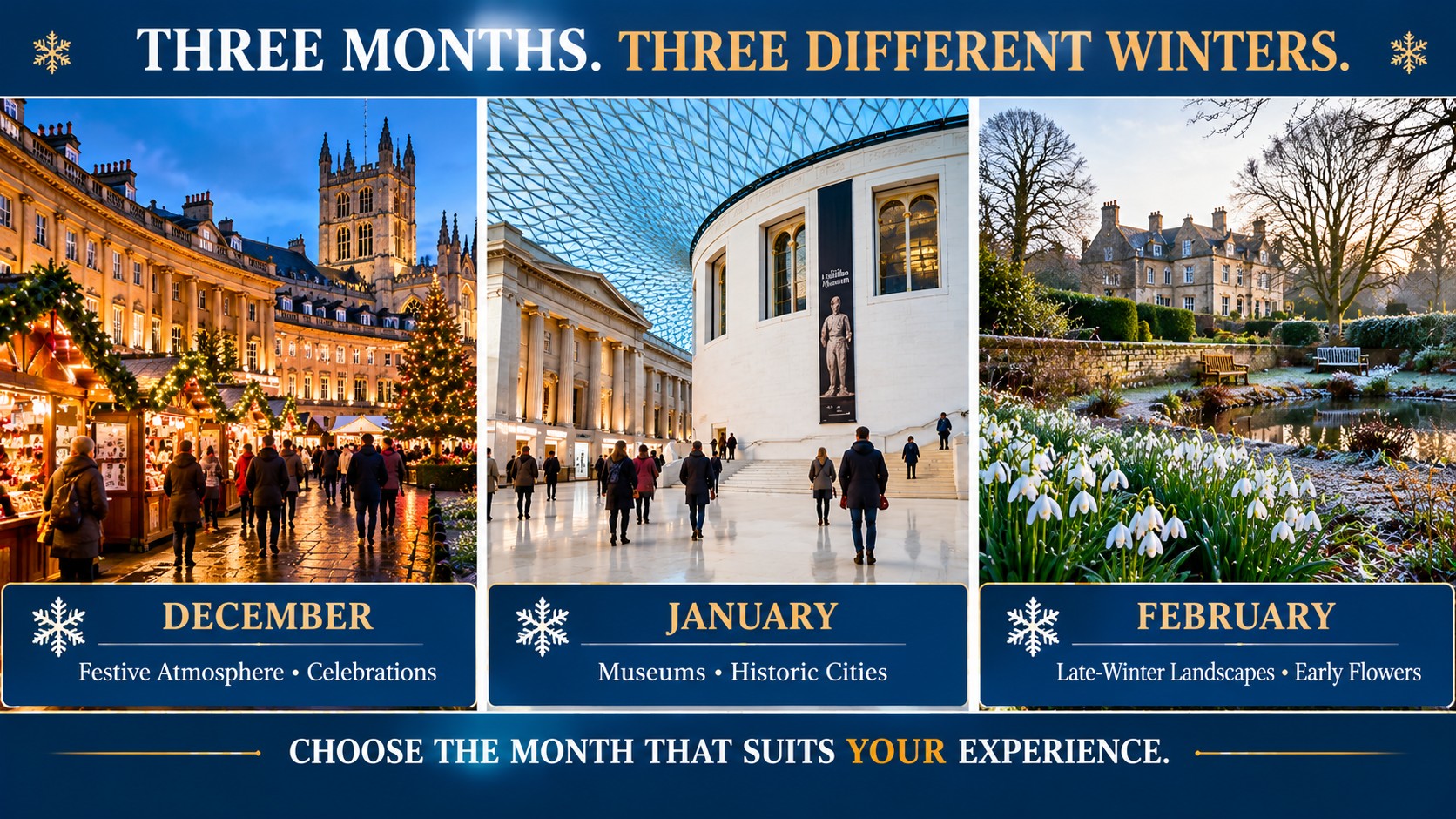
Three months, three different winter experiences. December brings festive celebrations and illuminated historic streets, January offers museums and cultural discovery, while February introduces late-winter landscapes and the first delicate signs of the approaching spring
🗺️ Where to Visit in Britain During Winter
Britain’s winter landscapes and destinations offer very different experiences. A cultural break in London requires relatively little exposure to difficult outdoor conditions, while exploring remote Highland scenery demands greater flexibility and preparation.
The most rewarding choice is not necessarily the destination with the most dramatic winter photographs. It is somewhere that offers experiences you will genuinely enjoy, with practical alternatives when the weather changes.
🏙️ London and Britain’s Historic Cities
London is one of Britain’s most versatile winter destinations. Its museums, galleries, historic buildings, theatres and cultural attractions provide plenty of opportunities to explore without depending entirely on favourable weather.
Visitors can combine outdoor landmarks such as Westminster and the Tower of London with indoor experiences, adjusting their itinerary according to conditions. Winter evenings also lend themselves to theatre performances, concerts and illuminated city streets.
Beyond London, historic cities offer distinctive alternatives.
York’s medieval streets, cathedral and historic architecture create an atmospheric setting for a short winter break. Bath combines Georgian architecture with Roman heritage, while Oxford offers historic colleges, museums and an architectural landscape that rewards exploration.
These destinations work particularly well when visitors concentrate on a manageable area rather than attempting to cover several distant locations in one day.
However, individual attractions may have seasonal opening arrangements, and outdoor sightseeing still requires suitable clothing.
Best suited to: Travellers interested in history, architecture, museums, culture and flexible sightseeing.
🏡 The Cotswolds and Rural England in Winter
The Cotswolds and other rural English regions reveal a quieter, more understated character during winter.
Honey-coloured stone villages, historic market towns, traditional pubs and countryside views can be especially atmospheric beneath winter skies. Without summer’s greenery, the architecture and shape of the landscape often become more prominent.
Villages such as Bourton-on-the-Water, Stow-on-the-Wold and Castle Combe illustrate the appeal of rural England beyond the warmer months.
Yet winter countryside touring needs careful judgement.
Daylight is limited, some gardens and attractions operate reduced schedules, and rural transport connections may be less convenient than those between major cities. Wet or icy paths can also affect walking opportunities.
Travellers relying on public transport should examine connections carefully, particularly when hoping to visit several villages.
A concentrated itinerary involving a small number of locations is often more rewarding than rushing between distant stops.
Best suited to: Visitors seeking traditional villages, countryside atmosphere, historic towns and a slower regional experience.
🌊 Southern England and Britain’s Winter Coastlines
Britain’s southern coastline offers a different kind of winter escape.
Historic harbours, coastal towns, dramatic viewpoints and seafront promenades can be rewarding even when swimming and beach holidays are firmly out of season.
Destinations along the Sussex coast, Dorset’s Jurassic Coast and parts of Devon and Cornwall offer opportunities to experience maritime heritage and distinctive coastal landscapes.
Winter can reveal the coast’s dramatic character, with changing light, powerful seas and exposed scenery. However, these same conditions demand caution.
Strong winds, heavy rain, rough seas and slippery paths can make exposed locations unsuitable for walking. Coastal erosion and temporary access restrictions may also affect particular routes.
Visitors should avoid approaching dangerous cliff edges or storm-exposed shorelines simply to obtain photographs.
Coastal attractions, boat services and hospitality businesses may operate seasonally, making advance checks particularly important.
A winter coastal journey is often most enjoyable when it combines historic towns, accessible viewpoints and indoor attractions rather than relying entirely on outdoor activities.
Best suited to: Travellers interested in maritime history, atmospheric coastal scenery and relaxed exploration with weather-dependent flexibility.
🏰 Wales in Winter: Castles, Towns and Mountain Landscapes
Wales combines historic attractions, traditional towns, coastal landscapes and some of Britain’s most impressive mountain scenery.
Its castles provide a compelling reason to visit throughout the year, although opening arrangements and access to exposed areas can vary during winter.
Historic destinations such as Conwy and Caernarfon offer opportunities to explore Welsh heritage alongside distinctive townscapes.
For travellers seeking dramatic scenery, Eryri (Snowdonia) and other upland regions can be particularly striking during colder months.
However, there is an important difference between admiring mountain landscapes from accessible locations and undertaking winter mountain walks.
Snow, ice, strong winds, poor visibility and rapidly changing conditions can make upland routes hazardous. Challenging winter activities require appropriate experience, equipment and current local information.
Visitors without specialist outdoor experience can still enjoy Welsh winter scenery through carefully selected towns, heritage attractions and accessible viewpoints.
Best suited to: Heritage enthusiasts, scenic travellers and visitors prepared to adapt outdoor plans to conditions.
🏔️ Scotland in Winter: Cities, Highlands and Seasonal Traditions
Scotland offers some of Britain’s most distinctive winter experiences, but its geography makes careful destination selection particularly important.
Edinburgh’s historic Old Town, castle setting and cultural attractions create a compelling city-break destination. Glasgow provides another strong option, with museums, architecture, galleries and a lively cultural scene.
Around New Year, Scotland’s Hogmanay traditions add a distinctive seasonal dimension, although specific celebrations, programmes and admission arrangements vary.
Beyond the cities, the Highlands can present extraordinary winter landscapes. Glencoe, the Cairngorms and areas around Loch Ness offer scenery shaped by mountains, lochs and changing winter light.
Yet Highland travel differs significantly from an urban break.
Snow and ice may affect roads and paths, daylight is shorter than in southern Britain, and conditions can change considerably over relatively short distances.
Remote journeys should include realistic travel times and contingency arrangements. Some scenic experiences may need to be postponed or replaced when conditions deteriorate.
Scotland is therefore particularly rewarding when visitors choose between cultural city experiences and more demanding rural exploration according to their interests and preparedness.
Best suited to: Travellers seeking Scottish history, winter traditions, dramatic landscapes and carefully planned scenic journeys.
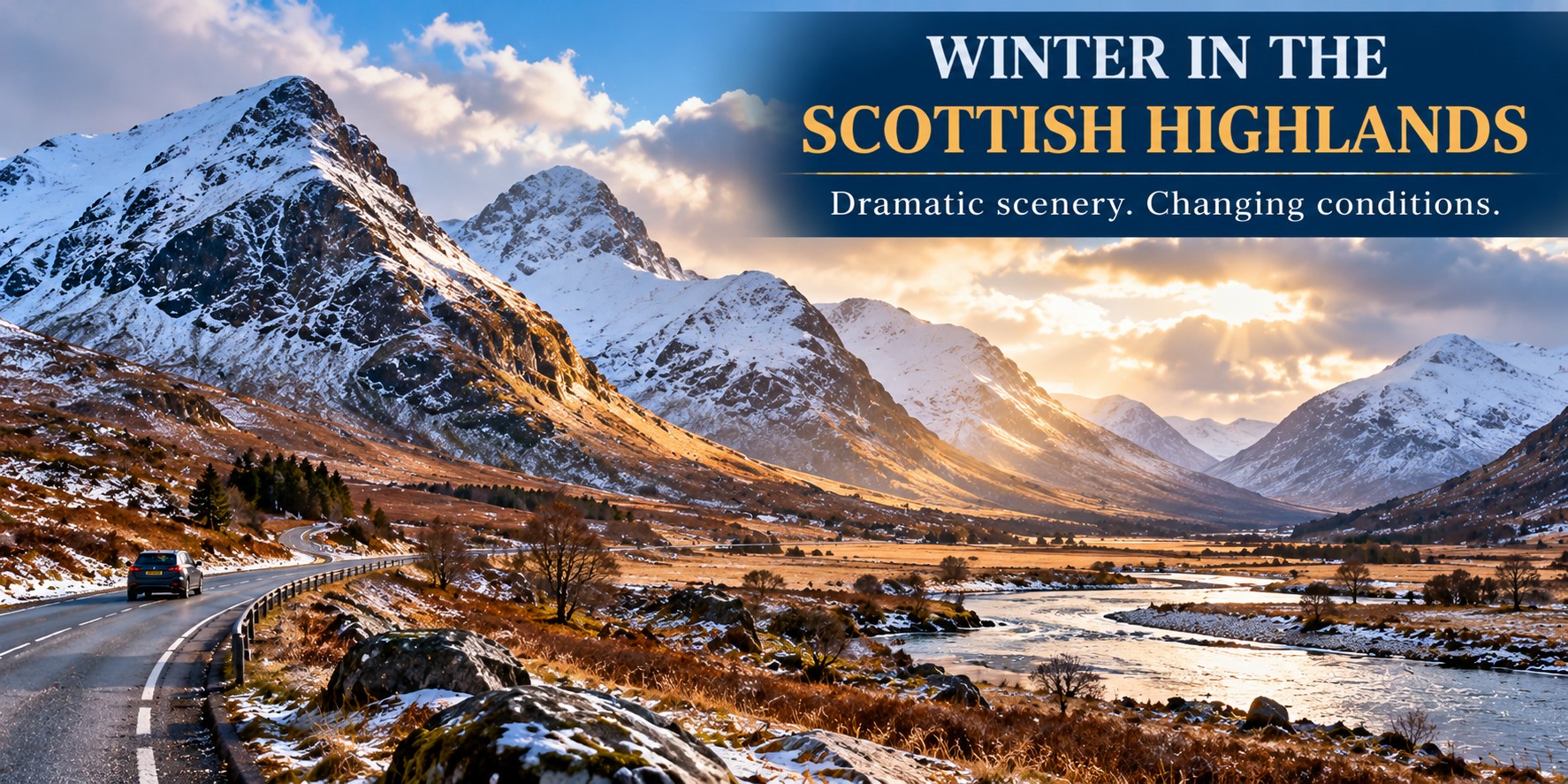
Dramatic scenery, changing conditions. Winter transforms the Scottish Highlands with snow-dusted mountains, rugged valleys and atmospheric landscapes, offering memorable scenic journeys when weather, daylight and road conditions allow
🗺️ Match Your Winter Break to the Right Destination
Britain’s winter destinations offer very different experiences. Match the type of journey you enjoy with the places most likely to suit you, while keeping seasonal limitations in mind.
🏛️ Cultural Cities
Your ideal break: Museums, galleries, historic architecture, restaurants and indoor cultural attractions.
Why it works: London and other historic British cities offer worthwhile experiences even when outdoor conditions are less inviting.
Main constraint: Shorter sightseeing days and possible holiday opening or transport changes.
🏡 Traditional Rural England
Your ideal break: Historic villages, countryside inns, market towns and quieter heritage landscapes.
Why it works: The Cotswolds and other rural areas can offer a slower, atmospheric winter experience.
Main constraint: Limited daylight, seasonal attraction closures and fewer transport options in some villages.
🏰 Coastal & Welsh Heritage
Your ideal break: Castles, historic towns, coastal scenery and cultural discoveries away from the busiest summer period.
Why it works: Wales and Britain’s coastal regions offer distinctive heritage and dramatic winter landscapes.
Main constraint: Exposed coastal weather, restricted seasonal facilities and variable heritage-site opening.
🏔️ Scottish Winter Experiences
Your ideal break: Scottish history, Edinburgh’s winter traditions, Highland landscapes and scenic journeys.
Why it works: Scotland combines historic cities with distinctive winter atmosphere and impressive natural scenery.
Main constraint: Highland weather, short daylight hours and possible disruption to rural journeys.
Winter planning tip: For a first winter visit, consider pairing a city base with carefully chosen countryside or heritage excursions. This can provide more flexibility if weather or seasonal opening arrangements change.
✨ The Best Experiences to Enjoy in Britain During Winter
Winter travel in Britain is not simply about finding attractions that remain open. The season changes how places are experienced, making some activities particularly appealing while placing practical limits on others.
The strongest winter itineraries combine experiences suited to the colder months with enough flexibility to respond to weather, daylight and seasonal opening arrangements.
🏛️ Historic Houses, Castles, Museums and Cultural Attractions
Britain’s heritage attractions provide some of the most rewarding winter experiences, particularly for travellers interested in history, architecture and cultural discovery.
Major museums and galleries in cities such as London, Edinburgh, Glasgow and York offer opportunities to explore important collections without relying on favourable outdoor conditions.
Castles, cathedrals and historic buildings can be equally compelling, although their winter arrangements vary. Some remain open throughout the year, while others reduce visiting days, restrict access to certain areas or close temporarily.
Historic houses require particular attention. A property that welcomes visitors daily in summer may operate a much shorter winter season, and its gardens or grounds may follow different arrangements from the main building.
Visitors should therefore distinguish between a destination being accessible and a particular attraction being open.
For heritage-focused travellers, selecting a small number of confirmed attractions can produce a more satisfying winter visit than building an itinerary around several uncertain opening arrangements.
🎭 Winter City Breaks, Theatre and Cultural Experiences
Britain’s cultural life offers an important advantage during winter: many rewarding experiences are not dependent on daylight.
Theatre performances, concerts, exhibitions and evening cultural events can extend a visitor’s day well beyond the hours available for outdoor sightseeing.
London’s West End is an obvious example, but Edinburgh, Glasgow, Manchester, Birmingham and other cities also offer varied cultural programmes.
A winter city break might combine historic streets and architecture during daylight with a museum visit in the afternoon and a theatre performance in the evening.
This approach creates a balanced itinerary without requiring continuous outdoor activity.
However, cultural programmes change throughout the year. Travellers should check performance dates, admission arrangements and availability rather than assuming a particular production or exhibition will be running.
For visitors whose main interests are art, history, music or theatre, winter can provide a compelling reason to explore Britain’s cities.
🎄 Christmas Markets, Festive Events and New Year Celebrations
Christmas and New Year celebrations form an important part of Britain’s winter visitor experience, particularly during December.
Seasonal markets, festive illuminations, traditional performances and decorated historic streets can transform familiar destinations into distinctive winter settings.
Some cities also host significant New Year celebrations, with Scotland’s Hogmanay traditions among the best-known examples.
Yet festive experiences are highly dependent on timing.
Christmas markets do not necessarily operate until Christmas Day, and some seasonal attractions finish before the main holiday period. Other celebrations may require advance tickets or have restricted capacity.
Christmas Day, Boxing Day and New Year’s Day can also bring substantial changes to public transport, attraction opening and hospitality arrangements.
Travellers should therefore plan around the specific celebration they want to experience, rather than assuming that all festive activities will be available throughout December.
For those primarily interested in Christmas atmosphere, careful date selection is often more important than attempting to visit numerous destinations.
🌲 Winter Countryside, Gardens and Scenic Landscapes
Britain’s countryside offers a different kind of beauty during winter.
Bare woodland branches reveal the structure of landscapes often hidden by summer foliage, while low sunlight can create striking contrasts across fields, hills and historic parkland.
Winter gardens may also offer seasonal interest through evergreen planting, colourful stems, winter-flowering shrubs and early bulbs, depending on the location and prevailing conditions.
These experiences can be particularly rewarding for travellers who enjoy photography, gentle walking and observing seasonal changes.
However, countryside access requires greater care during colder months.
Paths may become muddy, waterlogged or icy, while shorter daylight hours reduce the time available for longer walks. Some gardens, visitor centres and rural facilities also operate reduced winter schedules.
Accessible woodland routes, managed gardens and shorter countryside walks can provide worthwhile alternatives to more demanding excursions.
Visitors should respect temporary closures, avoid damaging vulnerable ground and recognise when conditions make a planned route unsuitable.
The objective is not to cover the greatest distance, but to enjoy the landscape safely and attentively.
🎄 Plan Around Britain’s Winter Events
Winter celebrations can be a highlight of visiting Britain, but their dates and arrangements vary. Start with the type of experience you want, then plan your journey around the confirmed details.
✨ Christmas Markets & Festive Lights
Enjoy decorated historic streets, seasonal markets and festive attractions in selected towns and cities.
Check: Opening and closing dates, admission arrangements and whether your chosen event runs before Christmas Day.
🎆 New Year Celebrations
Explore seasonal traditions and New Year celebrations, including Scotland’s distinctive Hogmanay atmosphere.
Check: Official event programmes, ticket requirements, crowd arrangements and holiday transport services.
🎭 Winter Cultural Events
Consider theatre, concerts, exhibitions and special heritage programmes that can enrich a winter city break.
Check: Performance dates, advance reservations, seasonal opening hours and evening travel options.
📅 Explore Seasonal Events Before Choosing Your Dates
Use our Seasonal Events Calendar to explore celebrations and seasonal travel ideas, then confirm the latest dates, admission arrangements and availability directly with the organisers before booking.
Winter travel reminder: Christmas Day, Boxing Day and New Year’s Day can involve significant changes to public transport and attraction opening arrangements. Always check the specific dates of your visit.
🚂 Scenic Rail Journeys and Winter Touring
Travelling through Britain can become part of the winter experience itself.
Rail journeys offer opportunities to appreciate changing landscapes, historic towns and countryside scenery without the responsibility of driving on unfamiliar roads.
Routes through northern England, Wales and Scotland can be particularly appealing where they pass through distinctive rural or mountainous landscapes.
However, travellers should distinguish regular passenger rail services from specialist scenic or heritage railways, which may operate seasonal timetables or close during parts of winter.
Rail travel is also subject to disruption from severe weather, engineering work and changes to holiday services.
Organised touring can simplify certain arrangements, particularly when visiting several attractions or travelling beyond major cities. Nevertheless, tours remain subject to road conditions, attraction access and operational changes.
For independent travellers, a carefully planned rail-based city itinerary may offer greater flexibility than a complicated sequence of rural connections.
For those seeking scenic touring, the most important consideration is whether the proposed journey remains practical within the available daylight and prevailing conditions.
A successful winter journey balances the pleasure of travelling with enough time to enjoy the places visited.
🧭 How to Plan a Winter Trip Around Britain
Planning a winter journey through Britain involves more than choosing destinations and booking accommodation. Shorter daylight hours, variable weather and seasonal operating arrangements can all influence how comfortably an itinerary works.
The most effective approach is to build a journey around a manageable number of experiences, allowing enough flexibility for changing conditions without sacrificing the places that matter most.
🕰️ Building a Realistic Winter Itinerary
Winter rewards thoughtful scheduling. With fewer daylight hours available, attempting to visit several widely separated attractions can leave travellers spending much of the best sightseeing time in transit.
A more practical approach is to identify the day’s main outdoor experience and arrange other activities around it.
For example, a three-day visit to York could combine historic streets and architectural sightseeing during daylight with museums, cultural attractions and evening dining. The compact nature of the city makes it easier to adjust plans when conditions change.
By contrast, attempting to combine several distant regions within the same short break introduces longer journeys, additional connections and greater exposure to disruption.
This does not mean multi-region winter touring should be avoided. It means that travel distances, available daylight and the importance of each stop need to be assessed realistically.
Allowing a little flexibility can make the difference between an enjoyable winter journey and an itinerary dominated by rushing.
🚆 Getting Around Britain in Winter: Rail, Road or Organised Tour?
The best transport choice depends on where you intend to travel and how much responsibility you want for the arrangements.
Rail travel can work particularly well between major cities, allowing visitors to avoid driving and use journey time comfortably. However, rural connections may be limited, and engineering work, severe weather or holiday timetable changes can affect services.
Self-driving offers greater independence, especially when exploring villages, countryside attractions and destinations away from principal railway routes. Nevertheless, winter driving requires attention to road conditions, visibility, parking and potentially difficult weather.
Organised touring can simplify transport arrangements and coordination between attractions. It may appeal to visitors who prefer a structured itinerary or do not wish to drive. However, organised journeys remain subject to weather, road access and attraction opening arrangements.
No single option is universally preferable.
For a cultural break based in London or another major city, public transport may be entirely sufficient. A rural itinerary involving dispersed attractions could benefit from different arrangements.
Travellers visiting around Christmas and New Year should pay particular attention to service changes. Normal weekday and weekend schedules cannot be assumed to apply throughout the holiday period.
🧥 What to Pack and Prepare for Winter Sightseeing
Comfortable winter travel depends more on practical preparation than specialist equipment for every destination.
Layered clothing allows visitors to adapt between heated interiors and cold outdoor conditions. A waterproof outer layer is especially useful because rain and wind can be as significant as low temperatures.
Footwear should provide suitable grip and comfort for wet pavements, cobbled streets and potentially slippery paths.
Gloves, scarves and warm headwear may also be useful, particularly during prolonged outdoor sightseeing or visits to northern and upland destinations.
Travellers planning countryside walks should check local conditions and carry appropriate equipment for the intended route.
Remote mountain environments require a different level of preparation from ordinary city sightseeing. Specialist winter activities should not be undertaken without suitable skills, equipment and current safety information.
It is also sensible to check the weather forecast and attraction arrangements shortly before each day’s activities.
🚆 Choose How to Explore Britain in Winter
The right way to travel depends on your destinations, available daylight and how much flexibility you want. Compare three practical approaches before building your winter itinerary.
🚄 Rail-Based City Breaks
Best suited to: Travellers exploring London, York, Bath, Edinburgh or other well-connected cities.
Main advantage: Convenient city-to-city journeys without the responsibility of driving or finding parking.
Winter consideration: Check engineering works, weather disruption and reduced holiday timetables.
🚗 Independent Driving
Best suited to: Visitors who want to explore rural villages, countryside attractions and locations beyond main rail routes.
Main advantage: Greater control over stops, routes and the pace of your journey.
Winter consideration: Allow for short daylight hours, poor visibility, icy roads and changing weather.
🚌 Organised Touring
Best suited to: Travellers who prefer a structured journey, planned sightseeing stops and transport arranged as part of a tour.
Main advantage: Less responsibility for coordinating travel between included destinations and attractions.
Winter consideration: Check departure dates, inclusions and seasonal operating arrangements. Tours remain subject to weather and access conditions.
🧭 Which Approach Works Best for You?
Choose rail for convenient city connections, independent driving for greater flexibility in suitable conditions, or organised touring when you would rather have the transport and itinerary coordinated. Whatever your preference, confirm winter schedules and allow time for changes.
💷 Winter Travel Costs, Crowds and Booking Considerations
Winter is sometimes described as a cheaper and quieter time to visit Britain, but this generalisation can be misleading.
Demand varies substantially between destinations and dates.
Popular Christmas markets, festive celebrations and New Year events may attract considerable numbers of visitors. Accommodation in particular locations can become more expensive when major events are taking place.
January may offer opportunities to travel outside peak visitor periods, although reduced demand is not guaranteed.
February brings another consideration: school half-term holidays, which can influence accommodation availability and family-oriented attractions.
Seasonal closures can also reduce the number of available experiences, even where visitor numbers are lower.
Travellers should therefore compare their preferred dates against local events, school holidays, transport arrangements and the opening schedules of important attractions.
The best-value winter journey is not necessarily the cheapest available trip. It is one where the experiences you most want to enjoy are accessible, practical and worth the time invested.
♻️ Responsible Winter Travel in Britain
Winter offers opportunities to experience Britain’s landscapes, heritage and communities in a different season, but responsible travel becomes particularly important when weather conditions are difficult and natural environments are more vulnerable.
Countryside paths can become waterlogged, muddy or icy, making it important to follow established routes and respect temporary restrictions. Walking across fragile ground or attempting unsuitable shortcuts can damage landscapes and create unnecessary safety risks.
Wildlife also deserves consideration. During colder periods, animals may face greater challenges finding food and shelter. Visitors should observe wildlife from an appropriate distance, avoid disturbing habitats and follow local guidance in protected areas.
In mountain and coastal environments, responsible behaviour includes recognising when conditions make an activity unsafe. Severe weather, poor visibility and unstable ground can turn an otherwise straightforward excursion into a hazardous undertaking. Respecting warnings and changing plans when necessary protects both visitors and those who may be called upon to assist them.
Winter travel can also support local communities. Visiting independent businesses, choosing locally operated experiences where appropriate and respecting residents can contribute positively to destinations outside their busiest seasons.
Rail and public transport may provide practical alternatives to driving, particularly between major cities. However, transport choices should remain realistic for the destination, available services and prevailing conditions.
Planning a manageable itinerary can also reduce unnecessary journeys while allowing more time to appreciate individual places.
Responsible winter travel is ultimately about making decisions that respect the season, the environment and the communities being visited.
Travel with purpose. Explore with care.
❓ Winter in Britain: Frequently Asked Questions
❓ Is December, January or February the Best Month to Visit Britain?
December is particularly appealing for Christmas celebrations, festive atmosphere and seasonal events. January can suit travellers interested in cultural city breaks and historic attractions beyond the festive period. February offers opportunities for late-winter sightseeing, with gradually increasing daylight but continued variable weather.
The best choice depends on your interests, destination and preferred travel dates.
❓ Does It Snow Everywhere in Britain During Winter?
No. Snowfall varies considerably according to location, altitude and weather conditions.
Mountainous areas of Scotland, Wales and northern England are generally more likely to experience significant winter snow than many lowland or coastal destinations. However, snow is not guaranteed anywhere, and some winters bring relatively little snowfall to particular regions.
Visitors should not plan an ordinary British winter holiday around an expectation of snow-covered scenery.
❓ Are Tourist Attractions Open in Britain During Winter?
Many museums, galleries and cultural attractions remain open throughout winter, particularly in major cities.
However, historic houses, gardens, rural attractions and some heritage sites may operate reduced schedules or close temporarily. Christmas and New Year can also affect opening arrangements.
Check the official information for individual attractions before making firm plans.
❓ Is Britain Cheaper and Less Crowded in January and February?
Some destinations may experience lower demand after Christmas, potentially offering a more relaxed visitor experience. However, prices and visitor numbers depend on the location, specific dates and events taking place.
February school holidays can increase demand in popular destinations, while major cultural events may attract visitors at other times.
Winter should not automatically be regarded as cheaper or quieter everywhere.
❓ Can You Explore the Scottish Highlands and Welsh Mountains in Winter?
Yes, but the type of exploration matters.
Accessible towns, heritage attractions and suitable scenic viewpoints can provide rewarding experiences when conditions permit. More demanding mountain routes may involve snow, ice, strong winds and rapidly changing visibility.
Specialist winter walking and mountaineering require appropriate skills, equipment and current local information. Travellers without that experience should choose safer alternatives rather than attempting difficult routes.
❓ Is It Better to Visit One Region or Tour Several Parts of Britain in Winter?
For shorter winter holidays, concentrating on one city or region often allows more time for sightseeing and greater flexibility when conditions change.
Longer journeys can include several regions, provided travel distances, daylight and transport connections are planned realistically.
The most suitable approach depends on how much time you have, the destinations you want to experience and your willingness to adapt plans.
🌅 Conclusion: Choosing Your Ideal Winter Journey Through Britain
Britain in winter offers far more than Christmas celebrations and the possibility of snowy landscapes. Its historic cities, cultural attractions, countryside scenery and regional traditions provide opportunities to experience the country from a different perspective.
The key is choosing the right combination of timing, destination and activities.
December suits travellers seeking festive atmosphere and seasonal celebrations. January offers opportunities for cultural discovery beyond the holiday period, while February can reward visitors interested in late-winter landscapes and gradually lengthening days.
Where you travel matters just as much. A cultural break in London or York presents different opportunities and challenges from a countryside journey through Wales or the Scottish Highlands.
Shorter daylight, changing weather and seasonal opening arrangements should influence the itinerary rather than become unexpected obstacles.
By choosing manageable journeys, checking important arrangements and allowing room for flexibility, visitors can discover a side of Britain that is atmospheric, distinctive and genuinely rewarding.
Winter does not need to offer the same experiences as summer to be worth exploring. Its appeal lies in understanding what the season does best and planning a journey that makes the most of it.
🚆 Choose How to Explore Britain in Winter
The right way to travel depends on your destinations, available daylight and how much flexibility you want. Compare three practical approaches before building your winter itinerary.
🚄 Rail-Based City Breaks
Best suited to: Travellers exploring London, York, Bath, Edinburgh or other well-connected cities.
Main advantage: Convenient city-to-city journeys without the responsibility of driving or finding parking.
Winter consideration: Check engineering works, weather disruption and reduced holiday timetables.
🚗 Independent Driving
Best suited to: Visitors who want to explore rural villages, countryside attractions and locations beyond main rail routes.
Main advantage: Greater control over stops, routes and the pace of your journey.
Winter consideration: Allow for short daylight hours, poor visibility, icy roads and changing weather.
🚌 Organised Touring
Best suited to: Travellers who prefer a structured journey, planned sightseeing stops and transport arranged as part of a tour.
Main advantage: Less responsibility for coordinating travel between included destinations and attractions.
Winter consideration: Check departure dates, inclusions and seasonal operating arrangements. Tours remain subject to weather and access conditions.
🧭 Which Approach Works Best for You?
Choose rail for convenient city connections, independent driving for greater flexibility in suitable conditions, or organised touring when you would rather have the transport and itinerary coordinated. Whatever your preference, confirm winter schedules and allow time for changes.