


Stonehenge Inner Circle Sunset Throughout the Year: Which Months Are Most Atmospheric? (2026 Guide)
20th July 2026
🌅 Stonehenge Inner Circle Sunset Throughout the Year: Which Months Are Most Atmospheric? (2026 Guide)
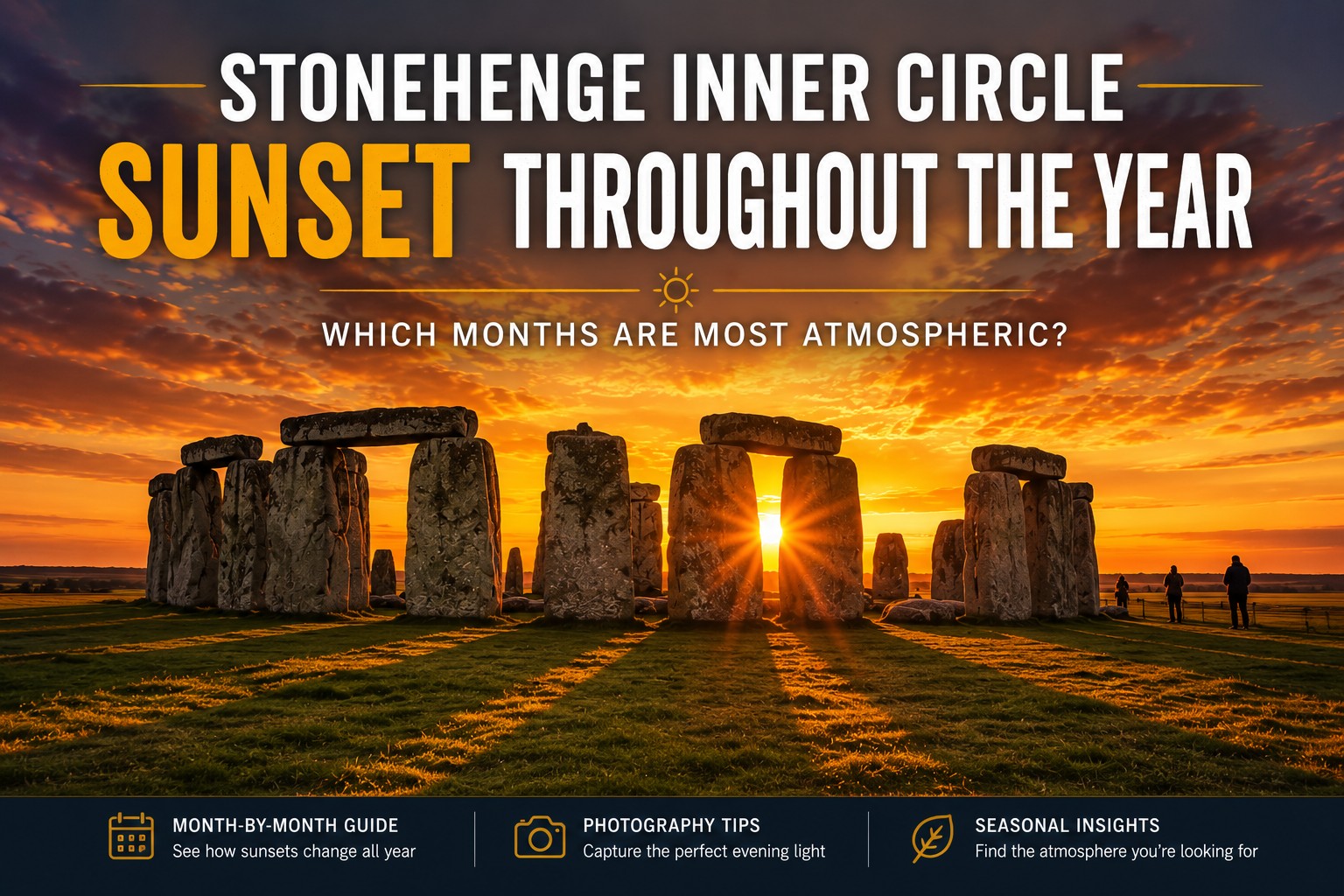
Every Stonehenge sunset is different. Discover how the changing seasons influence evening light, colours, atmosphere and photography opportunities to help you choose the perfect month for your Inner Circle experience
Watching the sun set inside Stonehenge is never the same experience twice.
The ancient stones remain almost unchanged from season to season, yet the light around them transforms continuously. The direction of the setting sun shifts across the horizon, evening colours evolve, shadows lengthen or soften, the surrounding landscape changes and the atmosphere itself feels different as the year unfolds.
That means choosing a Stonehenge Inner Circle sunset isn’t simply about selecting an available date—it’s about choosing the type of experience you want to remember.
Some visitors dream of the endless golden evenings of early summer. Others hope for the rich amber skies and crisp air of autumn. Many photographers deliberately seek lower-angle light, while travellers looking for peace often find winter’s quiet beauty surprisingly rewarding.
There is no single “perfect” month.
Instead, each season offers its own combination of atmosphere, practical timing, photography opportunities and historical character.
This guide explores how Stonehenge sunset experiences change throughout the year, helping you decide which month best matches your own travel style while explaining why some seasons consistently stand out above others.
⚡ Quick Answer: Which Months Offer the Most Atmospheric Stonehenge Inner Circle Sunsets?
If your priority is overall atmosphere, September and October are the strongest choices.
The lower evening sun, richer seasonal colours, comfortable sunset times and beautifully directional light often combine to create the year’s most rewarding sunset experiences.
If you’re looking for the best all-round balance between weather, scenery and practicality, May is an excellent choice.
Visitors hoping to enjoy the longest golden evenings should consider June and July, while those seeking peaceful winter character may find November through February especially appealing.
December also carries particular significance because Stonehenge’s principal solar alignment is associated not only with the famous midsummer sunrise, but also with the midwinter sunset, giving the season a unique archaeological resonance.
Ultimately, the best month depends on the kind of evening you want to experience—not simply the date on the calendar.
📅 Check Which Sunset Sessions Are Available
Once you’ve decided which seasonal experience appeals most, the next step is confirming which Stonehenge Inner Circle Access dates are available.
Not every month offers identical opportunities, and sunset sessions vary throughout the year. Comparing available dates alongside your preferred season makes it much easier to identify the visit that best suits your travel plans.
Whether you’re hoping to photograph warm autumn light, experience a peaceful winter evening or enjoy the extended daylight of midsummer, checking availability early gives you the greatest flexibility.
🌄 What Makes a Stonehenge Sunset Feel Atmospheric?
When people describe a sunset as “atmospheric”, they’re usually responding to several different factors working together rather than one spectacular moment.
At Stonehenge, five elements shape the experience more than anything else.
☀️ The Angle and Quality of the Evening Light
As the Earth moves around the sun throughout the year, the setting sun gradually changes position across the western horizon.
During summer, sunlight arrives from a higher angle and the transition from daylight to darkness is slow and gentle. In autumn and winter, the sun sits much lower, creating longer shadows, softer illumination and a more dramatic sense of depth across the ancient stones.
Lower-angle light often reveals textures and details that can appear flatter during brighter midday conditions.
☁️ Cloud Can Transform an Ordinary Sunset
Many visitors assume a completely clear sky always produces the finest sunset.
In reality, some of the most memorable evenings occur when high or broken cloud catches the final sunlight, reflecting warm gold, orange, pink and deep crimson across the sky.
A perfectly clear horizon may create crisp silhouettes, while scattered cloud often delivers richer colour and greater visual drama.
Of course, no weather forecast can guarantee a spectacular sunset—but changing conditions frequently become part of what makes each visit unique.
🌿 The Landscape Changes With Every Season
The stones themselves remain constant, but Salisbury Plain continually changes around them.
Fresh spring greens, mature summer grasslands, rich autumn tones and subdued winter colours each create a different backdrop for the monument.
Morning frost, low autumn mist, distant rain showers or crystal-clear winter air can all subtly influence how Stonehenge feels during the final light of day.
These seasonal changes often become just as memorable as the sunset itself.
🕰️ Sunset Timing Shapes the Entire Experience
Atmosphere isn’t only created by colour.
The practical timing of sunset changes the rhythm of your visit as well.
A June sunset can arrive very late in the evening, creating long golden-hour conditions but also a later finish to your day. By contrast, autumn and winter sunsets occur much earlier, allowing visitors to enjoy beautiful evening light while returning considerably earlier than during midsummer.
For many travellers, that balance between atmosphere and convenience becomes an important part of choosing the ideal month.
❤️ Emotional Atmosphere Matters Too
Not every unforgettable sunset is dramatic.
Some visitors remember the warmth and optimism of a late spring evening, while others treasure the stillness of a quiet winter visit when darkness gathers quickly around the monument.
The emotional character of each season is just as important as the colours in the sky.
Understanding that difference helps explain why two visitors can leave Stonehenge at sunset in different months, both convinced they experienced the perfect evening.
🧭 Why the Midwinter Sunset Matters at Stonehenge
Stonehenge is famous around the world for its connection with the midsummer sunrise, but fewer people realise that the monument is also closely associated with the midwinter sunset.
The stone circle was deliberately aligned along a northeast–southwest axis that connects these two important solar events. While the midsummer sunrise attracts widespread attention today, many archaeologists believe the midwinter sunset may have been equally—or perhaps even more—significant to the people who built and used Stonehenge thousands of years ago.
Although the monument has changed over the centuries and archaeologists cannot say with certainty exactly how prehistoric communities understood these events, the relationship between Stonehenge and the solstitial sun remains one of its defining characteristics.
That historical connection gives winter sunset visits a special sense of significance beyond their visual beauty alone.
🌦️ What Can Change Your Sunset Experience on the Day?
Choosing the right month significantly improves your chances of enjoying the type of sunset you’re hoping for, but no season can guarantee a particular sky.
Even within the same week, conditions on Salisbury Plain can vary dramatically.
Cloud cover, visibility, humidity, wind, seasonal haze and passing weather systems all influence how the evening develops. Some of the most spectacular sunsets occur after rain showers, when sunlight breaks beneath retreating cloud, while perfectly clear skies often produce cleaner silhouettes but less dramatic colour.
It’s also worth remembering that your tour meeting time, Inner Circle access time, astronomical sunset time and return journey are all different parts of the same experience. Planning around the complete itinerary—not simply the published sunset time—helps ensure a more relaxed and enjoyable visit.
Rather than searching for a guaranteed perfect sunset, the most rewarding approach is to choose the season whose overall character best matches the experience you’re looking for.
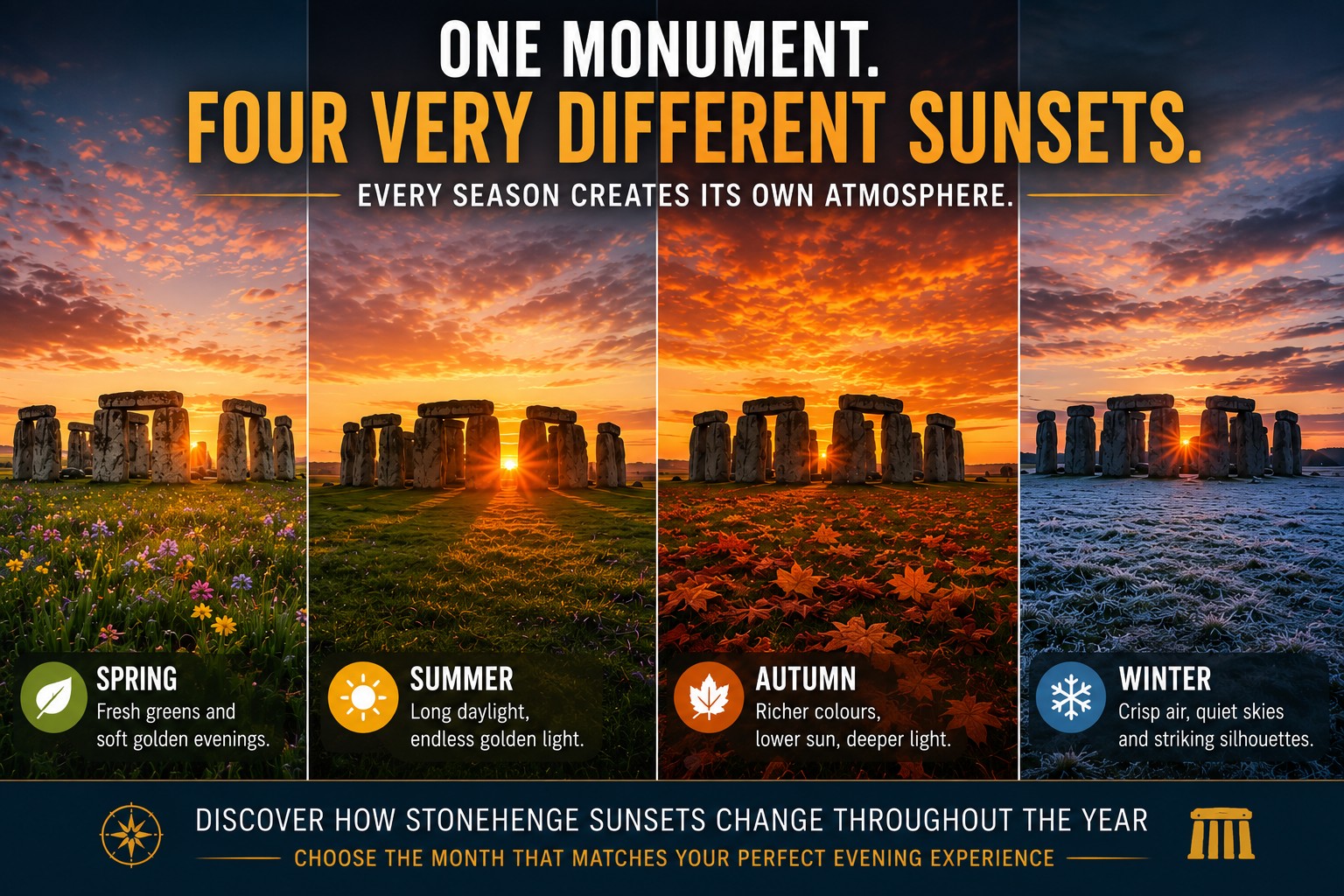
Stonehenge may remain unchanged, but every season creates a completely different sunset experience. Compare how spring, summer, autumn and winter each bring their own colours, light and atmosphere
🌅 Stonehenge Inner Circle Sunset Month by Month
Every month offers something different.
Some provide exceptionally long evenings, others create richer colours or quieter surroundings, while a few strike an excellent balance between atmosphere and practicality.
The guide below highlights what makes each month distinctive, helping you decide which season best suits your own priorities.
❄️ January – Peaceful Winter Light
January offers one of the quietest and most contemplative times to experience Stonehenge.
The low winter sun creates long shadows and soft, directional light before darkness arrives relatively quickly. On clear evenings, the crisp air can produce excellent visibility, while occasional frost adds another layer of seasonal character to the surrounding landscape.
If your priority is tranquillity rather than warm weather, January delivers an experience that feels calm, reflective and distinctly different from the busier months of the year.
🌨️ February – Winter Begins to Soften
Although still firmly part of winter, February often hints at the gradual transition towards spring.
Sunset arrives slightly later than in January, giving visitors a little more evening light while retaining the subdued atmosphere that many people enjoy. Changing weather patterns can produce particularly interesting skies, with broken cloud frequently enhancing the colours of sunset.
For photographers and visitors who appreciate quieter surroundings, February can be an unexpectedly rewarding choice.
🌱 March – The Balance of Early Spring
Around the spring equinox, day and night become almost equal in length, bringing a welcome balance to the season.
The evenings lengthen noticeably, temperatures gradually become milder and the first signs of spring begin to appear across Salisbury Plain. Conditions remain changeable, but the combination of fresh landscapes and increasingly comfortable sunset times makes March an attractive option for visitors seeking a quieter alternative to late spring.
🌸 April – Fresh Colour and Rapidly Changing Skies
April combines vibrant spring growth with some of the year’s most dynamic weather.
Bright sunshine, passing showers and fast-moving cloud can all appear during the same evening, creating constantly changing light around the stones. When conditions come together, these changing skies often produce striking sunset colours that photographers particularly appreciate.
Although no weather can be predicted with certainty, April’s variety is part of its appeal.
🌿 May – The Best All-Round Balance
For many visitors, May offers the finest overall combination of atmosphere, comfort and practicality.
The countryside is full of fresh colour, temperatures are generally pleasant and the evenings have become beautifully long without reaching the exceptionally late sunset times of midsummer.
Warm directional light, comfortable conditions and manageable travel schedules make May an excellent choice for first-time visitors, photographers and anyone looking for a balanced Stonehenge Inner Circle sunset experience.
☀️ June – Endless Golden Evenings
June is defined by light.
As the Summer Solstice approaches, daylight stretches late into the evening, creating prolonged golden-hour conditions that seem to linger across Salisbury Plain. The gradual transition from afternoon into sunset allows visitors plenty of time to appreciate how the changing light alters the appearance of the monument.
The trade-off is practical rather than visual.
Very late sunset times often mean a correspondingly later finish to the day, something worth considering when planning accommodation or onward travel.
🌞 July – Relaxed High-Summer Atmosphere
July retains much of June’s warmth while gradually bringing sunset a little earlier each week.
The busiest Solstice period has passed, yet evenings remain long, comfortable and ideal for visitors who simply want to enjoy Stonehenge beneath a broad summer sky. The mature landscape surrounding the stones reinforces the feeling of high summer, while the slightly earlier sunset compared with late June can make overall travel plans more manageable.
For visitors who love warm evenings without travelling during the Solstice period itself, July is an excellent alternative.
🌻 August – Soft Late-Summer Evenings
August quietly bridges the transition between summer and autumn.
The evening sun begins to sit lower in the sky than it does in June or early July, producing warmer directional light while still providing comfortably long evenings. Sunset becomes progressively earlier, making post-visit travel simpler without sacrificing the relaxed atmosphere associated with summer.
It’s an appealing month for visitors who want many of the advantages of midsummer while avoiding its latest finishes.
🍂 September – The Strongest Balance of Atmosphere and Practicality
If you asked an experienced travel planner to recommend just one season for a Stonehenge Inner Circle sunset, early autumn would almost certainly feature near the top of the list.
September brings together many of the qualities visitors hope for.
The evening sun sits noticeably lower than during midsummer, producing warmer, more directional light across the stones. The countryside still retains much of its summer colour, yet sunset arrives earlier, creating a more comfortable rhythm for the entire day.
For photographers, the combination of softer light, greater contrast and increasingly colourful skies can be particularly rewarding. For first-time visitors, September offers an excellent compromise between visual beauty and practical planning.
It’s this balance—not one single spectacular feature—that makes September one of the year’s standout months.
🍁 October – Peak Atmosphere
If your priority is pure atmosphere, October is arguably the finest month of the year.
The lower autumn sun produces long shadows and beautifully textured light, while cooler air often enhances clarity across Salisbury Plain. Trees beyond the monument begin to display rich seasonal colour, and changing weather patterns can create dramatic cloud formations capable of transforming an ordinary sunset into something extraordinary.
Perhaps most importantly, sunset occurs at a practical time for many travellers.
Rather than finishing exceptionally late, as can happen during midsummer, October often combines remarkable evening light with a more manageable return journey.
For visitors seeking mood, colour and a genuine sense of seasonal character, October is difficult to surpass.
🌫️ November – Quiet Beauty and Dramatic Skies
November has a character entirely its own.
The landscape becomes quieter, daylight shortens and the changing weather frequently creates layered cloud, shifting light and striking contrasts between illuminated sky and darkening countryside.
Although temperatures are noticeably cooler, the earlier sunset allows many visitors to enjoy an evening experience without the very late finishes associated with summer.
Those looking for tranquillity rather than peak tourist season often discover that November offers one of Stonehenge’s most reflective and rewarding atmospheres.
🎄 December – A Sunset With Historic Resonance
December is unlike any other month.
Beyond its peaceful winter beauty, it carries a unique connection with Stonehenge itself. The monument’s principal solar alignment links the famous midsummer sunrise with the midwinter sunset, giving this season a special archaeological significance that extends far beyond the colours in the evening sky.
The low winter sun creates subtle golden light, long shadows and a rapid transition into twilight. Crisp conditions can produce exceptional clarity, while the surrounding landscape takes on a quiet simplicity that many returning visitors find deeply memorable.
It may not offer the longest evenings or the warmest temperatures, but for those interested in Stonehenge’s relationship with the sun and the passing seasons, December provides one of the most meaningful sunset experiences of the entire year.
📊 Stonehenge Inner Circle Sunset Months Compared
Every visitor has different priorities.
Some want the richest colours. Others value practical timings, quieter surroundings or the historical significance of a particular season.
The comparison below provides a quick overview to help match your travel priorities with the months that best suit them.
| Month | Character of the Light | Best Suited To | Main Consideration |
|---|---|---|---|
| January | Low winter light and long shadows | Quiet, reflective visits | Cold conditions and early darkness |
| February | Soft winter light with changing skies | Photography and peaceful visits | Variable weather |
| March | Fresh spring balance | First spring visits | Unpredictable conditions |
| April | Bright, fast-changing light | Dynamic skies and photography | Mixed weather |
| May | Warm, luminous evenings | Best all-round choice | Increasingly longer evenings |
| June | Long golden-hour light | Extended summer sunsets | Very late finish |
| July | Warm high-summer evenings | Relaxed summer travel | Busy holiday season |
| August | Softer late-summer light | Comfortable evening visits | Gradually shortening days |
| September | Warm directional light | Atmosphere and practicality | Popular planning period |
| October | Rich autumn light | Mood, photography and colour | Cooler evenings |
| November | Dramatic late-autumn skies | Peaceful seasonal visits | Short daylight hours |
| December | Low midwinter light | Historical resonance and winter atmosphere | Cold weather and shortest days |
📷 Which Months Are Best for Sunset Photography?
Every photographer looks for something slightly different.
Some chase vibrant colours, others prefer dramatic silhouettes, while many simply hope to capture Stonehenge beneath beautiful evening light.
Rather than asking which single month is “best”, it’s more useful to consider the style of photography you’d like to create.
🌅 Best for Warm Golden Light
May, June and early September often provide the most attractive balance of warmth, colour and comfortable shooting conditions.
☁️ Best for Dramatic Skies
September, October and November frequently produce the most visually interesting cloud formations, particularly when changing weather allows sunlight to break beneath higher cloud during the final minutes before sunset.
🌄 Best for Silhouettes and Long Shadows
October through February offer lower-angle sunlight that can produce striking silhouettes and beautifully defined shadows around the stones.
🕰️ Best for Practical Photography Sessions
For many visitors, May, September and October offer the strongest overall balance between excellent light and manageable evening timings.
The very latest midsummer sunsets create wonderful photographic opportunities, but they also require considerably longer days.
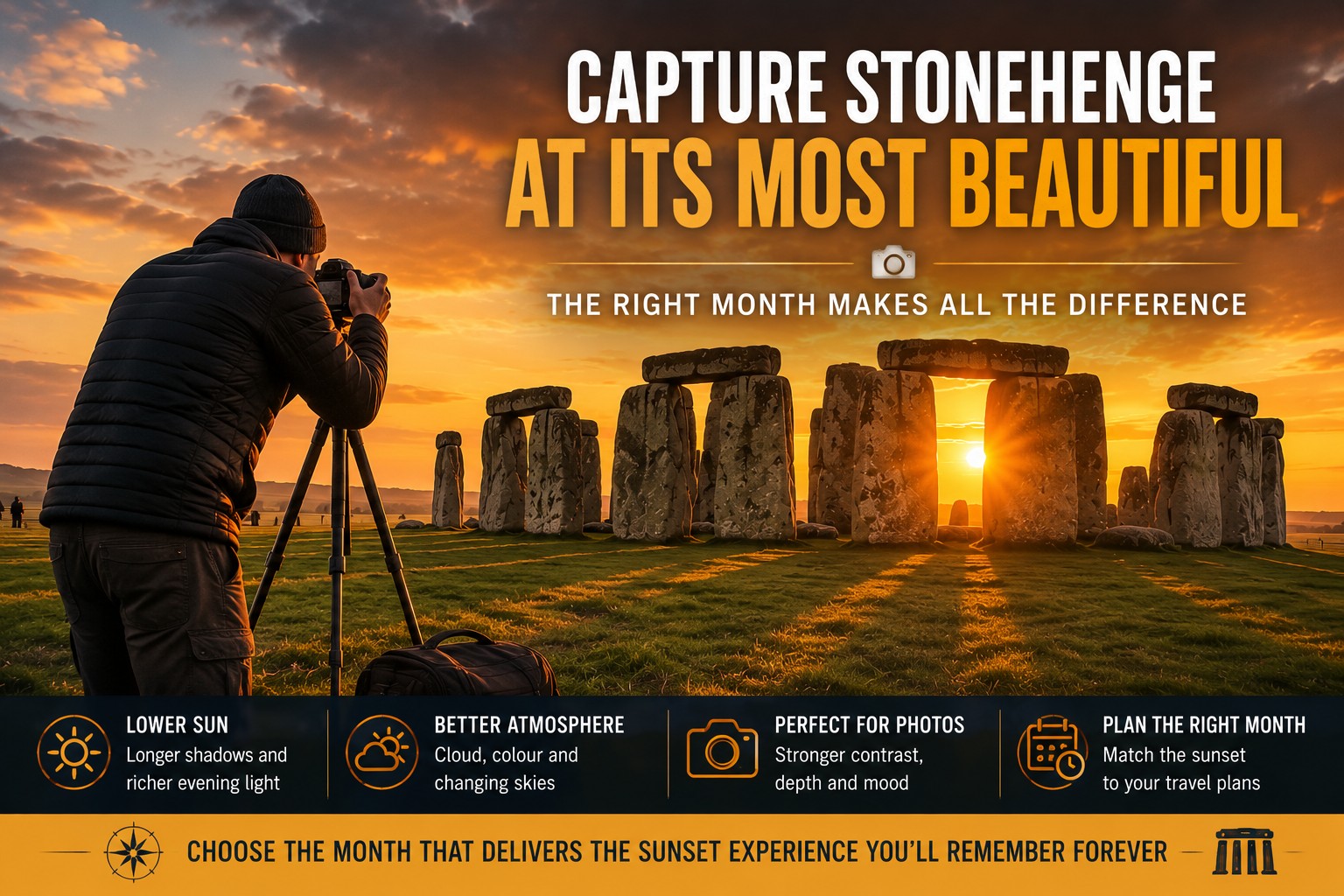
The best Stonehenge sunset photographs begin long before you press the shutter. Choosing the right month can dramatically influence the light, colours, atmosphere and overall character of your images
🧳 Which Month Should You Choose?
There isn’t a universally “best” month to experience a Stonehenge Inner Circle sunset.
The ideal choice depends entirely on what you hope to take away from the visit.
If you’re travelling primarily for spectacular evening light, your priorities will naturally differ from someone fascinated by archaeology or someone simply looking for the easiest month to fit into a wider UK itinerary.
The guide below summarises which seasons suit different types of visitors.
🌅 Choose September or October If You Want Maximum Atmosphere
For most visitors, early autumn delivers the strongest overall experience.
The combination of lower-angle sunlight, comfortable temperatures, richer colours and practical sunset timings creates an exceptional balance that is difficult to match elsewhere in the year.
If you can only visit once and your main objective is to enjoy Stonehenge at its most atmospheric, these two months deserve serious consideration.
🌿 Choose May If You Want the Best All-Round Experience
May consistently performs well across almost every category.
The countryside is vibrant, temperatures are generally comfortable, evenings are pleasantly long and travel logistics remain relatively straightforward.
For first-time visitors looking for an excellent all-round Stonehenge sunset experience, May is often one of the safest recommendations.
☀️ Choose June or July If You Love Long Summer Evenings
Nothing quite compares with the lingering daylight of early summer.
Golden-hour light stretches across the landscape, the transition into sunset feels wonderfully gradual and visitors have ample opportunity to appreciate how the monument changes as daylight slowly fades.
The trade-off is practical rather than visual.
Very late sunsets usually mean later departures and longer overall touring days.
🍂 Choose Winter If You Prefer Peace and Reflection
From November through February, Stonehenge adopts a completely different character.
Visitor numbers are generally lower, the landscape feels quieter and the low winter sun creates subtle, beautifully directional light.
Although temperatures are cooler, many experienced visitors find winter’s peaceful atmosphere one of the monument’s greatest strengths.
🎟️ Planning Your Stonehenge Inner Circle Sunset Visit
Once you’ve decided which season appeals most, it’s worth planning the rest of your visit with the same care.
Unlike standard daytime admission, Stonehenge Inner Circle Access offers a rare opportunity to enter the stone circle itself outside normal opening hours, making advance planning especially important.
A few simple considerations can make the experience considerably more enjoyable.
📅 Check Available Dates Early
Sunset access sessions are offered on selected dates rather than every evening throughout the year.
Availability varies by month, so checking the calendar well in advance gives you the widest possible choice, particularly if you’re travelling during popular periods.
🧥 Dress for the Conditions
Even during summer, Salisbury Plain can become noticeably cooler once the sun begins to fall.
Light layers, a waterproof outer garment and comfortable footwear are sensible choices throughout the year.
During autumn and winter, warmer clothing is strongly recommended, particularly if you’re standing outside for extended periods before or after sunset.
📷 Prepare Your Camera Before You Enter
Light changes surprisingly quickly during the final stages of sunset.
Having your camera, phone or photography equipment ready before entering the Inner Circle allows you to spend less time adjusting settings and more time enjoying the experience itself.
Sometimes the most memorable photographs are taken during the changing light immediately before sunset rather than at the precise moment the sun reaches the horizon.
🌤️ Stay Flexible About the Weather
A forecast showing cloud isn’t necessarily disappointing.
Broken cloud frequently creates the richest colours, while passing weather systems often produce dramatic skies that clear just before sunset.
Rather than hoping for perfect conditions, approach each visit knowing that every evening creates its own unique atmosphere.
That unpredictability is part of what makes returning visitors appreciate Stonehenge in different seasons year after year.
🌍 Travel Responsibly While Enjoying Stonehenge at Sunset
Watching the sun set over Stonehenge is a privilege shared by relatively few visitors.
Helping to protect both the monument and its surrounding landscape ensures future generations can enjoy the same remarkable experience.
Simple choices can make a meaningful difference.
- Choose organised transport where practical to reduce unnecessary vehicle movements.
- Stay on designated paths and follow all guidance provided during your visit.
- Respect the peaceful atmosphere that makes sunset access so special for everyone present.
- Avoid leaving litter or disturbing the surrounding landscape.
- Keep artificial lighting to a minimum so that others can fully appreciate the natural transition from daylight into evening.
Responsible travel doesn’t reduce the quality of the experience—it helps preserve the unique atmosphere that makes a Stonehenge sunset so memorable.
❓ Frequently Asked Questions
🌅 Which month offers the most atmospheric Stonehenge sunset?
For most visitors, September and October provide the strongest combination of beautiful light, seasonal colour, comfortable timings and overall atmosphere.
🌿 Is May a good month to visit Stonehenge at sunset?
Yes. May offers one of the year’s best all-round experiences, combining pleasant temperatures, fresh landscapes and long evenings without the exceptionally late sunsets of midsummer.
📷 Which months are best for photography?
September and October are excellent for dramatic colour and lower-angle light, while May and June provide beautiful golden-hour conditions with longer periods of usable evening light.
🗿 Does Stonehenge align with the sunset?
Yes. Stonehenge’s principal axis aligns with both the midsummer sunrise and the midwinter sunset, making winter an especially significant season in terms of the monument’s solar design.
☁️ Does cloud ruin a Stonehenge sunset?
Not at all.
Some of the most memorable sunsets occur when sunlight filters beneath or through broken cloud, creating richer colours and more dramatic skies than a completely clear evening.
📅 Are sunset Inner Circle sessions available every day?
No.
Sunset access operates on selected dates throughout the year, so it’s always advisable to check current availability before planning your trip.
Planning Tool
Check Which Sunset Dates Are Available
Stonehenge Inner Circle sunset access operates on selected dates only throughout the year. Before choosing your travel dates, it’s worth checking the official access calendar to see exactly which evenings are available.
🎄 Why Is the Midwinter Sunset So Significant?
While the Summer Solstice sunrise understandably attracts worldwide attention, archaeologists have long recognised that Stonehenge’s principal alignment also points towards the midwinter sunset.
Many researchers believe this winter alignment may have held enormous importance for the people who built and used the monument thousands of years ago. Although nobody can say with complete certainty exactly how prehistoric communities interpreted these solar events, the monument’s carefully designed relationship with both the midsummer sunrise and the midwinter sunset remains one of Stonehenge’s defining characteristics.
That historical connection gives a winter sunset visit a significance that extends beyond photography or seasonal scenery.
Standing among the stones as daylight fades during winter allows visitors to experience one half of Stonehenge’s remarkable solar design—a perspective that is often overlooked when attention focuses solely on the Summer Solstice.

Every Stonehenge sunset tells a different story. The month you choose shapes the colours, atmosphere and memories that stay with you long after your visit
🏁 Conclusion: The Best Stonehenge Sunset Depends on the Experience You Want
A Stonehenge Inner Circle sunset is never defined by the monument alone.
The stones remain constant, but the changing position of the sun, the evolving landscape, the colours of the sky and the atmosphere of each season combine to create a completely different experience from one month to the next.
If your goal is the most atmospheric overall visit, September and October stand out thanks to their beautiful autumn light, practical sunset times and exceptional seasonal character.
If you’re looking for the best all-round balance, May offers an outstanding combination of pleasant weather, vibrant landscapes and comfortably long evenings.
Visitors who dream of lingering golden-hour light will naturally gravitate towards June and July, while those seeking quieter, more reflective surroundings may discover that winter provides one of Stonehenge’s most memorable experiences, particularly when viewed through the historical significance of the midwinter sunset.
Rather than asking which month is objectively “best”, it’s more rewarding to ask which atmosphere best matches the experience you hope to have.
Whether you choose a warm June evening, a golden September sunset or the peaceful stillness of December, each season reveals a different side of one of Britain’s most extraordinary prehistoric monuments.
After all, the stones change very little throughout the year; what truly changes is the light, the landscape and the way the setting sun reveals them.
📚 Further Reading
If you’re still deciding when to visit, these guides will help you compare seasons, understand how Inner Circle Access works and plan the perfect Stonehenge experience.