


Stonehenge Summer Solstice Tonight: Final Guide Before You Go (2026)
20th June 2026
🌅 Stonehenge Summer Solstice Tonight: Final Guide Before You Go (2026)
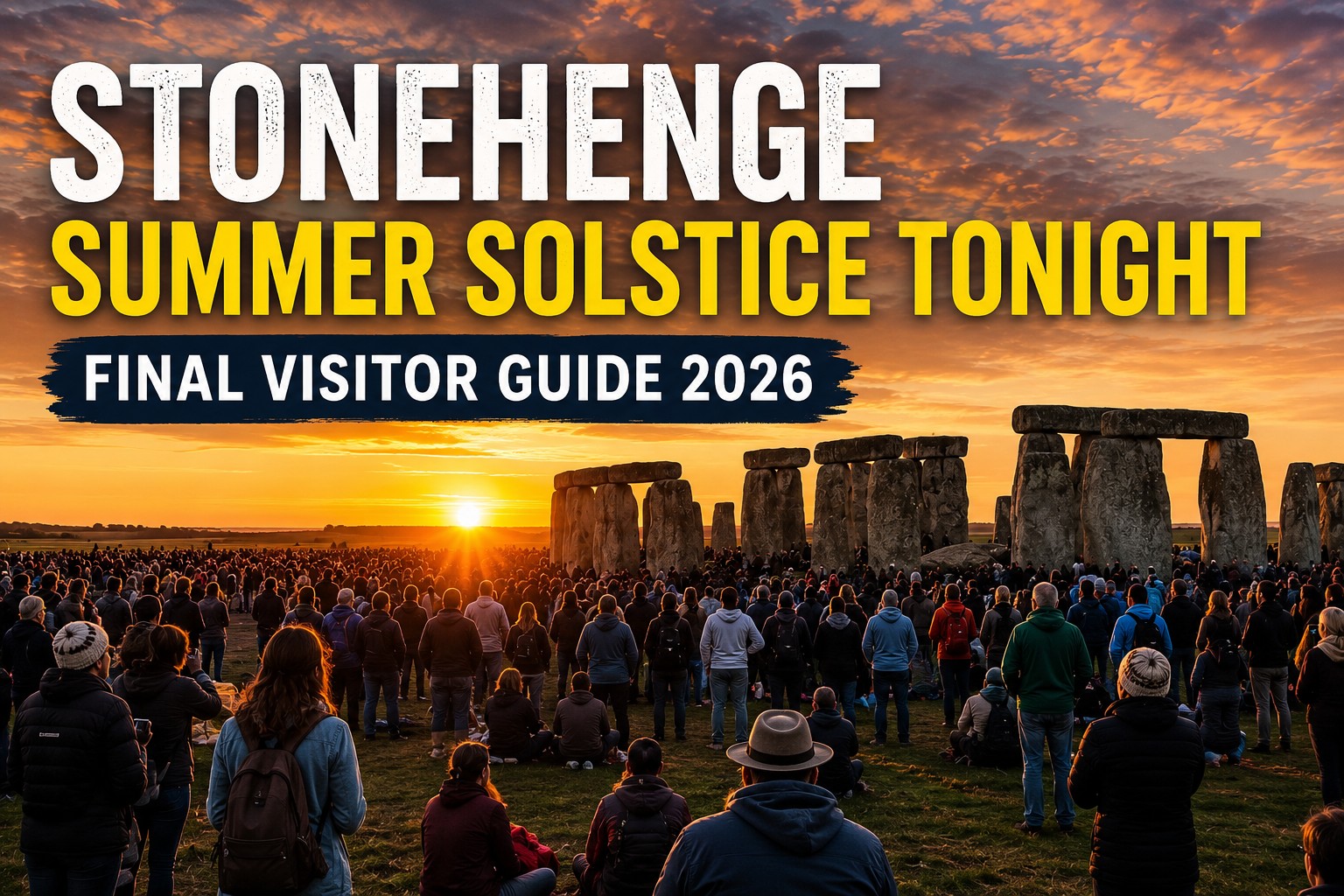
Visitors gather at Stonehenge for Summer Solstice 2026 as sunset approaches and anticipation builds ahead of sunrise
The wait is finally over.
After months of anticipation, planning and preparation, Stonehenge Summer Solstice 2026 is here. Tonight, thousands of visitors from across Britain and around the world will travel to Salisbury Plain to experience one of the country’s most famous annual events and witness sunrise at one of history’s most remarkable prehistoric monuments.
For some people, this will be a once-in-a-lifetime journey. Others may be returning after previous Solstice celebrations. Whether you’re travelling from London, staying locally or preparing to leave later today, a little preparation can make a huge difference to your overall experience.
This final visitor guide focuses specifically on those attending Stonehenge Summer Solstice tonight. Unlike planning articles written weeks or months in advance, the aim here is simple: provide practical, last-minute advice that can help you enjoy the event with confidence.
If you’re looking for broader background information, history and planning guidance, our complete Stonehenge Summer Solstice guide explores everything from the origins of the event to travel planning and visitor expectations.
Visitors exploring Stonehenge more generally can also begin with our complete Stonehenge travel planning hub, which brings together tours, transport advice, visitor information and Stonehenge experiences throughout the year.
🌅 Tonight Is The Night
If you’re reading this on 20 June 2026, you’re likely among the final wave of visitors preparing to attend this year’s Summer Solstice gathering.
In just a few hours, Salisbury Plain will begin filling with visitors sharing the same destination and anticipation.
Few events in Britain generate the same sense of excitement, expectation and shared experience.
As evening approaches, people will begin arriving from every corner of the UK and far beyond. Some come for spiritual reasons. Others are drawn by history, photography, archaeology or simply the opportunity to experience one of Britain’s most famous traditions.
Unlike a standard Stonehenge visit, Summer Solstice feels less like a sightseeing trip and more like a shared event. Visitors become part of something larger than themselves: a gathering that combines ancient history, seasonal change, landscape and human connection.
Throughout the evening, the atmosphere gradually evolves. Early arrivals settle into the landscape, conversations begin, photographs are taken and excitement steadily builds.
As darkness deepens, anticipation increases.
For many first-time attendees, the hours immediately before sunrise become the most memorable part of the entire event.
Then, as dawn approaches, attention turns eastwards and thousands of people wait together for the first light of the longest day of the year.
For countless visitors, the moment the sun finally appears above the horizon becomes the memory that stays with them long after the event itself has ended.
🕒 Key Times For Tonight & Tomorrow Morning
While timings can vary slightly, the following guide provides a useful overview for planning purposes.
Tonight’s Event Timeline
🚗 Travelling To Stonehenge Tonight
One of the most common mistakes visitors make is underestimating how busy Summer Solstice can become.
Even experienced Stonehenge visitors are often surprised by the amount of traffic generated by the event.
Arrive Earlier Than You Think
Road conditions can change quickly as visitor numbers increase.
Allowing extra travel time provides flexibility and significantly reduces stress if delays occur.
Rather than aiming to arrive shortly before sunset, many experienced attendees prefer reaching the area considerably earlier.
Visitors travelling from the capital may find our guide on how to get to Stonehenge from London useful before setting off.
Expect Congestion Around The Site
Approach roads can become significantly busier as the evening progresses.
Parking areas may also experience increasing demand as sunset approaches.
Historically, later arrivals face the greatest uncertainty regarding queues, parking availability and walking distances.
As sunset approaches, visitor numbers can increase rapidly, making early arrival one of the simplest ways to reduce stress.
Consider Organised Transport
Many visitors choose organised transport to avoid overnight driving, parking concerns and event-day traffic, making Stonehenge Summer Solstice and Equinox tour options one of the simplest ways to attend.
For those travelling considerable distances, organised transport can also remove concerns about driving home after an exceptionally long night.
Visitors wanting a fully organised experience may also find our guide to the best Stonehenge Summer Solstice tours from London useful.
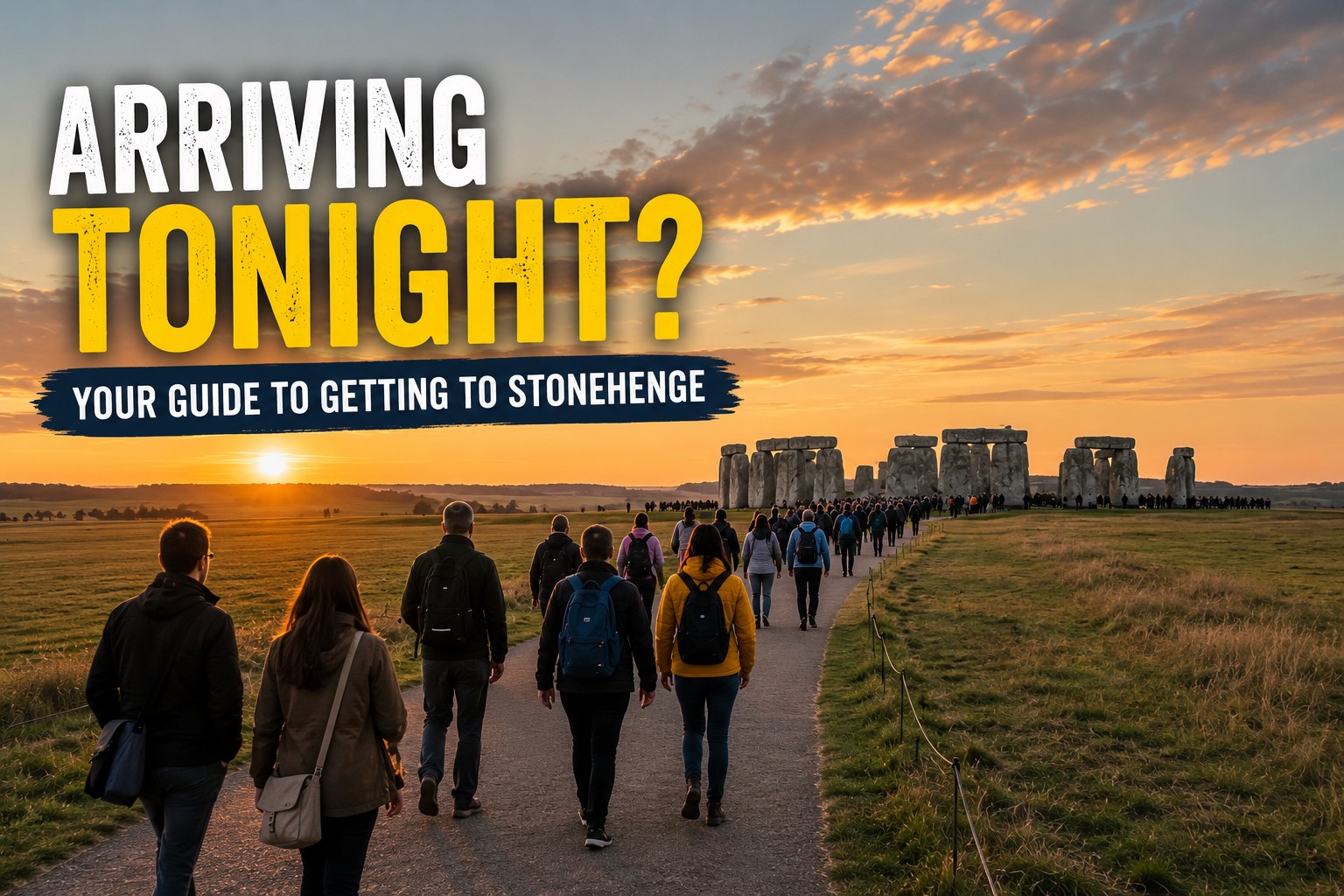
Visitors make their way towards Stonehenge during the evening as Summer Solstice celebrations begin across Salisbury Plain
🌦 Weather Conditions Can Change Quickly
One of the defining characteristics of Stonehenge Summer Solstice is the open landscape.
Unlike city-based events, there is very little protection from changing weather conditions. Wind, rain and overnight temperature shifts can all feel more noticeable on Salisbury Plain than visitors might expect.
A forecast that appears favourable during the afternoon can feel quite different by the early hours of the morning.
Conditions at Stonehenge can also differ from nearby towns because of the site’s exposed location.
Checking the latest Stonehenge weather guide before leaving can help you prepare for changing overnight conditions.
Visitors planning future trips may also wish to consider the Best Time to Visit Stonehenge when comparing seasonal experiences beyond Summer Solstice.
🌌 What To Expect During The Night
Visitors attending Summer Solstice for the first time are often surprised by how the atmosphere changes throughout the evening.
Initially, arrivals are spread across the landscape and the mood feels relaxed.
As more people arrive, conversations begin, photographs are taken and groups gradually gather around the monument.
Later in the evening, anticipation slowly builds.
Unlike many large events, there is generally a strong sense of shared purpose. People from different backgrounds, countries and age groups come together for a common experience.
Throughout the night, the mood evolves from celebration and curiosity towards quiet anticipation.
For many first-time attendees, the hours immediately before sunrise become the most memorable part of the entire event.
By dawn, thousands of people will be focused on the eastern horizon, waiting for the moment the first sunlight appears above the landscape.
For many visitors, this gradual build-up becomes every bit as memorable as the sunrise itself.
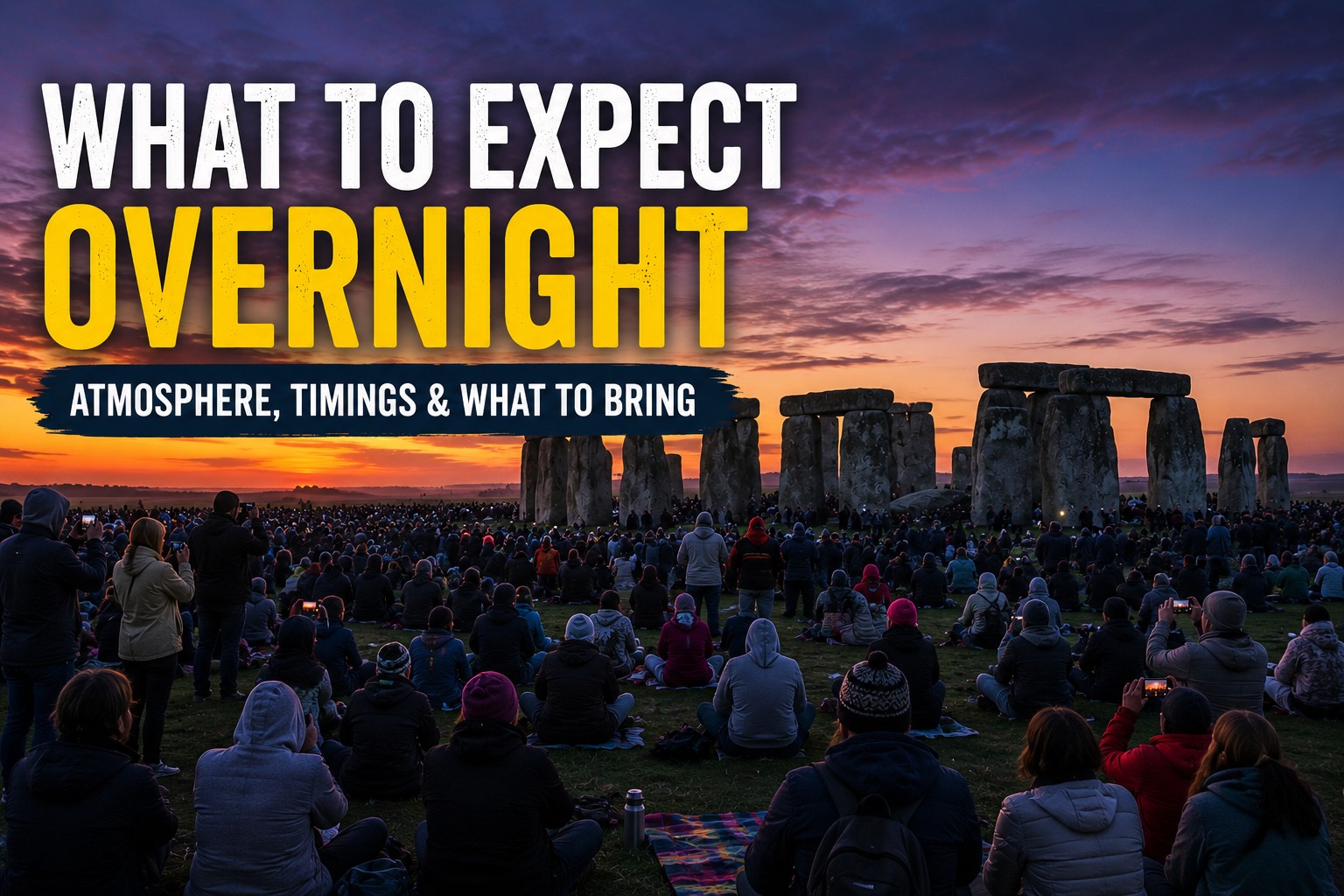
Visitors gather around Stonehenge during the evening and overnight hours as anticipation builds ahead of Summer Solstice sunrise
📸 Photography Tips For Tonight
Stonehenge Summer Solstice provides some of the most distinctive photography opportunities available anywhere in Britain.
At the same time, low light, large crowds and rapidly changing conditions can make photography more challenging than many visitors expect.
A little preparation can make a significant difference.
Capture The Atmosphere, Not Just The Stones
Many visitors arrive focused entirely on photographing Stonehenge itself.
However, some of the strongest images from Summer Solstice capture the wider experience.
Crowd silhouettes, sunset colours, shared anticipation and reactions to sunrise often tell a more compelling story than the monument alone.
Some of the strongest Summer Solstice photographs focus on people interacting with the landscape rather than the stones themselves.
Sometimes the best photograph of the night is not the monument itself but the experience unfolding around it.
Make The Most Of Sunset
Before darkness arrives, the evening light can create dramatic opportunities for photography.
Warm colours, long shadows and changing skies often produce some of the best images of the entire event.
Prepare For Low-Light Conditions
As darkness falls, camera stability becomes increasingly important.
Reducing unnecessary movement and using night-mode settings can improve image quality significantly.
Visitors using dedicated cameras may wish to bring tripods where permitted.
Think Ahead For Sunrise
Many attendees naturally move towards preferred viewing positions as sunrise approaches.
Arriving at your chosen location early can improve both photography opportunities and overall viewing experience.
Visitors interested in comparing different lighting conditions may find our guide on Stonehenge sunrise vs sunset useful.
For more detailed Stonehenge photography tips, including composition advice and seasonal photography opportunities, see our dedicated guide.
⚠ Common Mistakes First-Time Visitors Make
Every year, some attendees encounter problems that are entirely avoidable.
Learning from previous visitors can help make the experience smoother and more enjoyable.
Arriving Too Late
Perhaps the most common mistake is underestimating travel times.
Road congestion, parking delays and increasing visitor numbers can all slow arrival.
Earlier arrivals generally enjoy a more relaxed start to the evening.
Dressing For Daytime Rather Than Overnight Conditions
Temperatures that feel pleasant during the afternoon can feel very different several hours later.
Layered clothing remains one of the simplest ways to stay comfortable.
Forgetting Food Or Water
Many visitors stay longer than originally planned.
Bringing refreshments can make a noticeable difference during the night.
Expecting A Standard Tourist Visit
Summer Solstice is very different from a normal Stonehenge visit.
Crowds are larger, facilities operate differently and the emphasis shifts from sightseeing towards the shared event experience.
Several of these challenges are much easier to manage when expectations are realistic before arrival.
Readers still deciding whether the experience suits them may find our guide Is Stonehenge Summer Solstice Worth It useful.
Underestimating Walking Distances
The landscape around Stonehenge is larger than many first-time visitors expect.
Comfortable footwear is strongly recommended.
Many of these challenges can be avoided by reading our guide for first-time Summer Solstice visitors before setting off.
🌍 Responsible & Sustainable Solstice Travel
Stonehenge Summer Solstice is one of Britain’s most significant annual heritage events.
Protecting both the monument and its surrounding landscape helps ensure future generations can enjoy the same experience.
Share Transport Where Possible
Car sharing, organised transport and public transport options can reduce congestion and environmental impact.
Reduce Single-Use Waste
Reusable water bottles and food containers can significantly reduce unnecessary waste.
Respect The Landscape
The surrounding landscape forms an important part of the Stonehenge experience.
Taking litter home and leaving areas as you found them helps preserve the site for everyone.
Support Local Communities
Local accommodation providers, cafés, shops and services play an important role during the Solstice period.
Choosing local accommodation, cafés and independent businesses helps spread the economic benefits of the event throughout the surrounding area.
Protect The Monument
Stonehenge has survived for thousands of years.
Respectful behaviour helps ensure it remains protected for future visitors.
Every visitor plays a small part in helping preserve Stonehenge for future generations.
🎯 What If You Miss Summer Solstice?
Missing this year’s event does not mean missing the best of Stonehenge.
In fact, many visitors ultimately discover that quieter experiences available during the rest of the year suit them better.
Not every traveller finds their ideal Stonehenge experience during Summer Solstice itself. Many people return later to experience the monument under completely different conditions, from peaceful winter mornings and small-group tours to exclusive Inner Circle visits and seasonal experiences.
Fortunately, Summer Solstice is only one chapter of the Stonehenge story.
Throughout the year, visitors can choose from a wide variety of experiences that offer different advantages, crowd levels and styles of access.
Standard Stonehenge Tours
Many travellers prefer the flexibility, comfort and convenience of traditional tours.
Visitor centre access, organised transport, guided commentary and lower crowd levels appeal to a broad range of visitors.
Many visitors discover that Stonehenge tours from London provide a more relaxed and flexible way to experience the monument throughout the rest of the year.
Others discover that a standard tour provides a very different experience compared with Solstice attendance.
Inner Circle Access
Visitors seeking a quieter and more exclusive alternative often choose future Inner Circle dates once Solstice season has ended.
In many ways, Inner Circle Access provides the opposite experience to Summer Solstice: fewer people, closer access and a calmer atmosphere.
Both experiences are memorable, but they appeal to very different types of visitor.
Travellers seeking a balance between exclusivity and affordability may also want to consider small-group Stonehenge tours.
Checking the Stonehenge Inner Circle Access Calendar can help identify the next available opportunities once Solstice celebrations have finished.
Popular dates often fill far earlier than many first-time visitors expect.
If you’re considering a future return visit, comparing Summer Solstice or Inner Circle Access can help determine which experience best matches your interests.
❓ Frequently Asked Questions
Can I Still Attend Stonehenge Summer Solstice Tonight?
Depending on current arrangements and attendance levels, it may still be possible to attend. Always check the latest official information before travelling.
What Time Should I Arrive?
Earlier arrival is generally recommended. Allowing extra travel time can help reduce stress and provide greater flexibility if delays occur.
Will Stonehenge Be Busy Tonight?
Yes. Summer Solstice is one of the busiest periods of the year at Stonehenge, with thousands of visitors expected to attend.
What Should I Wear To Stonehenge Summer Solstice?
Layered clothing, comfortable footwear and waterproof outerwear are usually recommended because overnight temperatures and weather conditions can change significantly.
Is Stonehenge Summer Solstice Free To Attend?
Public Summer Solstice access is traditionally free to attend, although transport, parking, accommodation and related travel costs may still apply.
Can I Bring Food And Drinks?
Visitors are generally permitted to bring refreshments, although restrictions can vary. Always check current event guidance before travelling.
What Happens If It Rains?
The event normally continues in wet weather. Waterproof clothing is strongly recommended.
Can I Visit The Visitor Centre During Summer Solstice?
Visitor arrangements may differ from standard opening days, so check current event information before travelling.
Is Summer Solstice Suitable For Children?
Many families attend every year, although parents should be aware of overnight conditions, large crowds and extended periods outdoors.
Are Toilets Available?
Temporary facilities are normally provided during the event.
Can I Leave And Return Later?
Event arrangements can vary. Visitors should follow current guidance regarding re-entry.
Is Parking Available?
Parking arrangements may vary year to year and availability can become limited during peak arrival periods.
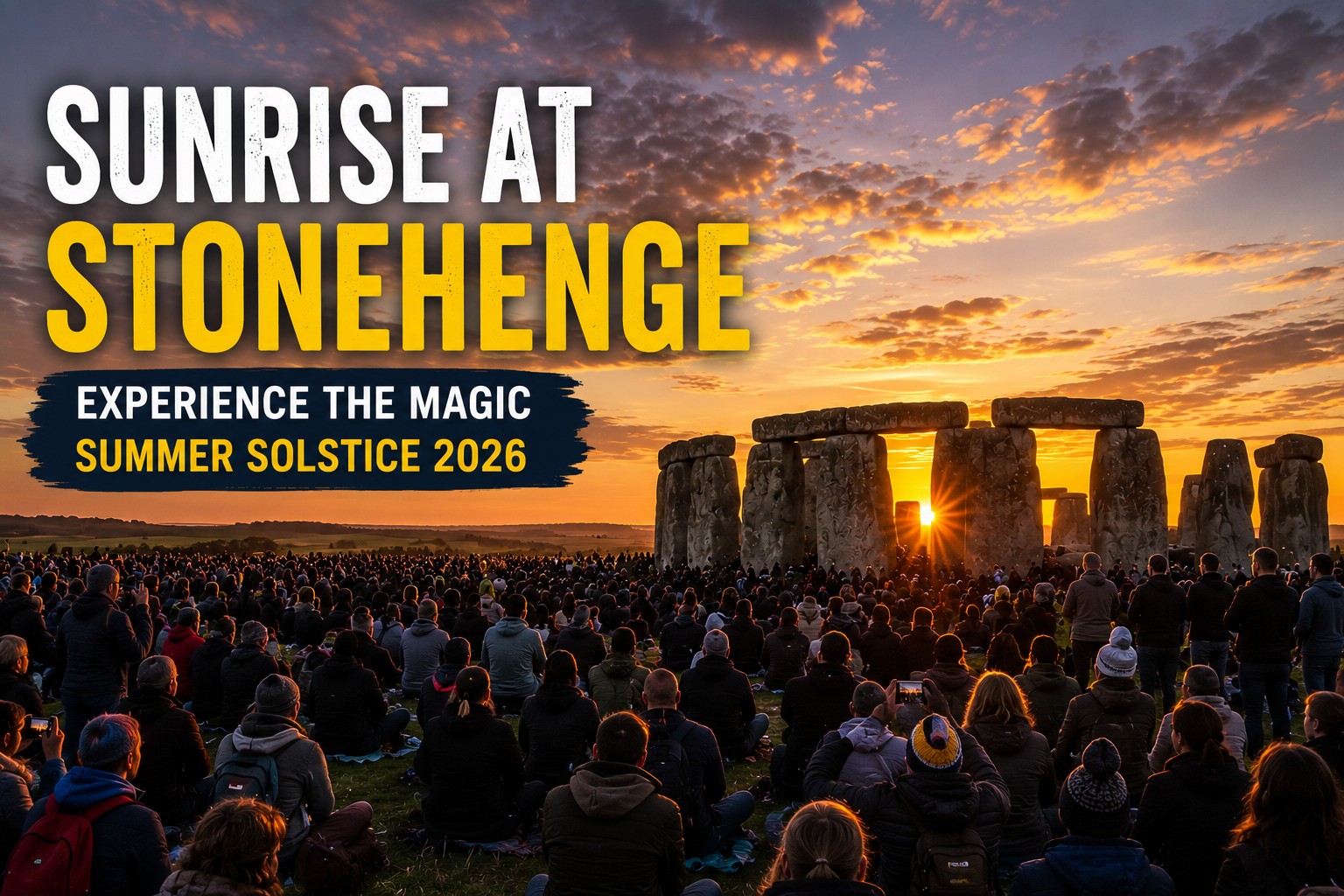
Visitors watch the Summer Solstice sunrise at Stonehenge as the first light of the longest day appears through the ancient stones
🏛️ Why Stonehenge Summer Solstice Remains So Special
Although modern visitors often associate Summer Solstice with photography, travel and sightseeing, the significance of the event reaches much deeper.
For thousands of years, people have gathered around seasonal change, celestial events and important moments in the natural calendar.
Standing beside Stonehenge during the longest day of the year creates a connection between past and present that few places can match.
Some people attend for spiritual reasons.
Others come because of archaeology, history or cultural tradition.
Many simply want to experience one of Britain’s most famous annual events for themselves.
Regardless of motivation, there is something remarkable about sharing sunrise at one of the world’s most recognisable prehistoric monuments.
As darkness gives way to dawn and the first sunlight appears above the horizon, the anticipation built throughout the night reaches its climax.
For countless visitors, that moment becomes the memory they take home.
🌄 Looking Beyond Summer Solstice
For some visitors, tonight will be their first and only Solstice experience.
For others, it becomes the beginning of a much deeper interest in Stonehenge and the wider landscape of Wiltshire.
Future visits might include:
- Standard Stonehenge day tours
- Small-group experiences
- Stonehenge and Bath tours
- Stonehenge and Windsor tours
- Stonehenge and Oxford tours
- Multi-day South West England journeys
- Inner Circle Access experiences
- Sunrise and sunset Stonehenge experiences
- King Arthur and Stonehenge tours
Families planning a future visit may wish to explore dedicated family-friendly tour options and visitor advice.
Visitors often begin by exploring our complete Stonehenge travel planning hub before deciding which experience suits them best.
One of the strengths of Stonehenge is that no single visit tells the whole story.
That ongoing sense of discovery is one reason many travellers conclude that Stonehenge remains one of Britain’s most rewarding heritage attractions.
Each experience offers a different perspective.
The reality is that there is no single best way to visit Stonehenge. The right experience depends entirely on what you hope to get from your visit.
Before planning a future visit, reviewing these Stonehenge visitor essentials can help you get even more from your experience.
📝 Final Thoughts
Stonehenge Summer Solstice 2026 is finally here.
Whether you’re already travelling, preparing to leave later today or making last-minute arrangements, good preparation can make a substantial difference to your overall experience.
Pack carefully.
Travel safely.
Allow extra time.
Respect the monument and those around you.
Most importantly, take a moment to appreciate where you are.
Very few places in the world offer the opportunity to witness an event that connects modern visitors with traditions stretching back thousands of years.
Few visitors remember every detail of their journey to Stonehenge. Most remember how they felt when the sun finally appeared above the horizon.
Long after the crowds have departed and the longest day of the year has passed, the memory of standing beside Stonehenge at Summer Solstice often stays with visitors for many years.
Whether you’re arriving this afternoon, travelling this evening or already making your way towards Salisbury Plain, enjoy the experience, travel safely and make the most of one of Britain’s most extraordinary annual events.
Planning does not need to end with Summer Solstice. Stonehenge offers remarkable experiences throughout the year, from exclusive Inner Circle access to small-group tours and seasonal visits that reveal a completely different side of the monument.