


Where to Watch Stonehenge Summer Solstice 2026: Best Viewing Spots & Travel Tips
31st May 2026
🌅 Where to Watch Stonehenge Summer Solstice 2026: Best Viewing Spots & Travel Tips

Thousands of visitors gather at Stonehenge during the Summer Solstice to experience the famous sunrise and unique atmosphere
🟢 Where Should You Watch the Stonehenge Summer Solstice?
If you’re planning to experience the Stonehenge Summer Solstice 2026, one of the biggest questions is:
👉 Where is the best place to watch it?
The answer depends entirely on the type of experience you want.
Some visitors dream of standing as close to the stones as possible as the sun rises above the horizon. Others prefer more space, easier logistics or a quieter atmosphere away from the largest crowds.
This guide is designed to help you choose the best viewing location based on your priorities, whether that’s photography, convenience, atmosphere, budget or avoiding crowds.
For visitors attending for the first time, understanding the differences between each viewing option can make a significant difference to the overall experience.
Many people spend months planning their Solstice trip, but surprisingly few consider where they actually want to stand when the moment arrives. Choosing the right location can dramatically influence everything from your photographs and comfort level to the overall atmosphere you experience.
If you’re still deciding whether to attend at all, you may also wish to read our guide exploring whether Stonehenge Summer Solstice is worth it.
For wider planning, including access arrangements, atmosphere and event expectations, start with our Stonehenge Summer Solstice 2026 guide.
There are three main ways to watch the Solstice:
• Inside Stonehenge (official access area)
• Outside the monument perimeter
• Nearby landscape viewpoints
Each offers a very different experience.
Many visitors choose organised transport to avoid overnight driving, parking issues and event-day traffic, making Stonehenge Summer Solstice and Equinox tour options one of the simplest ways to attend.
For timings, access details and practical preparation, read our Stonehenge Summer Solstice 2026 planning guide before finalising your visit.
🌅 What Makes Stonehenge Special at the Solstice?
During the Summer Solstice:
🌄 The sun rises in alignment with the Heel Stone
🌇 The sunset on 20 June marks the beginning of the celebration
🎶 Thousands gather for a unique festival-like atmosphere
🌍 Visitors travel from around the world to witness the event
The Summer Solstice has been associated with Stonehenge for thousands of years and remains one of the few occasions when visitors can experience the monument in such an open and communal atmosphere.
People travel from across Britain and around the world to witness the sunrise alignment, creating a remarkable mix of heritage, spirituality, celebration and curiosity.
While many visitors come specifically for the sunrise itself, others are drawn by the atmosphere, the opportunity to walk close to the stones and the chance to experience one of the world’s most famous prehistoric monuments at a truly special moment in the calendar.
The precise alignment between the rising midsummer sun and the monument remains one of the most famous astronomical events associated with any prehistoric site in the world. Whether or not Stonehenge was originally constructed specifically for Solstice ceremonies remains debated by archaeologists, but there is little doubt that the monument was intentionally aligned with important solar events.
For modern visitors, that combination of history, mystery and spectacle is what makes the Solstice such a memorable occasion.
This alignment is what makes Stonehenge one of the most famous Solstice sites in the world.
If you’re deciding whether June is the right month for your visit, our Best Time to Visit Stonehenge in 2026 guide compares the seasons in more detail.
If you want to compare the experience more broadly, our Stonehenge Sunrise vs Sunset guide explains the differences in detail.
While the Solstice is the most famous date in the Stonehenge calendar, many visitors prefer quieter periods, making our guide to the best time to visit Stonehenge in 2026 a useful comparison.
📍 Main Viewing Options — Quick Overview
Choosing where to watch the Solstice is only one part of the experience, and visitors should also consider transport, arrival times and practical planning.
🌅 Which Viewing Option Is Right For You?
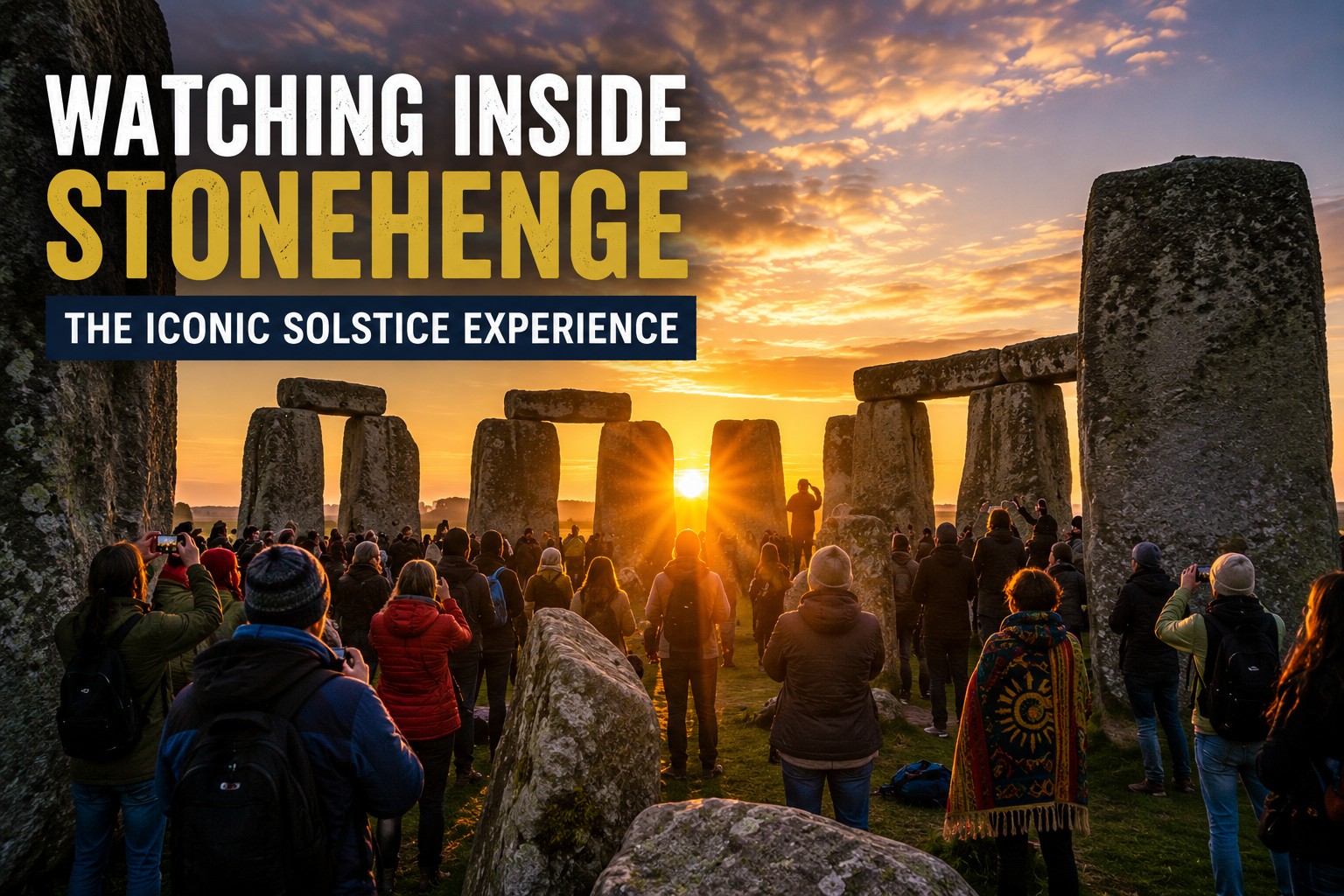
Visitors gather inside Stonehenge to experience the iconic Summer Solstice sunrise alignment
🏛️ Watching Inside Stonehenge (Official Access)
This is the closest and most immersive way to experience the Solstice.
Access is opened for the public.
You can stand close to the stones.
The atmosphere is unmatched.
👉 This is the best overall viewing experience.
Being inside the monument allows you to experience the scale of the stones in a way that is impossible from the standard visitor route. As sunrise approaches, thousands of visitors gather between and around the stones, creating an atmosphere that combines celebration, anticipation and a genuine appreciation for the site’s history.
Many visitors describe the experience as one of the most memorable moments of their UK trip. However, it is important to expect crowds, security checks and a significant amount of walking, particularly during peak attendance periods.
For first-time visitors, the atmosphere alone often justifies the effort involved. Watching the changing colours of the sky as the sun begins to rise behind the Heel Stone is a genuinely memorable experience that few other historic sites can match.
Many visitors spend weeks deciding whether the crowds, overnight travel and early start are worthwhile, so it can be helpful to compare the advantages and drawbacks before committing to the trip.
For visitors seeking a quieter restricted-access experience outside Solstice celebrations, Stonehenge Inner Circle tours provide access much closer to the stones in smaller groups.
Visitors unable to attend the Solstice may wish to compare future restricted-access dates using the Stonehenge Inner Circle access calendar.
Visitors ready to compare availability, departure dates and tour options can also browse the current range of Stonehenge Inner Circle tours available from London.
Some visitors ultimately decide that a quieter restricted-access visit better suits their travel style, making Stonehenge Summer Solstice vs Inner Circle access a useful comparison.
🌄 Best Free Viewing Spots Outside Stonehenge
If you prefer not to enter the main monument area, several surrounding areas still provide a rewarding experience.
Free viewing areas remain popular with visitors who want flexibility or who decide to attend at short notice.
While you won’t enjoy the same proximity as those inside the monument area, many visitors still enjoy excellent views of the celebrations and sunrise.
Many experienced visitors deliberately choose external viewing areas because they offer greater flexibility throughout the event. Rather than remaining in one location, visitors can move around the wider landscape and often find less crowded viewpoints as the evening progresses.
For photographers, external viewpoints can also provide opportunities to capture wider landscape scenes that include both the monument and the surrounding countryside. These perspectives often tell a broader story about the World Heritage Site and the scale of the Solstice gathering itself.
Visitors comparing different attendance options may also wish to read our guide exploring whether Stonehenge Summer Solstice is worth it before deciding how close they want to be to the stones.
The advantage of outside viewing is the additional space available. Some visitors prefer being able to move around more freely, while photographers often appreciate the wider perspectives available from surrounding areas.
Before travelling, it is worth reviewing our Stonehenge Opening Times & Visitor Info Guide for the latest practical visitor information.

Viewing the Stonehenge Summer Solstice from the wider landscape can provide more space, fewer crowds and excellent photography opportunities
🌍 Nearby Landscape Viewing Locations
For a different experience, consider exploring parts of the wider Stonehenge landscape rather than focusing solely on the monument itself.
The wider Stonehenge landscape forms part of a UNESCO World Heritage Site and contains numerous prehistoric monuments beyond Stonehenge itself. Viewing the Solstice from nearby areas can provide a broader appreciation of the landscape and its ancient ceremonial significance.
Some visitors prefer these locations because they offer a calmer atmosphere and more opportunities to appreciate the surrounding countryside. While the sunrise alignment is less dramatic than inside the monument area, the wider views can be particularly rewarding on clear mornings.
These locations may appeal to:
• Visitors seeking fewer crowds
• Photographers looking for wider compositions
• Travellers interested in the broader prehistoric landscape
• Visitors who prefer a more relaxed atmosphere
👉 Ideal if you prioritise space over proximity.
Many visitors are surprised to discover that Stonehenge forms only one part of a much larger prehistoric ceremonial landscape. Ancient earthworks, burial mounds and archaeological features stretch across the surrounding countryside, creating one of the most important prehistoric landscapes in Europe.
Viewing the Solstice from the wider landscape can provide a different perspective on why Stonehenge was originally built where it stands. Rather than focusing solely on the stones themselves, visitors gain a greater appreciation for the broader environment that shaped thousands of years of human activity.
Travellers with additional time may also enjoy exploring wider South West England itineraries that combine Stonehenge with other historic and legendary locations.
Visitors interested in the myths and legends connected to the region may also enjoy exploring Stonehenge and King Arthur sites across South West England.
Many visitors extend their Stonehenge trip into a wider South West England journey, combining prehistoric sites, historic cities and legendary locations connected with King Arthur.
⚖️ Inside vs Outside — Which Is Best?
Many visitors ask the same question:
👉 Should I watch the Solstice from inside Stonehenge or outside?
The honest answer depends on your priorities.
If this is your first visit to Stonehenge and attending the Solstice is a major travel goal, being inside the monument area will usually provide the most memorable experience.
You’ll enjoy the atmosphere, the energy of the crowd and the famous sunrise alignment from close to the stones themselves.
However, outside viewing areas can still be extremely rewarding.
Visitors who prefer flexibility, more personal space or wider photographic opportunities often enjoy the experience just as much from the surrounding landscape.
Families considering the event may also wish to compare whether the Summer Solstice is suitable for children by reading our guide to Stonehenge tours for families.
Quick Decision Guide
Choose Inside Stonehenge if you:
✅ Are visiting for the first time
✅ Want the iconic Solstice experience
✅ Want to stand close to the stones
✅ Don’t mind crowds
Choose Outside Stonehenge if you:
✅ Prefer more space
✅ Want flexibility
✅ Are attending at short notice
✅ Prefer landscape photography
Ultimately, there is no wrong answer.
The best viewing location is the one that matches your expectations, comfort level and travel plans.
🚐 Getting There Matters More Than Where You Stand
For most visitors, the biggest challenge isn’t choosing a viewing spot — it’s actually getting there.
Many first-time visitors focus entirely on where they will watch the Solstice, only to discover that transport and timing are the biggest challenges. Roads around Stonehenge can become extremely busy, parking is limited and arrival times often need to be planned carefully.
Visitors travelling from London should consider transport arrangements well in advance. Whether travelling independently or joining a tour, allowing extra time is essential during major Stonehenge events.
Road closures are common.
Traffic can be heavy.
Travel often involves overnight timing.
Many first-time visitors underestimate how busy the roads become during major Stonehenge events. Even visitors arriving well before sunrise can encounter delays, particularly on routes approaching Amesbury and the visitor centre.
Many visitors choose organised transport to avoid overnight driving, parking issues and event-day traffic, making Stonehenge Summer Solstice and Equinox tour options one of the simplest ways to attend.
Visitors who are still comparing transport options may also wish to read our guide covering how to get to Stonehenge from London by train, car or tour before making a final decision.
If you are travelling from London specifically for the Solstice, it is also worth comparing the various Stonehenge tours from London available throughout the year.
Visitors who have not yet arranged transport may also find our guide to last-minute Stonehenge Summer Solstice options useful.
For many visitors, the best viewing spot is ultimately the one that matches a realistic travel plan.
Visitors travelling from the capital may also find our guide to Stonehenge Summer Solstice tours from London useful when comparing transport options.
Visitors staying in the South West may wish to compare Stonehenge tours from Bath as an alternative starting point.
Visitors who want a detailed breakdown of arrival times, parking considerations and event preparation should also read our Stonehenge Summer Solstice 2026 planning guide before finalising their travel arrangements.
🌅 Planning to Attend the Summer Solstice?
Many visitors choose organised transport to avoid overnight driving, parking issues and event-day traffic.
Compare current Stonehenge Summer Solstice and Equinox tour options and find the travel solution that works best for you.
🌅 Sunset (20 June) vs Sunrise (21 June) — Best Viewing Position
Many visitors automatically focus on the famous sunrise on 21 June, but experienced Stonehenge visitors often point out that the evening gathering on 20 June can be equally rewarding.
🌆 Sunset (20 June)
• Easier to attend
• No overnight travel required
• More relaxed atmosphere
• Easier logistics
• Often less crowded
The evening gathering allows visitors to experience the unique atmosphere of the Solstice without the commitment of staying awake throughout the night. Many people enjoy being able to arrive during daylight hours, explore the wider landscape and settle into a viewing position before the celebrations begin.
Photographers often appreciate the softer evening light, which can create dramatic images of the stones and surrounding countryside. Crowd movement is usually more relaxed, making it easier to walk around, find viewpoints and absorb the atmosphere.
For visitors attending Stonehenge for the first time, sunset can provide a more comfortable introduction to the event while still delivering a memorable Solstice experience.
🌄 Sunrise (21 June)
• The iconic Solstice moment
• Highest demand
• Requires overnight or very early arrival
• Famous Heel Stone alignment
• Most photographed moment
Sunrise remains the main attraction because of the famous alignment between the rising sun and the Heel Stone. This is the moment most visitors travel from around the world to witness and the image most commonly associated with Stonehenge Summer Solstice.
The atmosphere during sunrise is often electric. Thousands of visitors gather in anticipation as daylight gradually appears on the horizon. When conditions are clear, the alignment creates one of Britain’s most memorable annual heritage experiences.
However, sunrise requires considerably more planning. Visitors must account for overnight travel, security arrangements, changing weather conditions and larger crowds. The most popular viewing positions can become busy well before dawn.
While the sunrise receives most of the attention, many experienced visitors enjoy the evening atmosphere before the event just as much. Sunset gatherings are often less intense, making it easier to move around, explore the landscape and appreciate the unique setting of the World Heritage Site.
For visitors seeking the classic Stonehenge Solstice experience, sunrise remains the ultimate choice. For those prioritising comfort, flexibility and a more relaxed atmosphere, sunset can be an excellent alternative.
Visitors comparing different ways to experience the event may also enjoy our guide to Stonehenge Summer Solstice sunrise and sunset viewing, which explores the advantages of both experiences.
While the sunrise receives most of the attention, many experienced visitors enjoy the evening atmosphere before the event just as much. Sunset gatherings are often less intense, making it easier to move around and absorb the atmosphere.
Sunrise remains the iconic moment because of the famous alignment with the Heel Stone, but it requires significantly more planning and commitment from visitors.
Visitors planning to attend for the first time may also wish to read our complete Stonehenge Summer Solstice 2026 guide, which explains the event atmosphere, access arrangements and what to expect throughout the celebration.
The Solstice also offers a unique opportunity to compare sunrise and sunset experiences at Stonehenge, with each creating a very different atmosphere and photographic opportunity.
For a broader comparison of visiting times throughout the day, see our Best Time of Day to Visit Stonehenge guide.
👉 Best Tip: Position yourself facing the Heel Stone for the best sunrise alignment.
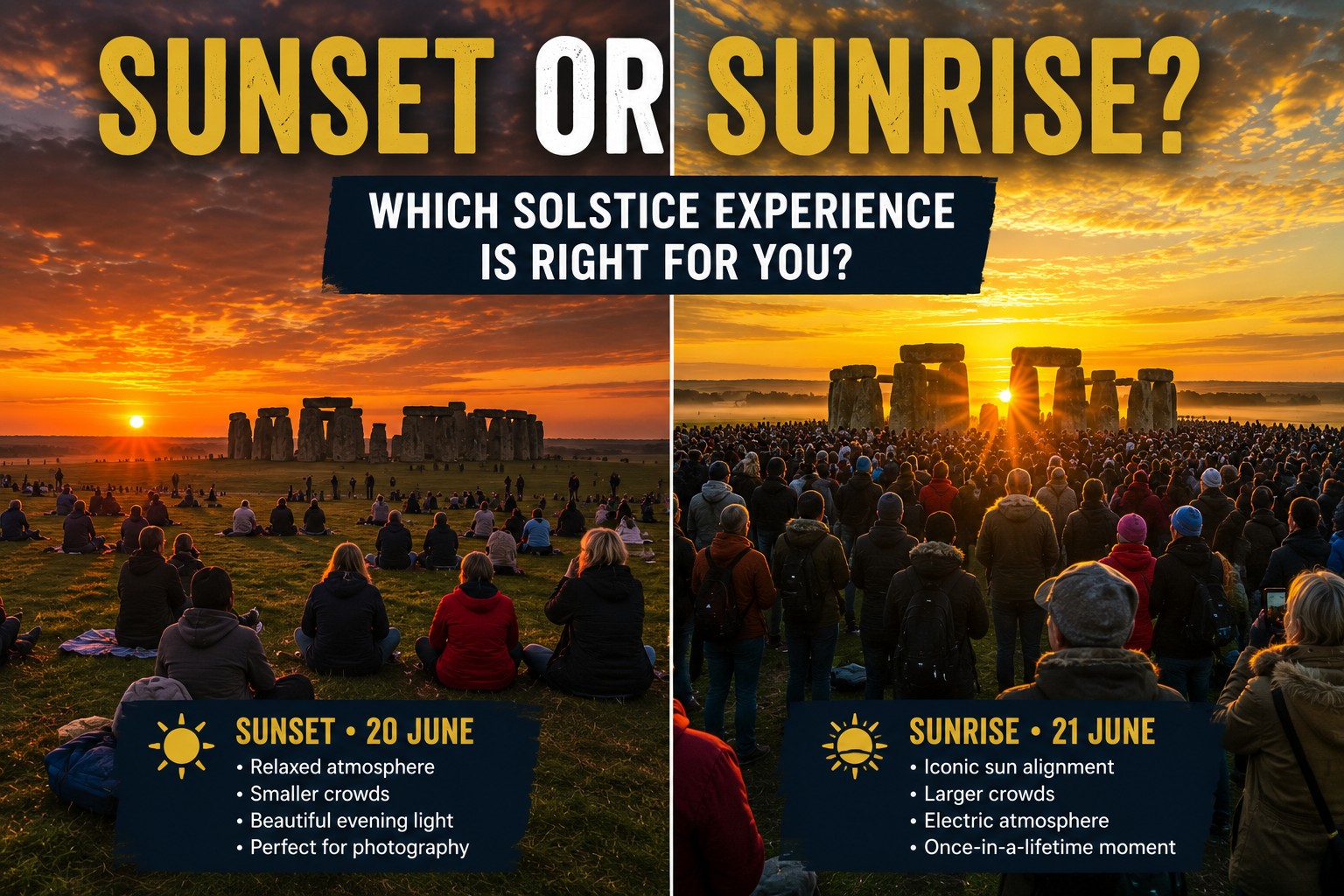
Sunset and sunrise offer very different Stonehenge Summer Solstice experiences, from relaxed evening gatherings to the iconic sunrise alignment
🌦️ How Weather Affects Your Viewing Experience
Weather can make a major difference to the Solstice experience.
Weather conditions often play a bigger role in the Solstice experience than visitors expect, particularly during overnight waiting periods.
Clear skies improve sunrise visibility, mist can create dramatic photographs and atmospheric conditions, while rain or strong winds can make overnight waiting considerably more challenging.
Although the Solstice takes place during June, temperatures in the early hours can still feel surprisingly cool, particularly when standing outdoors for several hours before sunrise.
Visitors travelling from London or planning to remain on site for an extended period should think carefully about clothing, footwear and waterproof layers.
Checking the Stonehenge Weather Guide before travelling can help you prepare for changing conditions and pack appropriately.
Morning mist can sometimes create some of the most dramatic Solstice photographs, while low cloud and changing light conditions often produce atmospheric scenes that are every bit as memorable as a completely clear sunrise.
Visitors should prepare for all conditions and remember that comfort often has a major influence on how enjoyable the overall experience feels.
📸 Best Places for Solstice Photography
For photographers, the best viewing position depends on the type of image you want to capture.
Some visitors focus on the classic sunrise alignment through the stones, while others prefer wider landscape images that show the surrounding countryside and the scale of the gathering.
The area facing the Heel Stone is traditionally the most iconic position for sunrise photography.
Photographers should remember that the most famous images are often not necessarily the most memorable. Wider compositions that include the crowd, landscape and changing colours of the dawn sky can sometimes capture the atmosphere of the event more effectively than close-up images of the stones alone.
Weather conditions also have a major influence on photography opportunities. Morning mist, low cloud and dramatic skies can produce some of the most striking images of Stonehenge, even when the sunrise itself is partially obscured.
Visitors interested in improving their photography throughout the year may also find our guide to Stonehenge photography tours and experiences useful.
Arriving early is often the single biggest advantage a photographer can give themselves. Securing a preferred position before the largest crowds arrive can dramatically improve composition options when sunrise approaches.
Visitors hoping to capture dramatic sunrise images may also wish to compare specialist Stonehenge photography tours and experiences designed around the best lighting conditions.
🌿 Responsible Solstice Travel
The Summer Solstice is one of Stonehenge’s most important annual events, but it also places considerable pressure on the surrounding landscape.
Travel responsibly by following official access guidance, taking litter away with you, staying on permitted routes and respecting both the monument and the surrounding countryside.
Choosing shared transport, organised tours and responsible travel practices can help reduce pressure on the local road network and minimise environmental impact during one of Stonehenge’s busiest annual events.
Visitors choosing organised transport can also reduce the number of individual vehicle journeys made during one of Stonehenge’s busiest annual events, supporting more sustainable travel practices.
The wider Stonehenge landscape forms part of a protected UNESCO World Heritage Site. While most visitors naturally focus on the stones themselves, the surrounding prehistoric landscape contains burial mounds, ancient earthworks and archaeological features that are equally important to preserve.
Responsible visitor behaviour helps protect both the monument and its wider landscape for future generations.
Simple actions such as using designated pathways, avoiding unnecessary vehicle journeys and respecting site regulations can collectively make a significant difference during major events like the Solstice.
Stonehenge has survived for thousands of years. Responsible travel helps ensure it remains protected for thousands more.
🎟️ Should You Book a Tour for the Solstice?
For many visitors — especially those travelling from London — a tour is the simplest solution.
A guided tour helps with:
🚌 Transport and timing
⏱️ Arriving at the right moment
🚗 Avoiding road and parking issues
📍 Local logistical knowledge
😌 Reducing travel stress
👉 This removes the biggest uncertainties.
A tour will not change official access arrangements, but it can significantly reduce stress. Visitors do not need to worry about navigation, parking, road closures or return travel, allowing them to focus entirely on the experience itself.
For international visitors, first-time UK travellers and anyone unfamiliar with the area, organised transport often provides excellent value compared with arranging everything independently.
Many visitors find that having transport handled for them allows them to enjoy the event much more fully, particularly during the early morning hours when fatigue can become a factor.
If you’re still comparing options, our Stonehenge Tours from London: Complete Guide (2026) explains the main tour types available.
If you’re booking close to the event, our Last-Minute Stonehenge Summer Solstice 2026 guide explains your remaining options.
Visitors looking for the simplest way to attend can compare current Stonehenge Summer Solstice and Equinox tour options, including organised transport designed around the event.
🌅 Attending Stonehenge Summer Solstice 2026?
The biggest challenge for most visitors isn’t finding a viewing spot — it’s managing transport, parking and event-day logistics.
Many visitors choose organised transport to avoid overnight driving, parking issues and event-day traffic, making Stonehenge Summer Solstice and Equinox tour options one of the simplest ways to attend.
🌄 Compare Stonehenge Solstice Tours & Travel Options
Compare organised transport, event-day departures and Solstice travel options.
🎒 Tips for Choosing the Best Viewing Spot
Choosing the right viewing location is only part of a successful Solstice experience. Preparation can have a major impact on comfort, visibility and overall enjoyment.
🕒 Arrive early
🎒 Bring warm clothing, water and snacks
📱 Charge your phone in advance
🚶 Expect crowd movement throughout the event
📷 Consider your photography position before sunrise
🚗 Plan your departure and return journey before arrival
🌦️ Check weather conditions before travelling
🧥 Dress for changing temperatures
Preparation often makes the difference between a stressful visit and a memorable experience.
Visitors attending for the first time frequently underestimate how much walking may be involved or how cool conditions can feel while waiting for sunrise. Being properly prepared can significantly improve the overall experience.
Checking the Stonehenge Weather Guide before travelling can help you prepare for changing conditions and choose appropriate clothing.
❓ FAQ — Where to Watch Stonehenge Summer Solstice
Can you get close to the stones during the Summer Solstice?
Yes. During the Summer Solstice, visitors are permitted much closer access to the stones than during normal opening arrangements.
Is it free to watch the Stonehenge Summer Solstice?
Yes. Access to the Solstice event itself is free, although travel, parking and organised tours may involve additional costs.
Where is the best place to watch the sunrise?
For most visitors, the official monument area offers the best alignment and atmosphere. However, nearby viewpoints can still provide rewarding views and often involve fewer crowds.
Are there quieter places to watch?
Yes. Viewing from parts of the wider Stonehenge landscape can offer a calmer experience while still allowing visitors to enjoy the event atmosphere.
Do tours provide better access?
Tours do not alter official access arrangements, but they can make transport, timing and logistics significantly easier.
Is it better to visit Stonehenge Solstice with a tour?
For many visitors, yes. Organised tours remove many of the transport challenges associated with attending a major event in a rural location.
What should I bring to the Solstice?
Comfortable clothing, waterproof layers, food, water, a fully charged phone and appropriate footwear are all recommended.
What happens if the weather is poor?
The event still takes place. However, cloud cover or rain can affect visibility and comfort, making preparation especially important.
Is sunrise or sunset better?
Most visitors choose sunrise because of the famous alignment with the Heel Stone. However, many experienced visitors also enjoy the more relaxed atmosphere of the previous evening’s sunset gathering.
How early should I arrive?
Earlier than you think. Large crowds, traffic delays and security arrangements mean arriving well in advance is usually advisable.
Before travelling, it is also worth checking the latest Stonehenge opening times and visitor information to help plan your day.
🌅 Continue Planning Your Stonehenge Solstice Visit
If you’re still planning your Summer Solstice trip, these related guides will help you understand the event, compare travel options, prepare for the weather and decide whether the Solstice experience is right for you.
| 🌄 Main Solstice Guide
How to attend, what to expect and practical travel advice for Stonehenge Summer Solstice 2026. |
| 🗺️ Planning & Travel Guide
Plan transport, arrival times, packing, overnight timing and practical event preparation. |
| ⚖️ Is Solstice Worth It?
Compare the atmosphere, crowds, overnight travel and overall value before deciding. |
| ⏰ Last-Minute Options
Check tickets, tours, transport options and what may still be possible close to the event. |
| 🌦️ Weather & What to Wear
Prepare for early-morning temperatures, rain, wind and changing Solstice conditions. |
| 🏛️ Inner Circle Experiences
Compare premium restricted-access visits if you want a quieter way to get close to the stones. |
💡 Suggested reading order: Start with the main Solstice guide, then use the planning guide for travel details, the worth-it guide for decision-making and the weather guide before you pack.
For the simplest way to attend, compare Stonehenge Summer Solstice and Equinox tour options designed around these special event dates.
🔚 Final Advice — Choosing the Right Solstice Experience
There is no single perfect viewing location.
The best choice depends on your priorities, travel plans and expectations.
👉 Want the most iconic experience? Aim for the official monument area.
👉 Want flexibility and lower costs? Outside viewing locations remain an excellent option.
👉 Prefer a quieter atmosphere? Explore wider landscape viewpoints.
👉 Want the simplest travel experience? Consider organised transport from London.
Ultimately, successful Solstice visits are usually determined less by where you stand and more by how well you prepare.
Planning transport, understanding weather conditions and arriving with realistic expectations will do more to improve your experience than any single viewing location.
Visitors looking for the simplest way to attend should consider organised tours, which remove many of the logistical challenges associated with one of Britain’s most popular annual events.
You can also compare Stonehenge Inner Circle tours if you would like a premium restricted-access experience outside the Summer Solstice period.
For visitors unable to attend the Solstice, the Stonehenge Inner Circle access calendar is also a useful way to compare upcoming restricted-access dates.
Visitors looking for organised transport can compare current Stonehenge Summer Solstice and Equinox tour options designed around these special event dates.
🌅 Ready to Experience Stonehenge Summer Solstice?
Whether you’re planning months ahead or making last-minute arrangements, organised transport can make attending one of Britain’s most iconic annual events significantly easier.
Compare Stonehenge Summer Solstice and Equinox tour options, travel arrangements and event-day departures to find the right experience for your visit.
🌄 Plan Your Stonehenge Solstice Visit
Compare organised transport, Solstice departures and event-day travel options.