


Stonehenge Weather Guide: What Weather Can You Expect on Your Visit? (2026)
30th May 2026
🌦️ Stonehenge Weather Guide: What Weather Can You Expect on Your Visit? (2026)

From misty winter mornings to warm summer evenings, Stonehenge offers a different experience in every season
Stonehenge stands on the exposed landscape of Salisbury Plain in Wiltshire, making weather an important part of the visitor experience. Unlike city attractions, museums or indoor landmarks, a visit to Stonehenge places you directly within one of Britain’s most iconic open-air environments.
Fortunately, weather is rarely a reason not to visit. In fact, many visitors discover that dramatic skies, shifting clouds, misty mornings and changing light conditions can make Stonehenge feel even more atmospheric and memorable.
Whether you are planning a summer day trip, a winter visit, a special Stonehenge Inner Circle experience or simply wondering what to pack, this guide explains exactly what weather you can expect throughout the year and how to prepare for your visit.
Many visitors begin by reading our complete guide to visiting Stonehenge before deciding which season and weather conditions suit them best.
For the easiest planning option, many visitors compare Stonehenge tours from London before choosing the best season, time of day and route.
🌦️ Why Weather Matters at Stonehenge
Stonehenge sits on the vast open landscape of Salisbury Plain. Unlike many historic attractions, there are very few trees, buildings or natural barriers to shield visitors from wind, rain or sunshine.
This exposed setting is one reason the monument feels so powerful. Visitors are able to experience the same skies, changing seasons and landscape views that have surrounded the stones for thousands of years.
Weather conditions can often feel different from nearby locations such as Salisbury, Bath or London. A warm morning in central London may feel noticeably cooler and windier once you arrive at Stonehenge.
Weather can also influence the time of day you choose to visit, particularly if you are hoping for sunrise, sunset or photography opportunities.
Many visitors are surprised to discover that cloudy skies, low mist and dramatic weather often create a more memorable atmosphere than a perfectly clear blue sky.
First-time visitors often underestimate how exposed the landscape can feel compared with nearby towns and cities, which is why a little preparation can make a significant difference.
☀️ What Is the Weather Usually Like at Stonehenge?
Stonehenge experiences a typical southern England climate, with relatively mild temperatures throughout the year compared with many parts of Europe and North America.
While temperatures rarely become extreme, conditions can change surprisingly quickly. Visitors may experience sunshine, cloud, wind and light showers during the same day, particularly in spring and autumn.
One of the biggest surprises for first-time visitors is not the temperature itself but the wind. Even during summer, a breeze across Salisbury Plain can make conditions feel cooler than expected.
Visitors travelling from London often find layered clothing works best because conditions can change throughout the day.
📅 Stonehenge Weather Month by Month
Every month offers a slightly different experience at Stonehenge. Visitor numbers, daylight hours, photography opportunities and weather conditions all influence what visitors can expect.
January
January is one of the quietest months to visit Stonehenge.
Temperatures are often between 1°C and 8°C, with occasional frost and cold winds sweeping across Salisbury Plain. While conditions can feel chilly, visitors are rewarded with fewer crowds and a peaceful atmosphere around the monument.
Frost-covered grass, crisp winter mornings and low-angle sunlight can create some of the most dramatic photographs of the year.
The quieter visitor numbers also make January appealing for travellers who prefer a more relaxed experience away from peak-season crowds.
February
February remains cold but daylight hours begin increasing noticeably.
Visitors often enjoy a balance between quieter conditions and improving weather. While rain remains possible, many days are bright and clear, particularly during high-pressure winter periods.
The surrounding landscape often feels open and expansive during this time of year, helping visitors appreciate Stonehenge’s setting within the wider Salisbury Plain environment.
March
March marks the beginning of spring and can be one of the most unpredictable months weather-wise.
Visitors may experience crisp winter mornings followed by surprisingly mild afternoons. Early flowers begin appearing across the countryside and daylight hours increase significantly.
March is often a good compromise between quieter winter conditions and the busier spring and summer visitor season.
April
April is famous for its rapidly changing weather.
A single day may include sunshine, cloud, light rain showers and bright skies. For this reason, layered clothing is particularly useful during April visits.
The surrounding countryside becomes increasingly green and the longer daylight hours make Stonehenge feel very different from the winter months.
Visitors interested in photography often discover that changing weather conditions can produce more dramatic images than clear blue skies.
May
May is widely regarded as one of the best months to visit Stonehenge.
Temperatures become more comfortable, flowers and greenery appear across the landscape and daylight extends well into the evening. Conditions are often pleasant without the peak visitor numbers associated with July and August.
Many repeat visitors consider May one of the best months to visit Stonehenge thanks to the combination of weather, daylight and manageable crowd levels.
May is also a popular period for visitors considering longer South West England itineraries, as weather conditions are generally favourable for exploring multiple destinations.
June
June brings some of the longest daylight hours of the year and is one of Stonehenge’s busiest months.
Warm temperatures, extended evenings and the famous Summer Solstice attract visitors from around the world. Sunrise and sunset opportunities are at their best during this period.
Visitors planning to attend the famous midsummer celebrations should understand that weather conditions can vary significantly even during June.
June is also one of the best times to compare sunrise and sunset experiences, as the longer days provide more flexibility for planning your visit.
July
July is usually the warmest month at Stonehenge and one of the busiest periods of the year.
Temperatures often reach the low to mid-20s Celsius, although occasional hotter spells can occur. Long daylight hours provide plenty of flexibility for visitors, particularly those travelling from London on day tours.
Because July falls within the peak holiday season, advance booking is often recommended for tours and popular travel dates.
Warm weather can make a visit particularly enjoyable, but visitors should still bring water, sun protection and a light waterproof layer in case conditions change.
August
August offers weather conditions similar to July and remains one of the most popular months for visiting Stonehenge.
Families travelling during school holidays often find August combines reliable weather with the opportunity to explore additional attractions across southern England.
Morning and late-afternoon visits can be especially pleasant, helping visitors avoid the warmest part of the day while enjoying softer lighting around the stones.
Visitors planning a family trip often combine Stonehenge with other nearby attractions and destinations.
September
September is often considered one of the best months to visit Stonehenge.
Temperatures remain comfortable, daylight hours are still generous and visitor numbers begin falling after the peak summer season. Many experienced travellers view September as the perfect balance between good weather and manageable crowds.
The lower sun angle also creates beautiful photography conditions, particularly during the morning and late afternoon.
Visitors looking for excellent weather without peak summer crowds often choose September for their visit.
October
October introduces cooler temperatures and increasingly dramatic skies.
Autumn weather often creates spectacular cloud formations, colourful countryside views and changing light conditions around the monument.
Many photographers actively seek out October conditions because they can create some of the most atmospheric images of Stonehenge.
November
November is quieter and cooler but remains an excellent month for visitors who prefer fewer crowds.
The weather becomes more unpredictable, but visitor numbers are generally lower than during spring and summer.
For many travellers, this quieter atmosphere allows for a more personal connection with the site and its history.
December
December brings shorter days but also a unique winter atmosphere.
Frosty mornings, low winter sunlight and occasional mist can create remarkably memorable conditions around the monument.
Although temperatures are cooler, many visitors enjoy seeing Stonehenge during winter because it feels more peaceful and less crowded than during the busiest months of the year.
🌤️ How Quickly Can the Weather Change at Stonehenge?
One of the most important things visitors should understand is that weather conditions at Stonehenge can change surprisingly quickly.
Because the monument sits on open Salisbury Plain, there are very few natural barriers to slow moving weather systems. Sunshine can quickly give way to cloud cover, while a calm morning may become noticeably windier later in the day.
For this reason, experienced visitors often dress for multiple weather scenarios rather than relying entirely on the forecast.
Visitors planning longer day trips often combine weather preparation with choosing the right itinerary and travel option.
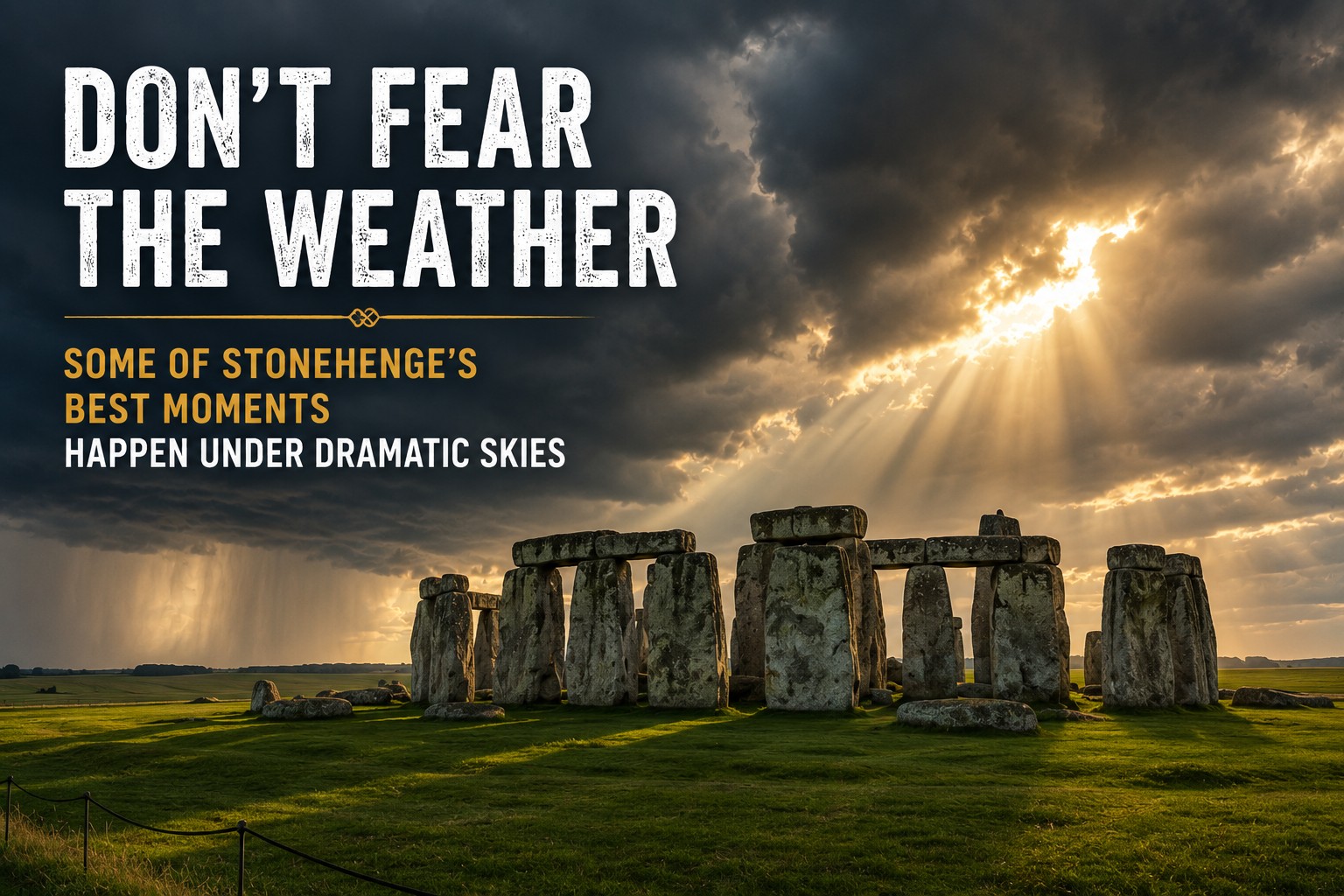
Changing weather often creates some of the most memorable and atmospheric views of Stonehenge
🌧️ Does It Rain Much at Stonehenge?
Rain is one of the most common concerns visitors have before travelling to Stonehenge.
The reality is that rain can occur at any time of year, but prolonged heavy rainfall is relatively uncommon. More often, visitors experience short showers mixed with brighter periods.
In many cases, changing weather actually enhances the atmosphere of the monument. Moving clouds, dramatic skies and occasional rainbows often create a more memorable experience than a completely clear day.
Many photographers actually prefer mixed weather conditions because dramatic clouds, changing light and occasional rain showers can create some of the most memorable images of the monument.
💨 Is Stonehenge Windy?
Wind is often more noticeable than rain at Stonehenge.
The exposed location means even relatively light breezes can feel stronger than expected, particularly during spring, autumn and winter.
Wind can also influence whether visitors prefer morning, afternoon or sunset experiences.
The good news is that appropriate clothing easily solves this issue. Layers, waterproof jackets and comfortable footwear are usually all that is required.
🌦️ Should You Cancel Your Stonehenge Visit Because of Bad Weather?
Many first-time visitors worry that rain or cloudy conditions will ruin their Stonehenge experience. In reality, some of the monument’s most memorable moments occur during mixed weather conditions.
Mist, dramatic clouds, changing light and even occasional rain showers can create a far more atmospheric experience than a completely clear day.
Unless severe weather warnings are in place, most visitors find there is little reason to cancel a Stonehenge visit because of the forecast.
Many experienced travellers discover that changing conditions create some of the most memorable photographs and experiences at the monument.
Visitors uncertain whether a trip remains worthwhile in mixed conditions may also find our Is Stonehenge Worth Visiting? (2026 Honest Guide) helpful.
| Time of Day | Typical Weather Conditions | Best For |
|---|---|---|
| 🌅 Sunrise | Mist, frost, cooler temperatures and soft golden light are common, particularly in spring, autumn and winter. | 📸 Photography 🔵 Inner Circle Visits 🌤️ Atmospheric Experiences |
| ☀️ Morning | Generally cooler, quieter and often less windy than later in the day. | 🏛️ General Sightseeing 👣 First-Time Visitors 📷 Comfortable Exploration |
| 🌤️ Afternoon | Usually the warmest part of the day, especially during summer months. | 👨👩👧👦 Families 🚍 Day Tours from London 🌞 Summer Visits |
| 🌇 Sunset | Golden-hour light, colourful skies and dramatic cloud formations often create memorable conditions. | 📸 Photography ❤️ Couples 🔵 Inner Circle Sunset Visits |
Quick Tip: Many experienced visitors consider sunrise and sunset the most atmospheric times to experience Stonehenge, particularly when weather conditions include mist, dramatic clouds or changing light.
🌤️ Weather conditions can vary significantly throughout the day at Stonehenge. Choosing the right visit time can improve photography opportunities, visitor comfort and the overall atmosphere of your experience.

Misty mornings, frost and golden sunrise light often create some of the most spectacular photography conditions at Stonehenge.
📸 Best Weather Conditions for Stonehenge Photography
Many visitors assume bright sunshine creates the best photographs. Surprisingly, this is often not the case.
Some of the most dramatic images occur during:
• Misty mornings
• Broken cloud conditions
• Sunrise and sunset
• Winter frost
• Post-rain clear skies
• Autumn cloud formations
Visitors interested in photography often discover that cloudy conditions can produce more dramatic images than clear blue skies.
Couples planning a romantic visit often discover that sunrise, sunset, mist and changing seasonal conditions make Stonehenge even more memorable, as explored in our Best Stonehenge Tours for Couples: Romantic Experiences & Day Trips (2026 Guide).
Changing weather conditions can create extraordinary images and our latest photography guide explores the best July dates for capturing Stonehenge.
👕 What Should You Wear for a Stonehenge Visit?
The best approach is to dress in layers.
Spring
• Waterproof jacket
• Light layers
• Comfortable walking shoes
Summer
• Sunglasses
• Water bottle
• Sun protection
• Light waterproof layer
Autumn
• Waterproof footwear
• Warmer layers
• Windproof jacket
Winter
• Warm coat
• Gloves
• Hat
• Waterproof outer layer
The weather is not something to fear at Stonehenge — it is simply something to plan for.

Dressing in layers and preparing for changing conditions helps visitors enjoy Stonehenge comfortably throughout the year
🌱 Weather, Conservation and Responsible Travel
Stonehenge is not simply a visitor attraction. It is one of the world’s most important prehistoric monuments and a UNESCO World Heritage Site.
Visitor access, conservation work and responsible tourism all help protect both the stones and the surrounding landscape for future generations.
Many visitors are also becoming interested in more sustainable ways to explore Britain’s historic and cultural landmarks.
Choosing organised transport, respecting site rules and travelling responsibly helps ensure future generations can enjoy Stonehenge in every season.
🚐 Tours vs Driving Yourself in Poor Weather
Weather can influence how comfortable and enjoyable your journey becomes.
Choosing a shared coach tour can help reduce the number of individual vehicles travelling to Stonehenge and supports a more sustainable approach to visiting one of Britain’s most important heritage sites.
🌦️ Plan Your Perfect Stonehenge VisitWhether you’re visiting in sunshine, mist, rain or frost, an organised Stonehenge tour takes the stress out of planning and helps you make the most of your day.
Compare Stonehenge day tours, Bath combinations, Windsor tours, Inner Circle experiences and more. |
Parents planning family visits may also find our Stonehenge Tours for Families (2026 Guide) useful when comparing different tour styles and itineraries.
🔵 Weather Considerations for Stonehenge Inner Circle Visits
Weather becomes even more important during Stonehenge Inner Circle visits because many access sessions take place around sunrise or sunset when temperatures can feel significantly cooler.
Early morning sessions often require warmer clothing than visitors expect, even during summer.
Stonehenge Inner Circle visits are particularly affected by weather because visitors spend longer focusing on the monument itself rather than moving through the site.
Visitors planning premium access should also compare available Stonehenge Inner Circle tours and check future access dates before booking.
Because many access sessions take place at sunrise or sunset, weather conditions often become part of the experience itself. Morning mist, low sunlight and dramatic evening skies can create some of the most spectacular conditions available to Stonehenge visitors.
Visitors comparing premium experiences may also wish to read our Best Stonehenge Inner Circle Tours from London (2026 Guide) before booking.
Guests planning future access dates can also use the Stonehenge Inner Circle Access Calendar (2026–2027) to compare upcoming sunrise and sunset sessions throughout the year.
Visitors ready to move from planning to booking can also browse the full range of Stonehenge Inner Circle Tours available from London, including exclusive sunrise and sunset access departures throughout the year.
❓ Frequently Asked Questions
Does Stonehenge close when it rains?
No. Stonehenge remains open during normal rain and typical UK weather conditions.
Is Stonehenge windy?
It can be. The exposed Salisbury Plain location often makes wind more noticeable than visitors expect.
What is the best month to visit Stonehenge?
May, June and September are often regarded as the best balance between weather, daylight and visitor numbers.
Visitors should also remember that daylight hours and seasonal opening times can influence the experience.
Is Stonehenge worth visiting in winter?
Yes. Winter offers quieter conditions, dramatic skies and a unique atmosphere.
What should I wear to Stonehenge?
Layers, comfortable shoes and a waterproof outer layer are recommended throughout the year.
What weather should I expect during Stonehenge Inner Circle access?
Conditions vary throughout the year, but sunrise and sunset sessions are usually cooler than daytime visits.
🏛️ Final Thoughts
Stonehenge is one of the few attractions where changing weather often enhances rather than detracts from the experience.
Mist can add mystery. Rain can create atmosphere. Frost can transform the landscape. Dramatic skies can make the monument feel even more powerful.
Rather than worrying about the forecast, visitors should focus on preparing appropriately and embracing the changing conditions that have shaped this extraordinary landscape for thousands of years.
If you are still deciding whether Stonehenge deserves a place on your itinerary, our guide to whether Stonehenge is worth visiting explains how timing, transport and tour choice can affect the overall experience.
🏛️ Ready to Visit Stonehenge?Whether you’re planning a summer visit, hoping to capture dramatic photography, comparing tour options or simply looking for the best time to go, choosing the right Stonehenge experience can make all the difference.
Explore Stonehenge day tours, Bath and Windsor combinations, exclusive Inner Circle experiences and more to find the perfect trip for your interests and travel style. |