


When Is the Best Time to Visit Europe? A Month-by-Month Travel Guide
31st October 2026
🌍 When Is the Best Time to Visit Europe? A Month-by-Month Travel Guide
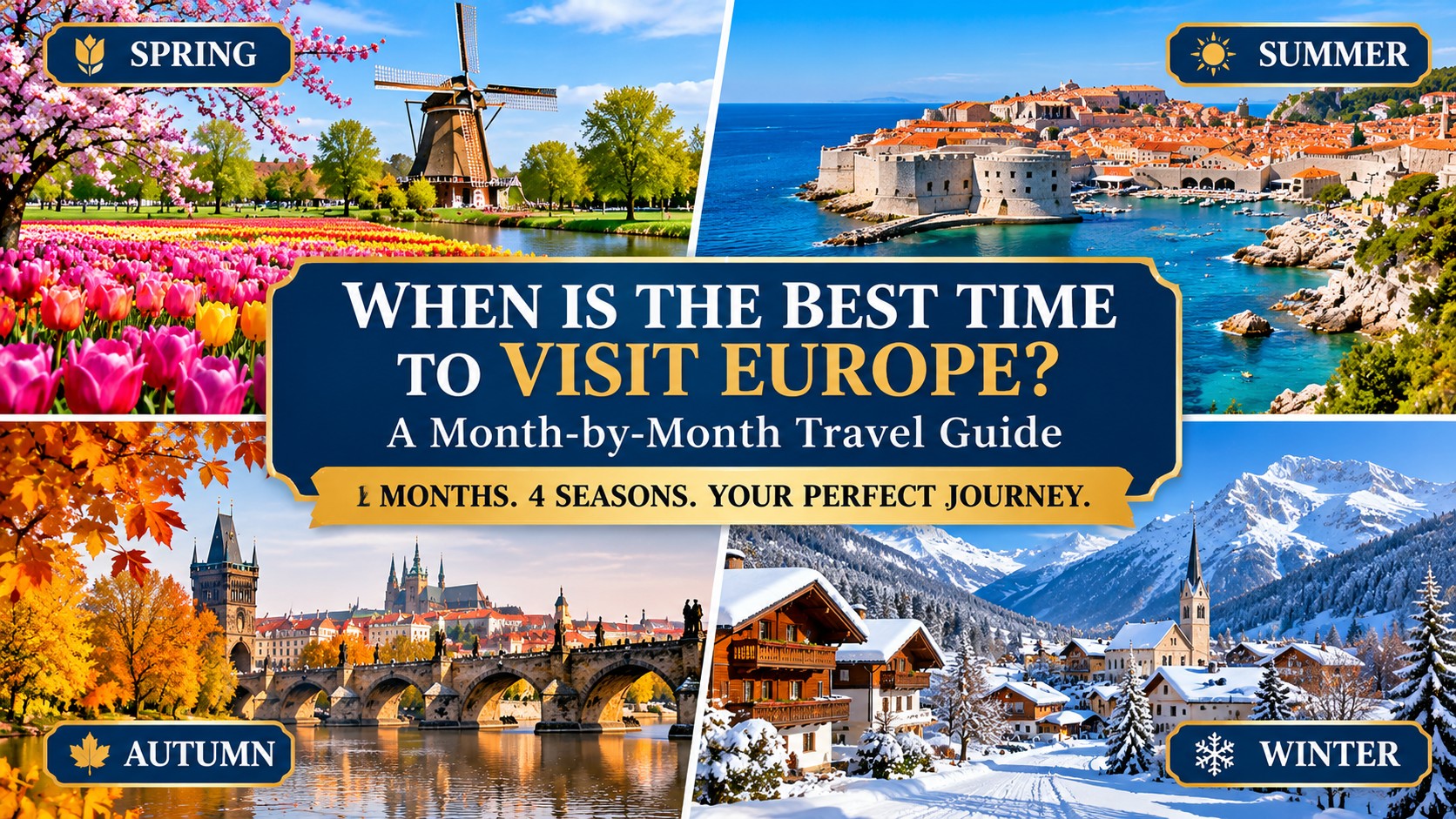
12 months, 4 seasons, your perfect journey. From colourful spring gardens and Mediterranean summer sunshine to historic autumn cities and snowy Alpine villages, Europe offers distinctive travel experiences throughout the year
Europe is a wonderful destination throughout the year, but choosing the right month can make an enormous difference to your holiday. The best time to visit depends on whether you dream of exploring historic cities in comfortable weather, enjoying Mediterranean sunshine, discovering colourful autumn landscapes or experiencing Europe’s magical winter celebrations.
A European journey in May can feel completely different from one in August or December. Weather, daylight, visitor numbers, seasonal events and the availability of particular experiences all influence what you can see and enjoy.
There is no single best month to visit Europe for everyone. The key is finding the time of year that suits your destinations, interests and preferred way of travelling.
This month-by-month guide explores the advantages and considerations of travelling between January and December, helping you choose the right period for your European adventure.
🧭 When Is the Best Time to Visit Europe Overall?
For many travellers, May, June and September are particularly appealing months to explore Europe, offering a potentially attractive balance of sightseeing conditions, daylight and seasonal experiences.
However, this broad recommendation changes considerably depending on where you intend to travel.
A summer holiday in Norway, a cultural journey through Italy and a winter escape to the Austrian Alps each have different ideal travel periods. Understanding those differences is more valuable than following a single European travel calendar.
🌤️ The Best Months for Comfortable Sightseeing
Late spring and early autumn are often excellent starting points for travellers interested in European cities, historic landmarks and cultural attractions.
May frequently brings pleasant conditions for walking through cities such as Paris, Prague and Vienna, while September can offer lingering summer warmth in parts of France, Italy and Spain.
These periods can be especially attractive when your itinerary involves several hours outdoors each day. Exploring historic neighbourhoods, gardens and archaeological sites is generally more enjoyable when temperatures suit prolonged walking.
June can also be rewarding, particularly in northern Europe, where extended daylight provides more time for sightseeing.
Nevertheless, comfortable weather is not the same everywhere. Southern Europe can experience substantial heat even outside July and August, while northern destinations may remain cool or unsettled.
🎯 Why the Best Month Depends on Your Travel Priorities
Before selecting your travel dates, consider what matters most about your holiday.
If your priority is Mediterranean beaches and warm evenings, July or August may suit you. If you prefer exploring museums, castles and historic cities without intense summer heat, May or September could be more attractive.
Travellers interested in Christmas markets may naturally favour late November or December, while skiing enthusiasts will look towards the winter season in suitable mountain resorts.
Spring flowers, autumn colours, summer festivals and northern winter landscapes each have their own seasonal windows.
The most useful approach is to identify your two or three most important experiences first, then choose a month that offers a realistic opportunity to enjoy them.
You may find that the best month for your holiday is not the month with the warmest weather, but the one that delivers the experiences you value most.
Start with the experience you would most enjoy, then use these suggested months to narrow your choices. Europe’s regions follow different seasonal patterns, so your ideal dates will depend on where you plan to travel.
A useful starting point for historic cities, museums and extended walking, especially when avoiding the strongest summer heat matters.
Particularly appealing for Scandinavian scenery, outdoor experiences and longer sightseeing days, with local conditions still worth checking.
Suited to travellers prioritising coastal holidays, swimming and summer atmosphere, while accepting higher temperatures and busy resorts.
Choose December for festive traditions or suitable winter months for Alpine snow experiences and northern winter landscapes.
Weather, daylight, local events and seasonal opening arrangements vary across Europe. Use your preferred experience to shortlist months, then check the conditions for your chosen destinations.
🗺️ Why Northern, Central, Southern and Alpine Europe Differ
Europe’s geographical diversity makes regional comparisons essential.
In Northern Europe, including Scandinavia, summer brings exceptionally long days, while winter offers limited daylight and opportunities for snow-based experiences and, in suitable locations, Northern Lights viewing.
Central Europe, including Austria, Germany and the Czech Republic, offers contrasting experiences throughout the year, from spring city breaks and summer festivals to autumn landscapes and traditional Christmas markets.
Southern Europe, including Mediterranean regions of Spain, Italy and Greece, often experiences hot summers and comparatively mild winters, although conditions vary between coastal areas, islands and inland destinations.
The Alpine regions follow another seasonal rhythm. Winter can support skiing and snow activities, while warmer months create opportunities for hiking, mountain scenery and scenic journeys, subject to local conditions.
These differences explain why choosing a European destination and choosing the right month should be considered together.
A month that is ideal for one region may be considerably less suitable for another.
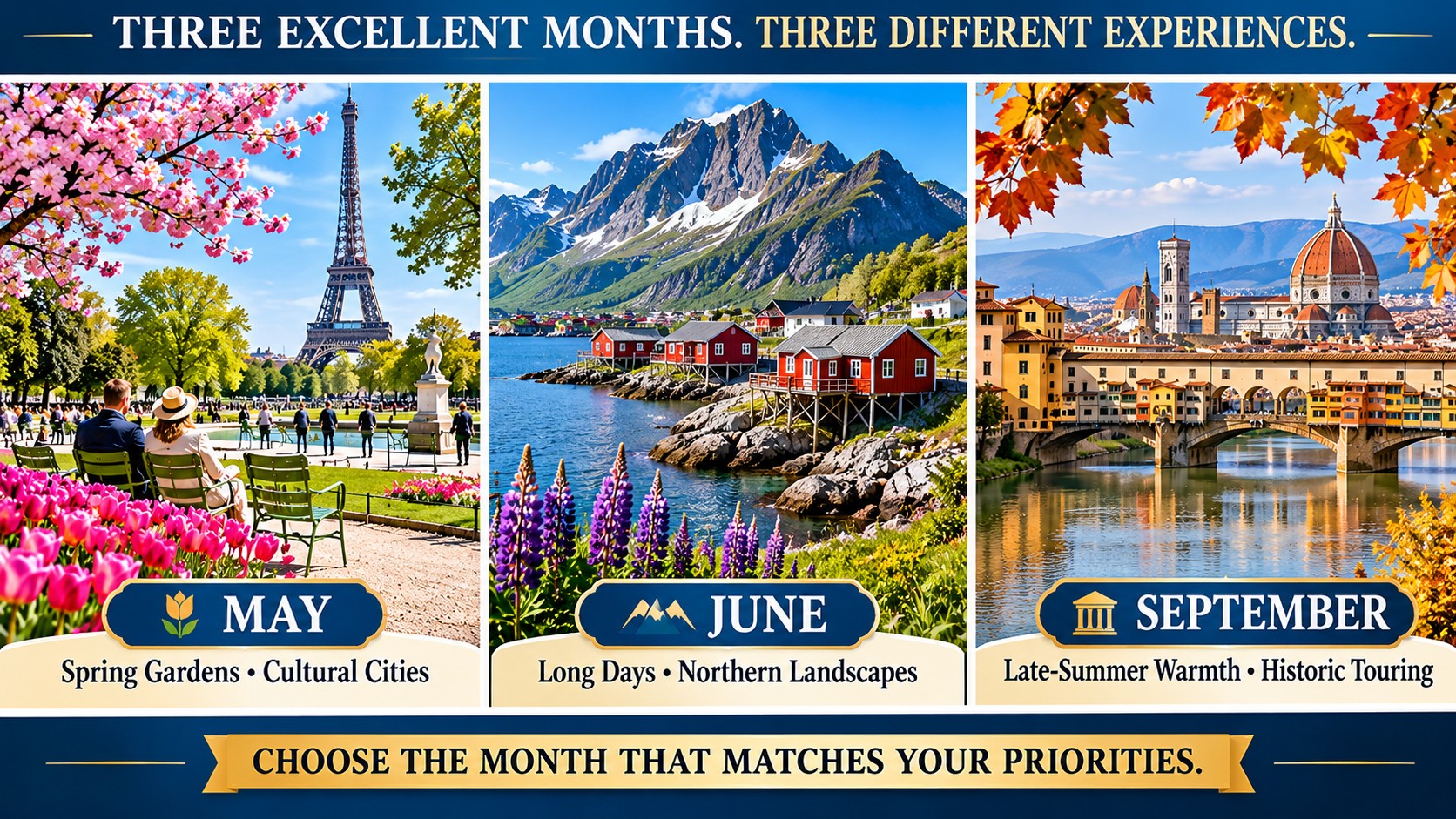
Three excellent months, three different experiences. May offers spring gardens and cultural sightseeing, June brings extended daylight and spectacular northern landscapes, while September combines late-summer warmth with historic European cities and cultural touring
📅 Europe Month by Month: Which Month Should You Choose?
Each month offers a different combination of weather, experiences, visitor demand and practical considerations.
Rather than judging months simply as good or bad for European travel, it is more useful to understand what each month does particularly well, who it suits and which compromises may be involved.
The following month-by-month comparison begins with Europe’s winter season before moving through spring, summer and autumn.
❄️ January: Winter Cities, Alpine Escapes and Post-Christmas Travel
January offers a quieter, more reflective side of Europe in many destinations, although the experience varies considerably between regions.
Following the Christmas and New Year celebrations, some historic cities experience reduced visitor demand, creating opportunities for travellers who enjoy museums, galleries, architecture and cultural sightseeing.
Cities such as Vienna, Prague and Budapest can be particularly atmospheric during winter, with historic buildings, cafés and indoor attractions providing rewarding alternatives when the weather is cold.
For mountain enthusiasts, January is also an important period for Alpine winter sports. Ski resorts in Austria, Switzerland, France and Italy may be busy, particularly where snow conditions are favourable.
January is worth considering if you enjoy winter scenery, cultural city breaks or skiing, rather than expecting consistently mild sightseeing weather.
The principal compromises are shorter daylight hours, cold conditions and the possibility of weather-related transport disruption. Some attractions operate reduced winter schedules, making advance checks worthwhile.
🌨️ February: Snow Experiences, Cultural Cities and Growing Daylight
February retains much of January’s winter character but brings gradually increasing daylight across Europe.
For travellers interested in skiing, snowboarding and mountain scenery, it can be an attractive month in established Alpine resorts, although snow conditions vary according to altitude, weather and location.
Winter landscapes also remain a major attraction in northern Europe. Destinations in Norway, Sweden and Finland may offer opportunities for snow activities and Northern Lights excursions, subject to local conditions.
Cultural city breaks provide another option, particularly for visitors comfortable with colder temperatures and interested in indoor attractions.
However, February is not necessarily a quiet or inexpensive month. School holidays in several European countries can increase demand for popular ski destinations, affecting accommodation availability and prices.
February may suit travellers who want winter experiences with somewhat longer days than January, provided they remain flexible about weather-dependent activities.
🌱 March: Early Spring, Changing Weather and Quieter Exploration
March marks an important transition, but spring does not arrive across Europe at the same time.
In parts of southern Europe, milder conditions can make sightseeing increasingly appealing. Cities such as Seville, Rome and Lisbon may offer comfortable opportunities for exploring historic neighbourhoods before the hottest summer weather.
Meanwhile, central and northern Europe can remain distinctly wintry, with cold mornings, unsettled conditions and occasional snow.
March is particularly interesting for travellers who enjoy observing seasonal changes, from early flowers and emerging greenery to longer daylight hours.
It can also be a useful period for cultural touring outside major holiday peaks, although local festivals and school breaks can affect visitor demand.
Choose March if you value flexibility, cultural sightseeing and the transition towards spring.
Do not assume that mountain routes, seasonal attractions or countryside experiences will already be operating on summer schedules.
🌷 April: Spring Landscapes, Easter Travel and Cultural Sightseeing
April brings more established spring conditions to many European destinations, making it an appealing month for gardens, historic cities and countryside exploration.
Flowering landscapes, increasingly green parks and longer days can add considerable enjoyment to sightseeing. The Netherlands, for example, is associated with its spring flower season, although the precise timing of displays depends on weather and location.
Southern European destinations can also be attractive for cultural visits before the main summer heat.
Easter is an important consideration. Depending on the year, celebrations, religious traditions and school holidays may influence visitor numbers, accommodation demand, transport arrangements and attraction opening hours.
Some destinations become particularly lively during Easter, while others experience closures or altered schedules.
April is a strong option for travellers seeking spring scenery and cultural experiences, but it rewards careful planning around holiday dates.
Weather remains changeable, especially in northern Europe and mountainous regions.
🌸 May: Gardens, Comfortable Touring and Longer Days
May is one of the most versatile months for exploring Europe, particularly for travellers who want a mixture of cultural sightseeing, countryside scenery and outdoor experiences.
Across many regions, gardens and landscapes are flourishing, daylight is increasingly generous and temperatures may be comfortable for walking through historic cities.
Destinations in France, Germany, Austria and northern Italy can offer appealing conditions for touring, while Mediterranean regions may provide opportunities to explore before the most intense summer heat.
May is especially worth considering for travellers planning journeys that combine several destinations, because comfortable outdoor conditions can make longer sightseeing days more enjoyable.
However, May should not automatically be considered quiet or inexpensive. Public holidays, major events and popular spring destinations can attract substantial visitor numbers.
Weather also remains variable, particularly in higher-altitude and northern regions.
For a first European journey combining cities, cultural attractions and scenic landscapes, May deserves serious consideration.
☀️ June: Early Summer, Long Days and Outdoor Experiences
June is an excellent month to consider if you enjoy longer sightseeing days, outdoor attractions and the atmosphere of early summer.
Across much of Europe, parks and countryside landscapes are green, outdoor cafés are busy and seasonal activities are becoming more widely available. Historic cities, lakeside destinations and scenic touring routes can all be rewarding.
Northern Europe is particularly appealing at this time of year. In Norway, Sweden and Finland, extended daylight creates opportunities for evening sightseeing and outdoor exploration. Above the Arctic Circle, some destinations experience the midnight sun.
June can also be attractive for European rail journeys and multi-country holidays, especially when travellers want to combine cities with countryside experiences.
However, early summer does not necessarily mean moderate temperatures everywhere. Mediterranean destinations can already experience considerable heat, and popular locations may become busy before the main July and August holiday period.
June is especially suitable for travellers who value daylight, outdoor experiences and varied itineraries, while remaining mindful of regional temperatures and increasing seasonal demand.
🏖️ July: Summer Holidays, Festivals and Peak-Season Travel
July brings the height of summer to many European destinations, with opportunities for coastal holidays, outdoor festivals, mountain exploration and long days of sightseeing.
Mediterranean destinations are popular with travellers seeking beaches, swimming and warm evenings. In northern Europe, extended daylight can make scenic journeys, walking holidays and outdoor attractions particularly appealing.
The Alps also offer a different experience from winter, with mountain walking, accessible valleys and seasonal scenic transport services, depending on local operating schedules.
July is an important festival period in many countries, although individual event dates and programmes must always be checked.
The main considerations are summer heat, visitor demand and potentially higher travel costs. Major cities and coastal resorts can become crowded, while prolonged outdoor sightseeing may be uncomfortable during hot weather.
July works particularly well for travellers whose priorities are summer activities, festivals and family holidays, provided they plan realistically around temperatures and busy destinations.
🌻 August: Mediterranean Holidays and Late-Summer Experiences
August continues Europe’s main summer holiday period, particularly in popular Mediterranean coastal destinations.
Warm seas, beach resorts, island holidays and outdoor dining are among the experiences that attract visitors to southern Europe.
However, August is not simply another version of July.
In parts of Europe, local holiday traditions influence business opening arrangements and visitor patterns. Some urban businesses may close temporarily for annual holidays, while coastal destinations experience intense seasonal demand.
Travellers interested in cooler conditions might consider northern European destinations or suitable mountain regions, although these can also be popular during summer.
August is a natural choice for travellers prioritising beach holidays and established summer experiences, but less attractive for those who dislike intense heat or crowded resorts.
For cultural sightseeing in southern cities, early starts, shaded breaks and realistic daily schedules may be particularly important.
🍇 September: Late-Summer Warmth, Cultural Touring and Harvest Traditions
September is often one of Europe’s most rewarding months for travellers seeking a balance between summer conditions and cultural exploration.
Parts of southern Europe retain considerable warmth, while some popular destinations begin to experience changing visitor patterns as the main school holiday period ends.
Historic cities, countryside routes and selected Mediterranean coastal destinations can be attractive, particularly for travellers who prefer sightseeing without the most intense summer temperatures.
September is also associated with harvest activity in various European wine-growing and agricultural regions. These traditions can add cultural interest to a journey, although harvest timing varies according to location, crop and weather.
Northern Europe begins moving more noticeably towards autumn, with shorter days and changing temperatures.
September is a strong candidate for multi-country touring, cultural sightseeing and late-summer travel, especially when travellers want a combination of outdoor experiences and historic attractions.
It is important not to assume everywhere becomes quiet immediately. Popular destinations and events can remain busy well into the month.
🍂 October: Autumn Colours, City Breaks and Seasonal Landscapes
October offers a distinctive European experience as autumn becomes more established across many central and northern regions.
Forests, parks and countryside landscapes may display striking seasonal colours, while historic cities can be enjoyable for cultural visits and atmospheric walking tours.
Destinations in Germany, Austria, France and parts of central Europe can be particularly appealing for travellers interested in autumn scenery and local traditions.
In some southern regions, October may still provide comfortable sightseeing weather, although rainfall and cooler conditions become increasingly important considerations.
The main challenge is variability. Autumn colours do not peak everywhere simultaneously, and their timing depends on weather, altitude and location.
Daylight also becomes shorter, particularly farther north, while some seasonal attractions and mountain facilities begin reducing their operations.
October suits travellers who appreciate autumn landscapes, cultural cities and a slower seasonal atmosphere, provided they are comfortable with less predictable weather.
🌫️ November: Quieter Cultural Travel and the Approach of Winter
November is sometimes overlooked, but it can suit travellers whose interests centre on museums, architecture, galleries and historic cities.
In some destinations, visitor demand is lower between the autumn holiday period and the main Christmas season. This can make November worth considering for cultural travel, although quieter conditions and better prices are never guaranteed.
The trade-offs are shorter daylight hours, colder or wetter weather and reduced seasonal services in certain locations.
Southern European cities may offer comparatively mild conditions, while northern and Alpine regions can already feel distinctly wintry.
Towards the end of November, some European Christmas markets and festive attractions begin operating, although opening dates vary annually.
November is best suited to flexible cultural travellers who are comfortable planning around weather and seasonal opening arrangements rather than relying on extensive outdoor activities.
🎄 December: Christmas Markets, Winter Atmosphere and Festive Travel
December transforms many European cities through Christmas markets, seasonal decorations, traditional celebrations and winter events.
Central European destinations such as Vienna, Prague and cities across Germany are particularly associated with festive traditions, although individual markets have different operating dates.
For travellers seeking winter scenery, northern Europe and Alpine destinations offer contrasting opportunities, depending on snow conditions and local activities.
December also presents important planning challenges.
Christmas and New Year can bring increased demand, altered transport schedules, attraction closures and higher accommodation prices in popular destinations. Some Christmas markets finish before Christmas Day, while others continue into the New Year.
Short daylight hours also affect sightseeing, particularly in northern Europe.
December is ideal for travellers whose main priority is festive atmosphere and winter experiences, rather than those seeking consistently mild weather or long outdoor sightseeing days.
Choosing the correct dates within December can be just as important as choosing the month itself.

What do you want from Europe? From flowering château gardens and Mediterranean beaches to spectacular Alpine hiking and traditional Christmas markets, choosing your preferred experiences is the first step towards finding the best month for your European holiday
📊 Europe Month-by-Month Travel Decision Comparison
The following table brings together the principal advantages and considerations of visiting Europe throughout the year. It provides a starting point for choosing your travel dates, rather than a fixed ranking of the best months.
| Month | Strongest Travel Opportunities | Regions or Travel Styles to Consider | Important Trade-offs |
|---|---|---|---|
| January | Winter scenery, skiing, cultural city breaks | Alps, Central European cities | Cold weather, short days, busy ski resorts |
| February | Snow activities, winter landscapes, cultural travel | Alps, Northern Europe | School holiday demand, variable snow conditions |
| March | Early spring, cultural sightseeing | Southern Europe, historic cities | Changeable weather, seasonal restrictions |
| April | Spring flowers, gardens, Easter traditions | Netherlands, Southern and Central Europe | Easter crowds, unsettled weather |
| May | Gardens, countryside, comfortable sightseeing | France, Italy, Central Europe | Public holidays, increasing demand |
| June | Long daylight, outdoor experiences, festivals | Scandinavia, Alps, European touring routes | Rising visitor numbers, southern heat |
| July | Beaches, festivals, summer activities | Mediterranean, Northern Europe, Alps | Peak demand, heat, potentially higher costs |
| August | Coastal holidays, island experiences, mountain escapes | Mediterranean, Alpine and northern destinations | Crowded resorts, heat, local holiday closures |
| September | Cultural touring, late-summer warmth, harvest traditions | Southern and Central Europe | Variable harvest dates, continued demand |
| October | Autumn colours, historic cities, seasonal landscapes | Central Europe, countryside regions | Shorter days, changeable weather |
| November | Museums, architecture, quieter cultural breaks | Historic cities, selected southern destinations | Reduced daylight, seasonal closures |
| December | Christmas markets, festive cities, winter experiences | Central Europe, Alps, Northern Europe | Holiday demand, closures, short daylight |
The strongest month for your holiday will depend on which opportunities matter most. A traveller interested in northern landscapes may reach a very different conclusion from someone planning Mediterranean sightseeing or a festive city break.
If you are still deciding when to travel, these four three-month windows offer a simpler way to narrow your options. Each brings different opportunities, practical compromises and reasons to visit.
Main advantage:
Winter scenery, cultural city breaks and the first signs of spring in suitable southern destinations.
Practical compromise:
Cold or unsettled weather, shorter daylight and seasonal access restrictions.
Best suited to:
Winter enthusiasts, flexible cultural travellers and visitors interested in quieter city experiences.
Main advantage:
Flowering landscapes, comfortable touring opportunities and increasingly long days.
Practical compromise:
Changeable spring conditions, holiday demand and rising temperatures in southern Europe.
Best suited to:
Garden lovers, first-time European visitors, cultural sightseers and travellers planning varied itineraries.
Main advantage:
Coastal holidays, outdoor activities, festivals and late-summer cultural touring.
Practical compromise:
Peak-season crowds, summer heat and potentially higher costs, especially in popular destinations.
Best suited to:
Beach travellers, families, outdoor enthusiasts and visitors seeking September sightseeing opportunities.
Main advantage:
Autumn landscapes, atmospheric cultural cities and Christmas celebrations towards the end of the year.
Practical compromise:
Shortening daylight, variable weather and increased demand around popular festive dates.
Best suited to:
Autumn scenery lovers, museum visitors, cultural travellers and those seeking festive experiences.
Choose the three-month window that most closely matches your interests, then compare the individual months and regions within it. Seasonal conditions, visitor demand and event dates can differ considerably across Europe.
🎯 Which Months Are Best for Different European Travel Experiences?
Choosing your travel dates becomes easier when you begin with the experiences you most want to enjoy.
Rather than treating Europe as a single destination, consider how different activities respond to seasonal conditions.
🏛️ Best Months for European Cities, Museums and Cultural Sightseeing
May, June and September are often attractive for exploring European cities on foot, particularly when an itinerary includes historic streets, gardens, monuments and outdoor attractions.
April and October can also be rewarding, depending on the destination and prevailing weather.
Winter should not be overlooked. Major museums, galleries and architectural attractions offer cultural experiences throughout much of the year, although opening arrangements may change around public holidays.
For cities in southern Europe, avoiding the hottest summer periods may make extensive walking more comfortable.
🌿 Best Months for Countryside, Gardens and Natural Landscapes
Spring is particularly appealing for flowering gardens, emerging greenery and countryside scenery.
April and May can offer rewarding opportunities in many temperate European regions, although flowering periods differ by latitude, altitude and annual weather conditions.
Summer brings lush landscapes and longer daylight in northern regions, while September and October are attractive for autumn colours in suitable woodland and countryside destinations.
Travellers seeking a particular flower display or autumn landscape should investigate the destination’s usual seasonal window rather than rely on a Europe-wide calendar.
🏖️ Best Months for Mediterranean Beaches and Warmer Weather
July and August are popular for Mediterranean beach holidays, particularly for travellers seeking warm weather, swimming and outdoor dining.
However, June and September can be attractive alternatives in many coastal destinations, sometimes combining favourable conditions with different visitor-demand patterns.
The best choice depends on whether your priority is swimming, sunbathing, sightseeing or exploring coastal towns.
Sea temperatures, rainfall and seasonal facilities vary considerably between destinations. A Greek island, the Spanish mainland and the Italian coast should not automatically be treated as interchangeable.
🏔️ Best Months for the Alps, Mountain Activities and Winter Sports
The Alps offer two very different seasonal experiences.
Winter provides opportunities for skiing, snowboarding and snow-covered landscapes, with the suitability of particular months depending on altitude, snow conditions and resort operations.
Summer is associated with hiking, mountain scenery, alpine villages and seasonal transport services.
June to September can be appealing for many mountain activities, although high-altitude routes may have shorter accessible seasons.
Travellers should check local conditions, lift schedules and weather forecasts before undertaking mountain excursions.
🎭 Best Months for Festivals, Christmas Markets and Seasonal Celebrations
Europe’s cultural calendar provides compelling reasons to choose particular travel dates.
Summer brings numerous outdoor festivals and cultural celebrations. Autumn introduces regional harvest traditions, while late November and December are associated with Christmas markets and festive events.
Some celebrations follow established annual traditions, but their precise dates, venues and programmes may change.
If attending a particular event is essential to your holiday, confirm its official schedule before making arrangements that cannot easily be changed.
A festival can make a journey especially memorable, but it can also increase local accommodation demand and visitor numbers.
Your favourite experiences can be a better guide to travel dates than the calendar alone. Compare these five interests to identify a promising time of year, then refine your choice around the destinations you want to explore.
Good starting months for exploring architecture, museums and historic neighbourhoods, particularly when comfortable walking conditions matter.
Consider spring for flowers and fresh greenery, or early autumn for changing colours, depending on the region and annual weather.
Choose according to whether you prefer swimming, beach holidays or coastal sightseeing, allowing for summer heat and local visitor demand.
Summer suits many scenic journeys and outdoor activities; winter brings snow experiences in suitable locations, subject to conditions.
Let the celebration guide your dates, whether you are interested in summer festivals, autumn traditions or Christmas markets.
If historic cities, regional landscapes and cultural touring appeal to you, our
France Travel Guide
offers a useful starting point for exploring one of Europe’s most varied destinations.
⚖️ How Weather, Crowds and Costs Change Your Best Travel Month
Even when a particular month appears ideal, the practical realities of travelling can change your decision.
Weather, daylight, visitor numbers and overall costs do not follow identical patterns across Europe. Understanding these differences can help you choose a travel period that offers the best balance for your priorities.
🌡️ Weather and Daylight: Why Location Matters More Than the Calendar Alone
A pleasant sightseeing day in southern Spain can feel very different from the same date in Scotland, Norway or the Austrian Alps.
Latitude influences daylight, while altitude, coastal conditions and regional climate affect temperatures and rainfall.
During summer, northern Europe offers particularly long days, making it attractive for travellers who enjoy extended outdoor exploration. In winter, daylight becomes much more limited, especially in northern Scandinavia.
Mediterranean destinations follow a different pattern, with summer heat sometimes making afternoon sightseeing uncomfortable.
Consider the conditions you need for your planned activities, not simply the warmest month on the calendar.
A comfortable temperature for walking through a historic city may be quite different from the conditions you would prefer for a beach holiday or mountain excursion.
👥 Peak Season, Shoulder Season and Quieter Travel Periods
Europe does not have one universal peak season.
July and August are busy periods for many Mediterranean resorts, but winter can be the main season for Alpine skiing destinations. Christmas markets, major festivals and school holidays can also create concentrated demand outside summer.
The term shoulder season generally describes periods between a destination’s busiest and quietest travel seasons.
For many cultural destinations, spring and autumn can provide an appealing balance between visitor demand and sightseeing conditions.
However, a shoulder-season month in one region may coincide with an important holiday or major event elsewhere.
Before deciding, investigate the destination’s local calendar rather than assuming that travelling outside summer guarantees fewer crowds.
💷 When European Travel May Offer Better Value
Travelling during periods of lower demand can sometimes offer better value, particularly where accommodation and transport prices respond to seasonal visitor numbers.
Nevertheless, the cheapest month is not necessarily the best-value month.
A lower hotel price may be less attractive if the attractions you most want to visit are closed, transport connections are limited or poor weather substantially restricts your activities.
Equally, paying more for a particular travel period may be worthwhile if it provides access to an experience unavailable at other times.
Compare the overall cost and quality of your intended journey, including accommodation, transport, activities and seasonal availability.
The best-value choice is the month that allows you to enjoy your priorities at a cost you consider reasonable.
🧳 How to Choose the Right Month for Your European Holiday
Once you understand the seasonal differences, the next step is to turn that information into a practical travel decision.
Rather than starting with twelve possible months, narrow your options according to what you want to experience and where you would like to go.
🧭 Start with Your Must-See Experiences and Preferred Regions
Begin by identifying the experiences that would make your European holiday particularly rewarding.
Perhaps you want to explore Renaissance cities, enjoy Mediterranean coastlines, see spring gardens or discover traditional Christmas markets.
Next, identify the destinations best suited to those interests and consider their usual seasonal conditions.
Separate your essential experiences from those you would simply enjoy if circumstances allow.
If a particular festival is the main reason for travelling, its dates may determine your journey. If your priority is general cultural sightseeing, you may have several suitable months to choose from.
🚆 Consider Travel Style, Journey Length and Seasonal Connections
Your preferred travel style can also influence the best time to visit.
A short city break may be enjoyable in almost any season, especially when indoor attractions feature prominently.
A longer journey through several European countries requires additional consideration. Different regions may experience contrasting weather, daylight and seasonal operating arrangements during the same month.
Rail journeys, scenic routes and mountain connections can also be affected by seasonal schedules or adverse weather.
Allow enough time for comfortable travel between destinations, and avoid assuming that every attraction or transport service operates identically throughout the year.
📆 Match Booking Plans to Holidays, Events and Seasonal Demand
Once you have identified a preferred month, examine the dates within it.
School holidays, national celebrations, major festivals and seasonal events can influence availability and visitor numbers. If your plans involve popular summer destinations, Christmas travel or a particular cultural event, earlier preparation may provide a wider choice of arrangements. Check the operating dates of attractions and experiences that are essential to your holiday, particularly where access depends on weather or seasonal conditions.
Where possible, retain some flexibility. Moving a journey by a week or adjusting the order of destinations may help you find a better balance between conditions, availability and cost.
Once you have shortlisted your preferred months, check what is happening in your chosen destinations. Festivals, public holidays and seasonal attractions can influence both the experiences available and the practical arrangements for your journey.
Explore seasonal celebrations and planning opportunities throughout the year, helping you identify experiences that may influence when you travel.
Investigate European festivals, cultural celebrations and events that could help you choose a destination or refine your travel dates.
- Confirm official event dates, venues and programmes.
- Check national holidays and local celebrations that may affect visitor demand.
- Verify attraction opening days and seasonal operating arrangements.
- Review rail, road and other transport schedules for your intended dates.
- Check reservation requirements and availability before committing to important arrangements.
Planning reminder: Calendar information is a useful starting point, but event dates, opening arrangements and availability may change. Confirm essential details with the relevant organisers and providers before booking.
✅ Your Final Month-Selection Checklist
Before settling on your travel dates, consider these seven questions:
-
Experiences: What do I most want to see or do?
-
Destinations: Which European regions best support those experiences?
-
Weather: Am I comfortable with the likely seasonal conditions?
-
Daylight: Will there be enough daylight for my preferred activities?
-
Crowds and budget: Am I happy with the likely visitor demand and overall costs?
-
Seasonal access: Will my essential attractions, activities and connections be available?
-
Flexibility: Could travelling slightly earlier or later improve the experience?
By working through these questions, you should be able to narrow your options to one or two promising months, rather than searching for a single perfect time to visit the whole of Europe.
♻️ Responsible Seasonal Travel in Europe
Choosing when to visit Europe is not only about finding favourable weather or avoiding crowds. Your travel dates can also influence the communities, landscapes and environments you encounter.
Thoughtful seasonal planning can help you enjoy destinations more responsibly while respecting the people who live and work there.
🌱 Choosing Travel Dates with Local Communities and Landscapes in Mind
Popular European destinations sometimes experience intense visitor pressure during particular seasons, especially in historic city centres, coastal resorts and sensitive natural environments.
Travelling during a quieter period, where appropriate, may help distribute visitor demand more evenly and create opportunities to experience local communities beyond their busiest tourist seasons.
However, quieter travel is not automatically more sustainable. Some destinations depend heavily on seasonal visitors, while others have limited transport or visitor facilities outside their main operating periods.
Respect protected landscapes, follow designated walking routes and observe local guidance, particularly where seasonal weather or wildlife activity creates additional sensitivities.
🚆 Travelling Thoughtfully Across Different European Seasons
When planning your journey, consider whether practical rail or public transport connections could reduce reliance on private vehicles or short flights.
Seasonal schedules, winter conditions and access restrictions may influence which arrangements are realistic.
Allow sufficient time for connections, respect wildlife habitats and avoid activities that place unnecessary pressure on fragile environments.
Responsible travel means balancing the enjoyment of your journey with consideration for the places you visit.
Travel with purpose. Explore with care.
❓ Frequently Asked Questions About the Best Time to Visit Europe
❓ What Is the Best Month to Visit Europe for the First Time?
May or September are excellent starting points for many first-time visitors interested in historic cities, cultural attractions and varied sightseeing.
Both months can offer appealing conditions across numerous destinations, although the best choice depends on your intended route. June may be particularly attractive for northern Europe, while winter is ideal for certain festive and mountain experiences.
❓ Which Month Has the Best Weather for Travelling Around Europe?
There is no single month with the best weather across the entire continent.
May, June and September often provide comfortable sightseeing opportunities in many regions. However, southern Europe can be hot during early summer, while northern destinations may remain comparatively cool.
Choose according to the regions and activities included in your itinerary.
❓ What Is the Cheapest Month to Visit Europe?
January, February or November may offer lower-demand opportunities in some European cities, but there is no universally cheapest month.
Alpine ski resorts can be expensive during winter, while festivals and public holidays may increase prices elsewhere.
Compare accommodation, transport and activity costs for your specific destinations and dates.
❓ When Is Europe Least Crowded?
Many cultural destinations experience quieter periods outside major summer holidays, but crowd levels depend heavily on location.
January or November may be relatively quiet in some historic cities, while popular ski resorts, Christmas markets and seasonal events attract substantial visitors at other times.
Avoid assuming that the whole of Europe follows the same visitor calendar.
❓ Is May or September Better for Visiting Europe?
May is particularly appealing for spring gardens, fresh countryside scenery and increasingly long days.
September can be attractive for late-summer warmth, cultural touring and harvest traditions in selected regions.
Choose May for spring landscapes and September for late-summer experiences, while considering local weather and your preferred destinations.
❓ When Is the Best Time to Visit Several European Countries in One Trip?
May, June and September are often good starting points for multi-country touring because they can offer favourable sightseeing opportunities across several regions.
However, a journey combining Scandinavia and the Mediterranean requires different seasonal considerations from one focused entirely on Central Europe.
Choose dates that suit the most weather-sensitive parts of your itinerary and allow realistic time for travelling between destinations.
❓ Is Europe Worth Visiting During Winter?
Absolutely. Winter offers distinctive experiences, including Christmas markets, historic cities, snow-covered mountain landscapes and seasonal cultural traditions.
January and February can be particularly appealing for winter sports, while December is associated with festive travel.
The main considerations are shorter daylight hours, colder weather and seasonal access restrictions. With suitable planning, winter can be one of Europe’s most memorable travel periods.
🌅 Conclusion: Finding the Best Month for Your European Journey
The best time to visit Europe is the month that allows you to enjoy the experiences that matter most to you.
For many travellers, May, June and September offer an appealing combination of sightseeing opportunities and seasonal conditions. Yet Europe’s summer coastlines, autumn landscapes, winter celebrations and spring gardens all provide compelling reasons to travel at other times.
The important decision is not simply whether a month is considered popular or favourable. It is whether that month suits your destinations, interests, weather preferences and practical arrangements.
Once you have identified your ideal travel window, you can choose the European regions and experiences that will make the most of it.
Every season has something special to offer. The right month is the one that makes your European journey your own.
Once you have identified your preferred travel month, the next step is choosing how you would like to experience Europe. Explore seasonal inspiration, develop a multi-country itinerary or discover organised touring options that suit your interests.
Explore the wider seasonal picture across Britain and Europe, including how destinations, landscapes and visitor experiences change throughout the year.
Turn your preferred travel window into a practical itinerary, considering destinations, travel connections and the time available for each stop.
Discover rail-based touring possibilities for travellers interested in connecting European destinations and enjoying the journey between them.
Explore organised European touring options and compare the destinations, journey styles and itineraries that interest you most.
Check the available departure dates, itinerary, included arrangements and any seasonal operating conditions. The best choice is one that combines your preferred travel period with the experiences and journey style you want.