


Britain Month by Month: Weather, Events, Daylight & What to Expect
1st November 2026
🇬🇧 Britain Month by Month: Weather, Events, Daylight & What to Expect
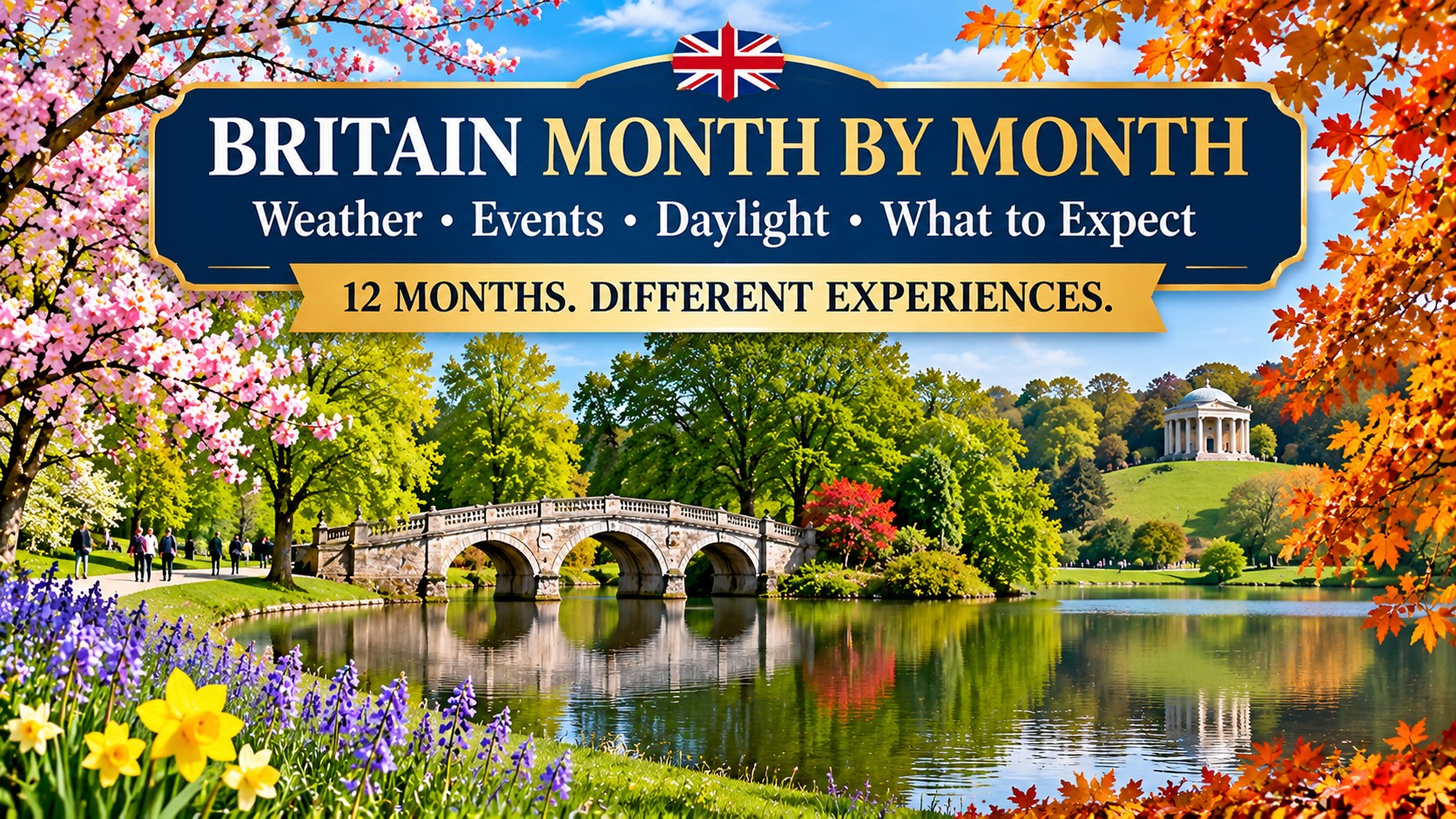
12 months, different experiences. From colourful spring flowers and lush summer landscapes to golden autumn foliage, Britain’s changing seasons offer distinctive opportunities for sightseeing, countryside exploration and memorable journeys throughout the year
When is the best time to visit Britain? The answer depends on far more than whether you prefer sunshine or cooler weather. Each month brings a different combination of landscapes, daylight, cultural traditions and opportunities to explore England, Scotland and Wales.
January offers atmospheric winter scenery and opportunities for quieter sightseeing, while spring gradually transforms gardens and countryside with flowers and fresh greenery. Summer brings wonderfully long evenings, outdoor festivals and opportunities to explore further afield. Autumn offers changing colours, harvest traditions and a different perspective on Britain’s historic towns and landscapes.
But there are important practical differences too. A June itinerary through the Scottish Highlands can benefit from remarkably long daylight hours, while the same journey in December requires a very different approach. School holidays, major events, seasonal opening arrangements and regional weather can also influence the experience.
This month-by-month guide explores what Britain is typically like from January to December, helping you compare conditions, understand seasonal highlights and choose travel dates that suit your interests.
🧭 Why the Month You Visit Britain Makes Such a Difference
Britain is a rewarding destination throughout the year, but the calendar influences much more than the temperature. Daylight, landscapes, events and visitor demand can all affect how comfortably and confidently you explore.
Understanding these differences makes it easier to plan a journey around the experiences that matter most.
🌦️ Weather Across Britain: Why Regional Differences Matter
Britain has a predominantly temperate maritime climate, influenced by the surrounding seas and changing Atlantic weather systems. Conditions can vary considerably, sometimes within a single day.
However, British weather is not uniform across the country.
Southern England generally experiences milder temperatures than northern Scotland, while western upland areas often receive more rainfall than sheltered eastern locations. Coastal destinations can feel exposed to strong winds, and mountain environments may experience conditions very different from nearby towns.
This matters when choosing activities.
A cool, showery day might still be perfectly suitable for exploring London’s museums, galleries and historic neighbourhoods. The same conditions could make an exposed coastal walk or Highland mountain excursion considerably less comfortable.
Nor should summer automatically be regarded as dry or winter as continuously wet. Rain is possible throughout the year, and local conditions can differ substantially.
For most visitors, the best preparation is straightforward: dress in adaptable layers, carry waterproof clothing and keep some flexibility in outdoor plans.
🌅 Daylight Hours: From Short Winter Days to Long Summer Evenings
One of Britain’s most significant seasonal differences is the changing length of the day.
Around the December winter solstice, daylight is limited, particularly in northern Scotland. By contrast, the weeks surrounding the June summer solstice offer exceptionally long days, with northern destinations enjoying noticeably more daylight than southern England.
These differences can transform an itinerary.
During summer, visitors may have time for a countryside walk, a historic attraction and an evening exploring a town. In winter, the same combination may be unrealistic without careful planning.
Britain also changes its clocks twice annually. British Summer Time begins on the last Sunday in March, when clocks move forward, and ends on the last Sunday in October, when they move back.
These changes affect the clock times of sunrise and sunset, although the underlying seasonal length of daylight changes gradually.
Remember that daylight does not mean sunshine. A long summer day can still be cloudy or rainy, while a short winter day may be beautifully clear.
📅 Events, School Holidays and Seasonal Visitor Demand
Britain’s annual calendar includes historic celebrations, sporting occasions, music festivals, agricultural shows and seasonal traditions.
These events can make particular months especially attractive.
Spring brings Easter celebrations and garden events. Summer features major cultural festivals and outdoor gatherings. Autumn includes harvest traditions and Bonfire Night, while winter introduces Christmas markets, illuminations and New Year celebrations.
However, popular events can also influence accommodation availability, transport arrangements and visitor numbers.
School holidays are another important consideration. Their dates differ between England, Scotland and Wales, and individual local authorities may follow different schedules.
A destination that feels relatively peaceful during term time may be much busier during a holiday week.
The important distinction is whether you want to experience a particular event or simply enjoy the destination at a comfortable time. Both approaches can lead to excellent journeys, but they may require different travel dates.
Because event programmes, holiday dates and opening arrangements can change, check the relevant year’s details before finalising plans.
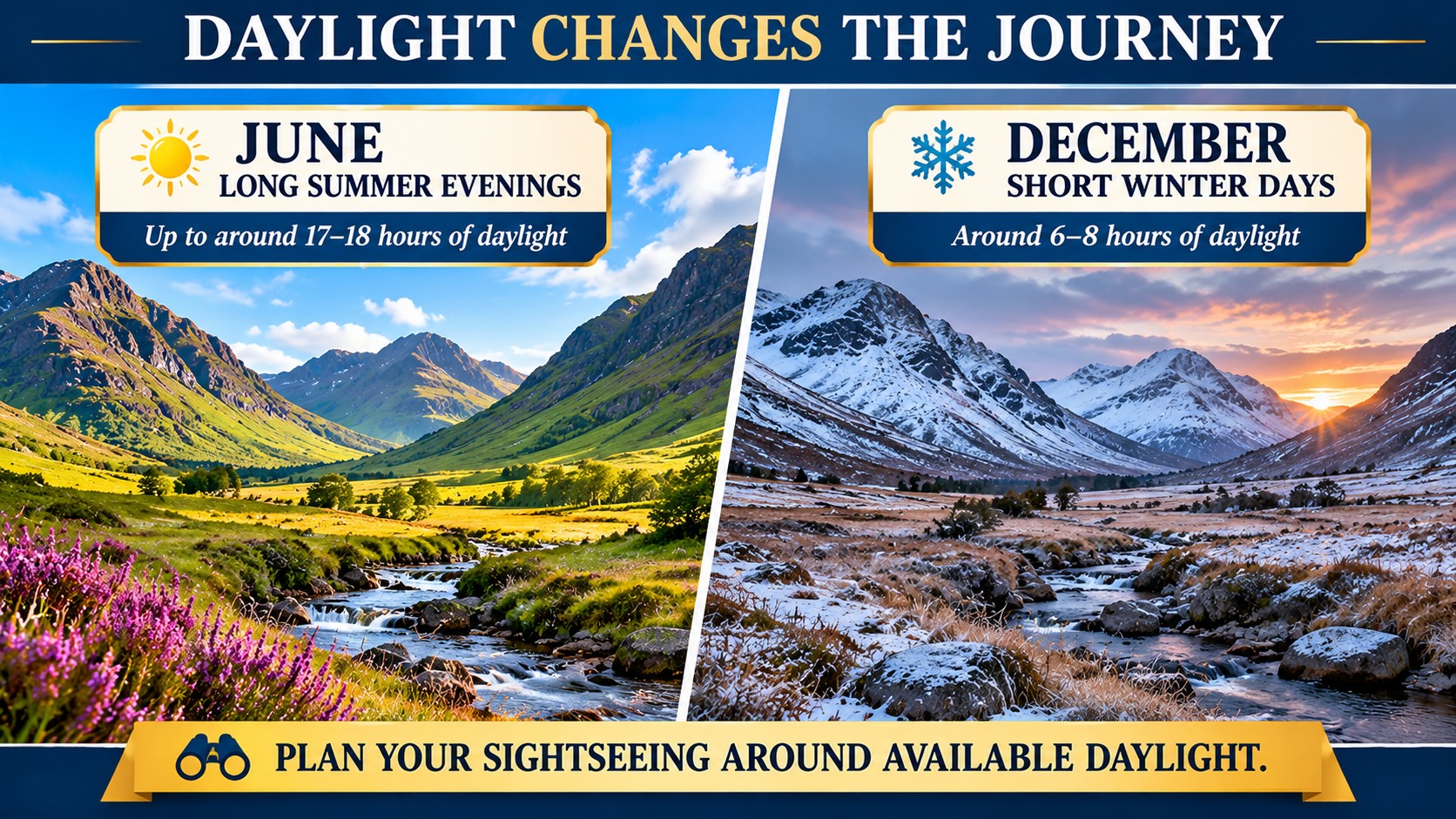
Daylight changes the journey. June brings approximately 17–18 hours of daylight to much of the Scottish Highlands, while December offers around 6–8 hours. These seasonal differences can significantly influence sightseeing opportunities, scenic journeys and the time available for outdoor exploration
Not sure where to begin? Start with the season that best matches your interests, then use the month-by-month guide below to narrow your choice. Each season offers something distinctive, along with practical considerations worth weighing up.
Main advantage:
Daffodils, blossom, colourful gardens and fresh countryside scenery make spring especially appealing for gentle exploration.
Consider:
Weather remains changeable, flowering dates vary and Easter or bank holidays can increase visitor numbers.
Main advantage:
Long daylight hours, outdoor festivals and extended sightseeing opportunities suit travellers keen to explore further afield.
Consider:
Popular destinations can be busy during school holidays, and even summer weather is not reliably dry.
Main advantage:
Harvest traditions, changing woodland colours and atmospheric heritage destinations offer a different perspective on Britain.
Consider:
Daylight shortens considerably through autumn, and peak foliage varies by region and weather.
Main advantage:
Festive traditions, atmospheric historic towns, museums and winter landscapes provide rewarding seasonal experiences.
Consider:
Short daylight hours, colder conditions and reduced seasonal opening times require more careful itinerary planning.
Choose the season that best suits your interests, then compare its individual months below. Weather, daylight and seasonal experiences can differ noticeably even within the same season.
📆 Britain Month by Month: What to Expect from January to December
Britain’s changing seasons are best understood month by month. Even neighbouring months can offer noticeably different experiences, particularly when daylight, gardens, countryside conditions and cultural events are taken into account.
The following guide explores each month’s distinctive character, alongside the practical considerations that can help you decide when to travel.
❄️ January in Britain: Winter Landscapes and Quieter Sightseeing
January brings Britain firmly into winter, with short days, cold temperatures and the possibility of frost, ice or snow, particularly in upland and northern areas. Rain and wind can also influence outdoor plans.
Following the Christmas and New Year period, many cities return to their everyday rhythm. This can make January appealing for visitors interested in museums, galleries, historic streets and cultural attractions without the intensity of major summer holiday periods.
Scotland offers a distinctive January tradition with Burns Night on 25 January, celebrating the poet Robert Burns through suppers, poetry and Scottish culture.
However, winter resorts and popular seasonal destinations may remain busy, while some countryside attractions operate reduced hours.
Best suited to: Travellers who enjoy atmospheric winter scenery, cultural sightseeing and flexible itineraries.
Planning consideration: Keep outdoor journeys realistic within the limited daylight and check seasonal opening arrangements.
🌨️ February in Britain: Late Winter, Growing Daylight and Early Signs of Spring
February remains a winter month, but daylight gradually increases, creating more opportunities for sightseeing than during the darkest weeks of December and January.
One of the month’s quieter pleasures is the appearance of snowdrops, which can brighten woodland floors, gardens and historic estates. Their flowering varies according to local weather and location, but they provide an early indication of the approaching spring.
February also includes school half-term holidays in many areas, which can increase demand at family attractions and popular destinations.
Traditional celebrations such as Shrove Tuesday may fall in February or March, depending on the date of Easter.
Winter weather can still be demanding, especially in the Scottish Highlands and exposed rural areas. February should therefore be viewed as late winter rather than reliably early spring.
Best suited to: Visitors interested in winter landscapes, early flowers and cultural attractions.
Planning consideration: Check local half-term dates and retain flexibility for weather-dependent activities.
🌼 March in Britain: Spring Begins and Daylight Changes
March marks a fascinating transition as Britain moves from winter towards spring.
Daffodils begin transforming parks, gardens and countryside, while increasing daylight makes outdoor sightseeing more appealing. Early spring landscapes can be particularly attractive in Wales, where daffodils are closely associated with St David’s Day on 1 March.
The spring equinox, usually around 20 March, marks the astronomical transition towards spring. Later in the month, British Summer Time begins, moving sunset to a later clock time.
Nevertheless, March weather can remain unpredictable. Cold spells, showers and occasional wintry conditions are still possible, especially farther north and at higher elevations.
Easter occasionally falls in March, potentially changing school-holiday demand and attraction arrangements.
Best suited to: Travellers who enjoy emerging spring scenery, historic towns and gardens beginning their seasonal transformation.
Planning consideration: Pack for both winter-like and milder conditions, and check whether Easter affects your intended dates.
🌷 April in Britain: Spring Gardens, Easter Holidays and Changing Weather
April brings a more established spring atmosphere, with blossom, fresh leaves and colourful gardens appearing across many parts of Britain.
Historic houses, landscaped estates and countryside destinations become particularly attractive as seasonal planting develops. Woodland walks and garden visits can be rewarding, although the timing of individual flowers depends on weather conditions.
Easter, when it falls in April, introduces additional celebrations and family activities. It can also increase visitor numbers at popular attractions and holiday destinations.
April weather remains changeable, and occasional cold days are entirely possible. Visitors should not assume that spring sunshine means consistently warm conditions.
Compared with March, April generally offers more developed spring scenery, although May often brings fuller greenery and longer days.
Best suited to: Garden enthusiasts, countryside visitors and travellers interested in spring traditions.
Planning consideration: Check Easter holiday dates and allow flexibility if particular flowering displays are important.
🌿 May in Britain: Gardens, Green Landscapes and Longer Days
May is one of Britain’s most rewarding months for visitors who enjoy gardens, countryside scenery and comfortable outdoor exploration.
Spring greenery is well established across much of the country, with woodland walks, flowering gardens and historic estates offering particularly attractive experiences. Bluebells may still be flowering in some locations early in the month, while rhododendrons, azaleas and other late-spring displays bring colour to many established gardens.
Daylight continues increasing, providing more time for sightseeing and journeys between destinations.
May also includes bank holidays, which can bring additional visitors to popular countryside attractions, coastal towns and historic sites. Weather remains variable, however, and warm sunshine can alternate with cooler, showery conditions.
Compared with April, May generally offers fuller landscapes and longer days, making it appealing for travellers combining cultural sightseeing with outdoor experiences.
Best suited to: Garden lovers, countryside explorers and visitors seeking a balance of daylight, scenery and sightseeing.
Planning consideration: Check bank holiday dates and individual garden flowering conditions rather than assuming every display peaks simultaneously.
☀️ June in Britain: Long Days, Summer Landscapes and Outdoor Events
June brings some of Britain’s longest and most enjoyable opportunities for daylight sightseeing.
Around the summer solstice on 20 or 21 June, the northern hemisphere experiences its longest daylight period. In northern Scotland, daylight extends considerably later into the evening than in southern England, creating opportunities for scenic journeys and outdoor exploration.
Gardens and countryside landscapes are often lush, while outdoor events and cultural celebrations become increasingly prominent.
Stonehenge’s summer solstice celebrations provide a distinctive example of how the calendar can influence visitor experiences. However, arrangements for special gatherings and access should always be checked with the relevant organisers.
June can also appeal to travellers hoping to explore before the main summer school-holiday period, although popular events and destinations may still attract substantial crowds.
Best suited to: Visitors prioritising long daylight hours, outdoor sightseeing, gardens and scenic journeys.
Planning consideration: Take advantage of the extended evenings without overloading itineraries or assuming that long days guarantee sunny weather.
🎪 July in Britain: Summer Festivals, Holidays and Extended Sightseeing
July brings established summer conditions, outdoor events and opportunities to explore Britain’s towns, coastlines and countryside.
Long daylight hours remain a major advantage, allowing visitors to combine several experiences within a day. Historic attractions, gardens, coastal destinations and outdoor cultural events are particularly appealing during suitable weather.
Major sporting occasions and festivals can add excitement to a July visit, although their exact dates and programmes vary.
School holidays begin during July in many parts of Britain, with Scottish schools generally breaking up earlier than those in much of England and Wales. This can influence demand at family attractions and popular holiday destinations.
July may offer warmer conditions than spring, but rain, wind and cooler spells remain possible.
Best suited to: Travellers seeking summer sightseeing, outdoor activities and cultural events.
Planning consideration: Check school-holiday periods and major event dates, particularly when visiting popular cities or coastal destinations.
🌞 August in Britain: Peak Summer Holidays and Major Cultural Events
August is strongly associated with Britain’s summer holidays, major festivals and busy outdoor attractions.
One of the month’s most distinctive cultural experiences is Edinburgh’s festival season, when the Scottish capital becomes a centre for theatre, comedy, music and performance. Individual festival programmes and dates should be confirmed for the intended year.
Elsewhere, coastal resorts, national parks, historic attractions and family destinations can attract considerable numbers of visitors.
August remains well suited to outdoor exploration, although daylight is gradually shortening compared with June and July.
For travellers seeking festivals and a lively holiday atmosphere, the month offers substantial opportunities. Those preferring quieter sightseeing may find some destinations more comfortable outside the busiest holiday weeks.
Best suited to: Festival enthusiasts, families and visitors seeking an energetic summer atmosphere.
Planning consideration: Arrange essential accommodation and event tickets well ahead where demand is expected to be high, and allow extra time at popular attractions.
🍂 September in Britain: Late-Summer Travel and Early Autumn Changes
September marks the transition from summer towards autumn, offering a distinctive combination of lingering greenery, changing landscapes and gradually shortening days.
Early September can still feel pleasantly summery, particularly in southern England, while cooler mornings and the first signs of autumn become more noticeable as the month progresses.
Harvest traditions, countryside walks and visits to historic towns can be especially rewarding. Gardens may retain considerable colour, although summer flowering gradually gives way to autumn interest.
With many schools returning after the summer holidays, some family destinations become less busy. However, popular cities, cultural events and established visitor attractions can remain lively.
September offers a different experience from May: rather than fresh spring growth, visitors encounter mature landscapes and the beginning of autumn.
Best suited to: Travellers interested in countryside scenery, cultural sightseeing and late-summer exploration.
Planning consideration: Allow for shortening daylight and remember that early and late September can feel noticeably different.
🍁 October in Britain: Autumn Colours, Heritage and Shorter Days
October brings Britain’s autumn landscapes into sharper focus, with changing woodland colours, cooler temperatures and increasingly atmospheric countryside scenery.
Historic estates, landscaped gardens and woodland destinations can be particularly appealing as trees develop shades of gold, orange and red. The timing and intensity of autumn colour vary according to species, location and weather.
October also brings Halloween celebrations and school half-term holidays, which may increase demand at family attractions and popular destinations.
On the last Sunday of the month, British Summer Time ends, moving clocks back one hour. Combined with naturally shortening days, this means noticeably earlier sunset times by the end of October.
For visitors planning countryside excursions, daylight becomes an increasingly important consideration.
Best suited to: Autumn scenery enthusiasts, heritage visitors and travellers who enjoy atmospheric countryside experiences.
Planning consideration: Remain flexible about peak foliage dates and check half-term schedules when visiting popular attractions.
🌫️ November in Britain: Short Days, Cultural Traditions and Early Festive Preparations
November moves Britain towards winter, bringing shorter days, cooler conditions and a distinctive calendar of cultural traditions.
Bonfire Night on 5 November commemorates the events of the Gunpowder Plot of 1605, with organised fireworks and community celebrations taking place around the date.
Remembrance Sunday, observed on the second Sunday in November, is another significant national occasion, marked by commemorative ceremonies across Britain.
As the month progresses, some towns and cities begin introducing Christmas lights, festive markets and seasonal attractions. Their opening dates vary, however, and not every destination adopts a festive atmosphere at the same time.
November can reward visitors interested in museums, historic buildings and cultural experiences, particularly when outdoor plans remain flexible.
Compared with October, autumn colour becomes less dependable in many areas, while daylight is substantially more limited.
Best suited to: Cultural travellers, city visitors and those interested in traditional celebrations or early festive experiences.
Planning consideration: Check attraction opening hours and confirmed festive event dates before travelling.
🎄 December in Britain: Christmas Traditions, Winter Days and Festive Travel
December offers one of Britain’s most distinctive seasonal atmospheres, with Christmas illuminations, festive markets, decorated historic properties and traditional celebrations.
Cities and towns often feature seasonal displays, while selected heritage attractions offer special Christmas experiences. These can provide memorable opportunities for visitors travelling specifically to enjoy the festive period.
However, December also brings some of the year’s shortest daylight hours. Around the winter solstice, outdoor sightseeing time is particularly limited, especially in northern Scotland.
Travel arrangements require additional attention around Christmas and New Year. Public transport may operate reduced or altered services, and some attractions, shops and restaurants close on particular holidays.
Early December can therefore provide a substantially different visitor experience from Christmas week itself.
Winter weather remains variable, with snow more likely in certain upland areas but never guaranteed.
Best suited to: Travellers seeking Christmas traditions, winter atmosphere and seasonal cultural experiences.
Planning consideration: Confirm festive opening dates, holiday transport arrangements and attraction availability, particularly around Christmas Day, Boxing Day and New Year’s Day.
📊 Britain at a Glance: Twelve-Month Travel Comparison
Britain’s changing seasons create different opportunities throughout the year. Some months favour gardens and countryside exploration, while others are particularly rewarding for festivals, cultural sightseeing or festive experiences.
The following comparison brings together the typical conditions, distinctive attractions and practical considerations for each month. Weather patterns are general guides rather than forecasts, and local conditions can vary considerably.
📋 How to Compare Weather, Daylight and Seasonal Opportunities
| Month | Typical weather and daylight | Seasonal experiences | Key planning consideration |
|---|---|---|---|
| January | Cold, short days; frost or snow possible | Winter landscapes, museums, Burns Night | Check winter opening hours and allow for limited daylight |
| February | Late winter; daylight gradually increasing | Snowdrops, winter scenery, early spring signs | Check half-term dates and weather-dependent activities |
| March | Changeable early spring; longer days | Daffodils, early gardens, spring equinox | Prepare for mixed weather and possible Easter holidays |
| April | Developing spring; increasing daylight | Blossom, gardens, spring countryside | Check Easter dates and flowering conditions |
| May | Milder late spring; long days | Established gardens, green landscapes, walking | Consider bank holidays and popular outdoor destinations |
| June | Early summer; longest daylight period | Summer solstice, gardens, outdoor events | Make use of long evenings; verify special-event arrangements |
| July | Summer conditions; long daylight hours | Festivals, coastal visits, outdoor sightseeing | Check school holidays and event-related demand |
| August | Summer; daylight gradually shortening | Edinburgh festivals, family holidays, outdoor attractions | Plan ahead for busy destinations and major events |
| September | Late summer into autumn; shortening days | Harvest traditions, countryside, historic towns | Consider differences between early and late September |
| October | Cooler autumn; increasingly short days | Autumn foliage, heritage sites, Halloween | Check half-term dates and allow for variable foliage timing |
| November | Late autumn; short days and cooler conditions | Bonfire Night, cultural traditions, early festive events | Verify seasonal openings and event schedules |
| December | Winter; shortest daylight period | Christmas markets, illuminations, festive heritage | Check holiday closures and transport arrangements |
This comparison is most useful when combined with your preferred activities and destinations. A month that suits a cultural city break may be less appropriate for a demanding countryside itinerary, while the ideal period for spring gardens will differ from the best time to experience autumn woodland colours.
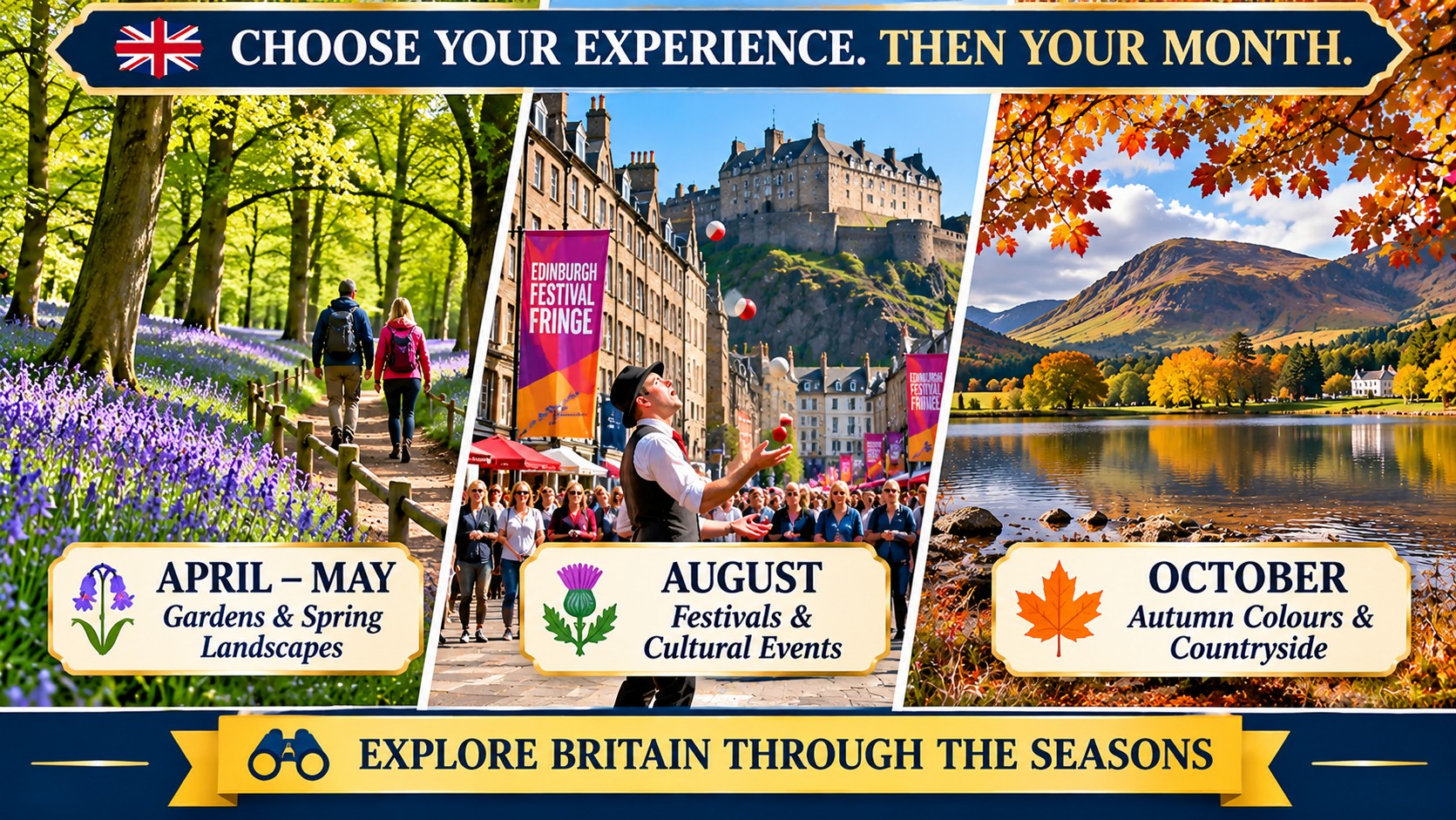
Choose your experience, then your month. From bluebell-filled woodlands in April and May to Edinburgh’s lively August festival season and the Lake District’s golden autumn landscapes in October, Britain offers distinctive travel experiences throughout the year
Already know what matters most to you? Use this quick comparison to identify promising travel months before exploring the experiences and regional differences that may influence your final choice.
These are useful seasonal starting points, not guarantees. Flowering dates, weather, event programmes and visitor demand vary by region and year. Compare your preferred months with your intended destinations before fixing your travel dates.
🎯 Which Months Are Best for Different British Travel Experiences?
Rather than selecting a month based on weather alone, consider what you most want to experience. Britain’s seasonal calendar offers different advantages for sightseeing, gardens, outdoor exploration and cultural events.
🏛️ Best Months for Cities, Museums and Historic Attractions
Britain’s major cities can be rewarding throughout the year, particularly where museums, galleries and indoor attractions provide alternatives during unsettled weather.
April to June and September can offer an appealing balance of daylight and outdoor sightseeing opportunities. However, winter visits can also work well for travellers interested primarily in cultural attractions, historic streets and indoor experiences.
London, Edinburgh, Cardiff and other historic cities offer different seasonal atmospheres, from spring gardens to Christmas illuminations.
Remember that some historic houses, gardens and smaller heritage properties operate seasonal opening schedules, even when nearby museums remain accessible throughout the year.
🌸 Best Months for Gardens, Flowers and Countryside Scenery
For spring gardens, April and May are particularly attractive, although flowering periods vary by region and weather.
March can bring daffodils and early blossom, while May often offers fuller greenery and established late-spring displays.
June and July provide opportunities to enjoy summer gardens and mature countryside landscapes. September introduces early autumn changes, while October can be rewarding for woodland colour.
The best month therefore depends on the particular landscape or flowering display you want to experience.
A visitor hoping to see spring blossom should plan differently from someone seeking golden autumn woodland scenery. Neither experience can be guaranteed for a precise date, so flexibility remains valuable.
🥾 Best Months for Walking, Coastal Visits and Outdoor Exploration
For many outdoor activities, May, June and September offer an attractive combination of daylight, seasonal scenery and opportunities to explore Britain’s varied landscapes.
June is especially useful for longer excursions because of its extended daylight hours. July and August also provide substantial opportunities for coastal walks, countryside visits and outdoor attractions, although popular destinations can become busy during school holidays.
Spring brings fresh greenery and flowering landscapes, while September offers the appeal of late-summer countryside and the first signs of autumn.
However, the best month depends on the activity and location. Walking through the Cotswolds is very different from exploring exposed mountain terrain in Snowdonia (Eryri) or the Scottish Highlands.
Mountain weather can deteriorate rapidly in any season, and longer summer days do not eliminate the need for appropriate equipment and sensible route planning.
Choose your month according to the conditions your activities require, rather than assuming that summer is automatically the safest or most suitable season.
🎭 Best Months for Festivals, Traditions and Seasonal Celebrations
Britain’s cultural calendar provides compelling reasons to visit at different times of year.
March and April can bring Easter celebrations, while June offers summer solstice traditions and outdoor gatherings. July and August feature major festivals and cultural events, including Edinburgh’s internationally recognised festival season.
Autumn introduces harvest celebrations, Halloween and Bonfire Night, while December is particularly appealing for Christmas markets, festive illuminations and seasonal heritage experiences.
The important question is whether a particular celebration is central to your journey.
If attending a major festival is your priority, travel dates may need to follow the event schedule. If you are primarily interested in general sightseeing, avoiding the busiest event periods may provide greater flexibility.
Always distinguish established annual traditions from confirmed programmes. Recurring events do not necessarily take place on identical dates or under identical arrangements every year.
💷 Best Months for Quieter Travel and Potential Value
Travellers with flexible dates may find worthwhile opportunities outside the main school-holiday periods.
January, February and November can be quieter at some city attractions and traditional holiday destinations, although seasonal closures and shorter daylight may limit certain activities.
March, early May and September can also provide appealing alternatives to the busiest summer weeks, depending on the destination and local events.
However, there is no universally cheapest or quietest month across Britain.
A major festival, sporting occasion or school holiday can increase demand even during a period that might otherwise seem relatively peaceful.
Accommodation prices, transport costs and attraction availability also vary by location and booking date.
For better value, compare the complete cost and practicality of your preferred itinerary rather than relying on the month alone.
🗺️ How the Best Travel Month Changes Across Britain
Britain’s geography means that the same month can produce noticeably different travel experiences in England, Scotland and Wales.
Latitude, altitude, proximity to the coast and local weather patterns all influence conditions. Understanding these differences is particularly important when planning a journey across several regions.
🏙️ England: Cities, Gardens, Coastlines and Seasonal Contrasts
England offers considerable variety, from London’s year-round cultural attractions to the gardens of southern England, northern uplands and coastal landscapes.
Spring can be especially rewarding for gardens and countryside visits, while summer brings long sightseeing days and opportunities to explore seaside destinations.
Autumn offers changing woodland scenery and atmospheric historic towns, while winter remains suitable for many city-based cultural experiences.
However, conditions in southern England may differ substantially from those in the Lake District or the North Pennines.
Visitors combining urban sightseeing with countryside excursions should therefore consider the requirements of both environments.
🏔️ Scotland: Northern Daylight, Highland Conditions and Seasonal Events
Scotland’s northern location creates some of Britain’s most striking seasonal daylight differences.
Summer brings exceptionally long days, particularly in northern Scotland, supporting scenic journeys and extended outdoor exploration.
Winter daylight is much more limited, especially in the Highlands and islands, where weather and travel conditions may also influence itineraries.
Edinburgh’s festivals provide a distinctive summer attraction, while Burns Night and Hogmanay contribute to Scotland’s winter cultural identity.
Nevertheless, conditions in Edinburgh, the western Highlands and the Northern Isles can differ considerably.
For multi-region Scottish journeys, daylight, driving distances, weather exposure and seasonal transport arrangements deserve particular attention.
The same travel month can feel very different across Britain. Use these regional starting points to match your interests with the landscapes, daylight and seasonal conditions you are most likely to encounter.
Spring:
Gardens, blossom and fresh countryside scenery.
Summer:
Historic attractions, coastal visits and longer sightseeing days.
Autumn:
Woodland colours, heritage towns and atmospheric landscapes.
Winter:
Museums, city culture and festive experiences.
Spring:
Emerging Highland greenery and increasing daylight.
Summer:
Exceptionally long northern days, scenic journeys and festivals.
Autumn:
Changing Highland landscapes and cooler countryside exploration.
Winter:
Short daylight, winter traditions and weather-dependent travel.
Spring:
Flowering valleys, green countryside and scenic walks.
Summer:
Longer days for coastal exploration and mountain landscapes.
Autumn:
Colourful wooded valleys and atmospheric heritage destinations.
Winter:
Cultural visits and shorter, weather-conscious outdoor journeys.
Consider the destinations within each country as carefully as the season itself. Coastal weather, mountain conditions and daylight can differ substantially, particularly when combining several regions in one itinerary.
🏞️ Wales: Mountain Landscapes, Coastal Weather and Outdoor Planning
Wales offers dramatic seasonal contrasts between its mountains, valleys, historic towns and extensive coastline.
Spring brings fresh countryside greenery and flowering landscapes, while summer provides longer days for coastal exploration and walking.
Autumn can be particularly attractive in wooded valleys and national park landscapes, although weather conditions become increasingly important as daylight shortens.
Mountain areas such as Eryri may experience considerably different conditions from nearby coastal destinations.
Visitors planning walking holidays or scenic journeys should consider terrain, weather exposure and realistic travel times.
The most suitable month is therefore determined not simply by the season, but by where you intend to explore and how much time you expect to spend outdoors.
🧳 How to Choose the Right Month for Your British Holiday
Choosing when to visit Britain becomes easier once you identify the experiences that matter most. Rather than searching for a single perfect month, consider how seasonal conditions, daylight, visitor demand and practical arrangements fit your plans.
A little flexibility can make a considerable difference, particularly when combining several destinations or travelling for a specific event.
🎯 Start with the Experiences That Matter Most
Begin by identifying the main purpose of your journey.
If gardens and flowering countryside are priorities, spring may be especially appealing. If you want extended sightseeing days and opportunities for outdoor exploration, late spring and summer deserve consideration.
Autumn may be more suitable for woodland scenery and atmospheric historic towns, while winter offers distinctive festive experiences and opportunities for cultural sightseeing.
It is also worth distinguishing between experiences you consider essential and those you would simply enjoy if circumstances allow.
For example, someone determined to attend a particular festival should plan around its confirmed dates. A visitor interested in historic cities, museums and occasional countryside excursions may have considerably more flexibility.
Choose your essential experiences first, then identify the months most likely to support them.
⚖️ Balance Weather, Daylight, Crowds and Travel Costs
Every month involves trade-offs.
June offers exceptionally long daylight hours, but popular outdoor destinations can still attract substantial visitor numbers. August provides major cultural events and summer activities, although school holidays may increase demand.
May can be attractive for gardens and countryside, while September offers late-summer scenery and a different visitor atmosphere. Winter months may suit cultural city breaks but require more careful planning around daylight and seasonal closures.
A useful approach is to compare two promising months against the same priorities.
Consider whether longer days matter more than warmer temperatures, whether you prefer lively festivals or quieter sightseeing, and how much flexibility you have around accommodation and transport costs.
There is rarely one universally correct answer. The best month is the one offering the strongest balance for your particular journey.
From spring celebrations and summer festivals to autumn traditions and Christmas events, Britain’s calendar can influence when and where you travel. Before committing to your preferred month, check which experiences are scheduled for your intended dates.
Use our Seasonal Events Calendar to explore celebrations, festivals and seasonal highlights that may help shape your British holiday. Treat it as a planning starting point, then confirm the latest arrangements with the relevant event organisers.
Confirm festival and celebration dates for your travel year.
Check school holidays and bank holidays in your chosen destinations.
Verify seasonal attraction opening dates and operating hours.
Check transport schedules, connections and advance-booking requirements.
Use official event organisers and attraction providers to confirm final details.
Annual traditions do not always follow identical programmes, access arrangements or dates. The calendar helps you identify opportunities, but individual events, tickets and operating schedules should be independently confirmed before booking.
🚆 Plan Around Seasonal Access, Events and Journey Length
Once you have shortlisted your preferred months, examine how the season affects the practical arrangements.
Some historic properties, gardens and countryside attractions operate seasonal opening hours. Rural transport services may be limited, and certain activities depend on weather or local operating conditions.
Public holidays and major events can also affect transport, accommodation availability and visitor numbers.
Daylight is particularly important for itineraries involving several destinations. A journey that feels comfortable during June’s long evenings may require fewer stops or earlier departures in December.
For multi-region holidays, consider the additional time needed for connections and possible weather-related disruption.
Before finalising dates, check the arrangements that are essential to your journey rather than assuming that every experience is available throughout the year.
✅ Your Britain Month-Selection Checklist
Before choosing your final travel dates, consider these seven questions:
-
Essential experiences: What do you most want to see or do?
-
Destinations: Which parts of England, Scotland or Wales will you visit?
-
Weather: How comfortable are you with cold, rain, wind or changeable conditions?
-
Daylight: Will your plans involve long outdoor days or several sightseeing stops?
-
Events and holidays: Are there celebrations you want to attend or busy periods you would prefer to avoid?
-
Seasonal access: Will your chosen attractions and transport connections operate when needed?
-
Budget and flexibility: Could changing your dates improve availability, value or the overall experience?
Answering these questions should help you narrow your options to one or two suitable months, making the remaining planning decisions considerably more straightforward.
♻️ Responsible Seasonal Travel in Britain
Choosing when to visit Britain is not only about weather, scenery and convenience. Seasonal travel decisions can also affect local communities, historic attractions, wildlife and sensitive natural environments.
Travelling responsibly means understanding these pressures and making practical choices that respect the places you visit.
🌱 Travelling Thoughtfully During Busy and Quieter Seasons
Popular destinations can experience considerable visitor pressure during school holidays, major festivals and periods of particularly favourable weather.
Historic towns, coastal communities and well-known countryside attractions may become especially busy, placing additional demands on local services, transport and public spaces.
Where your dates are flexible, visiting outside the busiest periods can sometimes help spread visitor demand more evenly throughout the year.
However, quieter travel is not automatically more sustainable. Some rural businesses depend heavily on seasonal visitors, while reduced public transport services may make certain off-season journeys less practical.
A thoughtful approach involves respecting local communities, supporting businesses where appropriate and following visitor-management guidance at sensitive locations.
The aim is to enjoy Britain’s seasonal attractions while helping preserve their character for residents and future visitors.
🚆 Respecting Landscapes, Wildlife and Seasonal Travel Conditions
Britain’s countryside changes considerably throughout the year, and responsible exploration requires attention to seasonal conditions.
Spring can be a sensitive period for nesting birds and emerging wildlife, while wet autumn and winter weather may leave walking routes muddy, slippery or vulnerable to damage.
Stay on designated paths where required, follow local access guidance and avoid disturbing wildlife or fragile habitats.
Public transport can be a practical alternative to driving for some journeys, particularly between major cities and well-connected attractions. However, rural connections may be limited, especially outside the main visitor season.
Where driving is necessary, sensible route planning and combining nearby destinations can help avoid unnecessary journeys.
Whatever the season, checking local conditions and respecting temporary restrictions helps protect Britain’s landscapes while making your visit safer and more enjoyable.
❓ Frequently Asked Questions About Visiting Britain Month by Month
❓ What Is the Best Month to Visit Britain for the First Time?
May, June and September are often attractive choices for a first visit because they can offer useful daylight, appealing landscapes and opportunities for varied sightseeing. However, the best month depends on your destinations, preferred activities and tolerance for changeable weather. Britain can be rewarding throughout the year.
❓ Which Month Has the Best Weather in Britain?
July and August are generally among Britain’s warmest months, although June can also offer pleasant conditions and particularly long daylight hours. Weather varies considerably between regions, and summer does not guarantee sunshine. For comfortable sightseeing, May and September may also be worth considering.
❓ What Is the Rainiest Month in Britain?
There is no single rainiest month that applies consistently across Britain. Rainfall patterns differ between western and eastern regions, coastal areas, mountains and lowlands. Some locations experience wetter autumn and winter conditions, but rain is possible throughout the year. Regional climate information is more useful than a nationwide generalisation.
❓ When Does Britain Have the Longest Daylight Hours?
Britain experiences its longest daylight period around the summer solstice, usually on 20 or 21 June. Northern Scotland enjoys considerably longer summer days than southern England. However, daylight duration should not be confused with sunshine, as cloudy or rainy conditions remain possible.
❓ Which Months Are Best for Avoiding Crowds in Britain?
January, February and November can be quieter at some attractions, while March and September may offer alternatives to the main summer holiday period. However, school holidays, festivals and local events can create busy conditions in any month. Quieter travel also needs to be balanced against seasonal closures and shorter daylight.
❓ Is Britain Worth Visiting in Winter?
Yes. Winter offers atmospheric historic towns, museums, cultural attractions, festive traditions and distinctive countryside scenery. However, daylight is limited, particularly in northern Scotland, and some attractions operate reduced schedules. Flexible itineraries and appropriate clothing can make winter travel rewarding without relying on guaranteed snow or clear weather.
❓ Is May or September Better for Visiting Britain?
May is particularly attractive for spring gardens, fresh greenery and increasing daylight. September offers late-summer landscapes, harvest traditions and the beginning of autumn. Both can suit sightseeing and countryside visits. Choose May for established spring scenery or September for a late-summer atmosphere, while allowing for regional weather differences.
🌅 Conclusion: Choosing the Best Month for Your British Journey
Britain offers something distinctive in every month of the year. From winter traditions and early spring flowers to long summer evenings and colourful autumn landscapes, the changing seasons create different opportunities for exploration.
The key is understanding how those changes affect your own travel plans.
Weather, daylight, seasonal events and visitor demand all influence what you can comfortably experience. A month that suits a city-focused cultural holiday may be less suitable for an ambitious countryside itinerary, while the ideal time for gardens will differ from the best period for autumn scenery or Christmas celebrations.
By comparing the months, considering regional differences and checking important seasonal arrangements, you can select dates that genuinely support your interests.
There is no single perfect month to visit Britain. The right time is the one that brings together the places you want to explore, the experiences you value and the kind of journey you hope to enjoy.
Found a promising time to visit Britain? Explore these carefully selected guides to develop your seasonal plans, or discover organised touring options when you are ready to take the next step.
Compare seasonal travel across Britain and Europe, including the changing experiences and practical considerations that can influence your itinerary.
Explore the appeal of spring gardens, flowering landscapes, blossom and countryside experiences as Britain emerges from winter.
Plan around longer daylight hours, outdoor sightseeing, summer experiences and the practical realities of the busiest travel season.
Ready to turn your preferred travel season into a journey? Explore organised touring options across Britain and Ireland.
Start with the seasonal guidance that best reflects your interests, then explore suitable touring options once your destinations and preferred travel period are clearer.