


Britain’s Seasonal Events Calendar: What Happens Throughout the Year?
2nd November 2026
📅 Britain’s Seasonal Events Calendar: What Happens Throughout the Year?
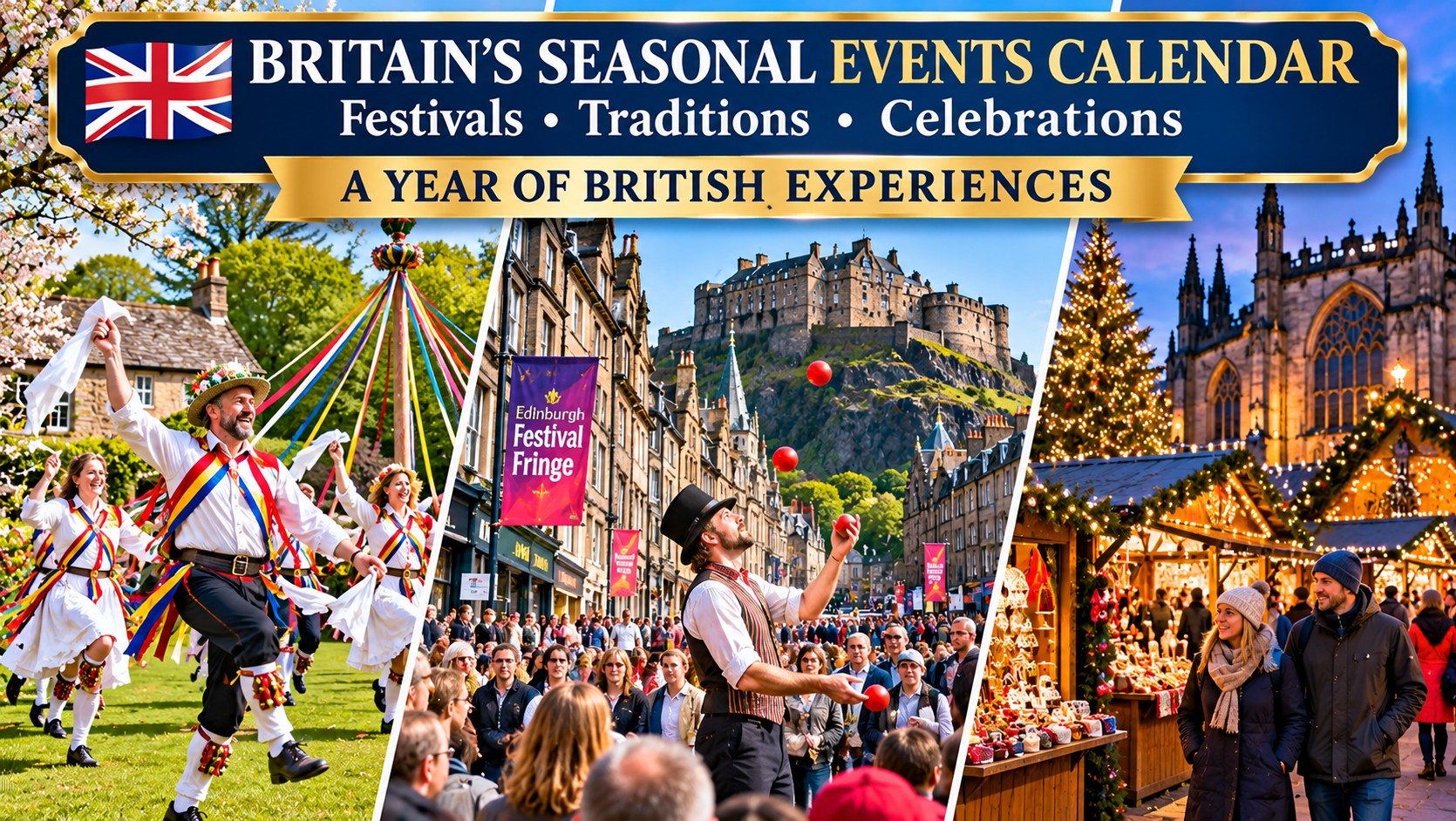
A year of British experiences. From traditional May Day dancing and Edinburgh’s lively summer festival season to atmospheric Christmas markets, Britain’s annual calendar offers distinctive cultural celebrations, historic traditions and memorable visitor experiences throughout the seasons
Britain’s calendar is filled with traditions, festivals and celebrations that give every part of the year its own character. From Burns Night in Scotland and springtime celebrations in Wales to summer festivals, historic ceremonies, autumn gatherings and Christmas markets, the country’s annual events offer opportunities to experience British culture beyond its familiar landmarks.
Some occasions take place on established dates, while others follow changing festival programmes, religious calendars or natural seasons. Where you travel can be just as important as when: a Highland Games gathering in Scotland offers a very different experience from a London ceremonial event or a village May Day celebration.
Whether you’re choosing holiday dates around a particular occasion or looking for something memorable during an existing visit, this month-by-month guide explains what happens throughout Britain, where to experience it and what to check before making plans.
🧭 How Britain’s Annual Events Calendar Works
Before exploring the months individually, it helps to understand how Britain’s events calendar operates. Not every celebration has a fixed date, not every tradition takes place nationwide and not every major occasion offers unrestricted public access.
These distinctions can make a considerable difference when planning a visit.
📆 Fixed Dates, Movable Celebrations and Annually Announced Festivals
Some British traditions are associated with a particular calendar date. Burns Night falls on 25 January, St David’s Day on 1 March and Bonfire Night on 5 November. Although the observances themselves have established dates, organised celebrations may take place on nearby evenings or weekends.
Other occasions move each year. Shrove Tuesday depends on the Christian calendar, while Easter can fall in March or April. This means a traveller visiting Britain during the same week in successive years may encounter quite different celebrations.
Major festivals and sporting events operate differently again. The Edinburgh Festival Fringe, Wimbledon and Royal Ascot are recurring fixtures, but their precise programmes and dates are announced for individual editions.
Natural seasonal experiences introduce another consideration. Spring flowers, autumn colours and other outdoor spectacles depend partly on local conditions and the weather experienced during a particular year.
The practical distinction is between knowing when something traditionally happens and knowing exactly when you can experience it. For important occasions, always check the current programme rather than relying solely on previous years.
🗺️ National Occasions and Regional Traditions Across Britain
Britain includes England, Scotland and Wales, each with its own cultural traditions, regional celebrations and distinctive events.
Scotland’s calendar includes Burns Night, Highland Games and Hogmanay, while Wales celebrates St David’s Day through activities that reflect Welsh language, culture and national identity. Across England, visitors encounter everything from historic May Day customs and village festivals to major sporting occasions and ceremonial traditions.
Some celebrations cross national and cultural boundaries. St Patrick’s Day, for example, is particularly associated with Ireland but is also marked by communities and organised events in British cities. Northern Ireland is part of the United Kingdom but not Great Britain, so its own events calendar should not automatically be treated as British coverage.
Even within one nation, traditions can vary considerably. A local agricultural show, coastal festival or community celebration may provide a more distinctive regional experience than a nationally recognised event.
For travellers, this means that choosing the right location is often as important as choosing the right month. A celebration may be widely known but most meaningful, or most accessible, in a particular community.
🎟️ Public Celebrations, Ticketed Events and Visitor Access
An event appearing on Britain’s calendar does not necessarily mean visitors can attend without advance arrangements.
Some celebrations take place in public streets, parks or town centres. Others involve ticketed performances, reserved seating, controlled viewing areas or restricted ceremonial access. Major sporting events may offer an entirely different visitor experience from free community gatherings.
There is also a distinction between observing a tradition and participating in it. Visitors may be welcome to watch a procession or attend a public festival, while smaller community or religious occasions may have particular expectations concerning behaviour, photography and participation.
Before arranging travel around an event, establish whether it is open to the public, whether admission or reservations are required and whether the experience you want is actually available.
This is particularly important for popular ceremonies, festivals and historic locations where crowd management, security or conservation requirements can affect access.
A worthwhile event is one that fits your interests and offers a realistic visitor experience, not simply one with a famous name.
🎭 Choose Your British Seasonal Experience
Britain’s celebrations offer very different ways to experience its culture and traditions. Before choosing a month, consider what you would most enjoy: a lively festival, a historic ceremony, a regional gathering or an outdoor seasonal occasion.
🎨 Cultural Festivals & Performances
Ideal for: Travellers who enjoy theatre, music, comedy, arts and lively cultural destinations.
Edinburgh’s festival season and summer arts programmes can offer extensive choices, from major productions to smaller performances.
Before choosing: Check individual programmes, admission arrangements, accommodation demand and whether the performances you want coincide with your visit.
👑 Historic Ceremonies & National Occasions
Ideal for: Visitors interested in British history, ceremonial traditions and significant national observances.
Occasions such as Trooping the Colour and public commemorations reveal different aspects of Britain’s national heritage.
Before choosing: Confirm public viewing arrangements, security restrictions and the appropriate conduct for solemn or commemorative occasions.
🏴 Regional Traditions & Community Celebrations
Ideal for: Travellers seeking local identity, traditional customs and a closer connection with communities.
Highland Games, Welsh cultural celebrations, May Day customs and village gatherings can provide distinctive regional experiences.
Before choosing: Establish the precise location, whether visitors are welcome and whether the event is practical to reach.
🌿 Outdoor & Seasonal Celebrations
Ideal for: Visitors who enjoy gardens, seasonal landscapes, outdoor gatherings and changing traditions throughout the year.
Spring flower shows, summer solstice gatherings, autumn heritage activities and festive markets offer contrasting seasonal experiences.
Before choosing: Check seasonal conditions, daylight, event access, weather contingencies and confirmed operating dates.
🧭 Choose the experience, not simply the headline: A major festival may offer an extensive programme but involve crowds and advance reservations. A smaller regional celebration may suit your interests and itinerary better, although visitor facilities and access can be more limited. The most rewarding choice is the one that genuinely fits your travel plans.
🗓️ Britain’s Events Calendar: January to December
Britain’s annual calendar changes with the seasons, bringing together long-established customs, major cultural occasions and local celebrations. Some events are closely associated with particular months, while others move between dates or extend across several weeks.
The following monthly guide highlights representative experiences and explains what their timing means for visitors. It is an overview of recurring traditions and typical event periods, rather than a confirmed programme for any particular year.
❄️ January: New Year Traditions, Burns Night and Winter Celebrations
January begins with the continuation of New Year celebrations, particularly in Scotland, where Hogmanay has a distinctive cultural identity. Although Hogmanay centres on New Year’s Eve, celebrations and associated activities may continue into the opening days of January.
One of Scotland’s most recognisable cultural occasions follows on 25 January: Burns Night, commemorating the poet Robert Burns. Traditional Burns Suppers often feature poetry, music, speeches and a meal associated with Scottish heritage.
Visitors may find Burns Night celebrations in hotels, restaurants, cultural venues and community settings, although programmes and admission arrangements differ.
January’s shorter daylight and colder conditions make indoor cultural occasions especially appealing. However, outdoor New Year gatherings and winter events require suitable clothing and attention to local travel arrangements.
For visitors interested in Scottish culture, Burns Night can provide a memorable reason to travel. Others may prefer to incorporate a celebration into an existing winter city break rather than organise an entire journey around it.
🎭 February: Shrove Tuesday, Cultural Traditions and Winter Events
February can bring a mixture of traditional celebrations, winter entertainment and community occasions.
One of Britain’s best-known customs is Shrove Tuesday, popularly called Pancake Day. Traditionally associated with the period before Lent, it is marked in some communities by pancake races and other activities.
The historic pancake race in Olney, Buckinghamshire, is a particularly distinctive example of this tradition. Other towns and communities may organise their own celebrations, often reflecting local customs.
Importantly, Shrove Tuesday does not always fall in February. Its date changes with Easter and can occur in March, so visitors hoping to see a particular race or celebration should check the relevant year’s arrangements.
Elsewhere, winter festivals, performances and local cultural programmes can provide experiences that are less dependent on favourable outdoor conditions.
February is therefore better approached as a month for discovering specific traditions and local programmes rather than expecting one nationwide festival season.
🌼 March: St David’s Day, St Patrick’s Day and the Arrival of Spring
March brings two prominent cultural dates alongside the gradual transition towards spring.
St David’s Day on 1 March celebrates Wales’s patron saint and is an important expression of Welsh national identity. Celebrations may include music, traditional dress, cultural performances and displays of Welsh symbols such as daffodils and leeks.
Cardiff and other Welsh communities can provide opportunities to experience these traditions, although individual programmes vary.
St Patrick’s Day on 17 March is associated primarily with Ireland, but celebrations also take place in British cities with Irish cultural communities. These may include music, performances and organised public events.
The two occasions have different national and cultural meanings and should not be treated as interchangeable.
March also marks the beginning of spring in different ways across Britain. Gardens and landscapes may start changing, but the timing of flowers and outdoor seasonal experiences depends on location and weather.
Easter sometimes falls in March, bringing additional religious observances and holiday activities. Travellers should therefore check the calendar for their particular year rather than assuming Easter belongs to April.
🌷 April: Easter Celebrations, Heritage Events and Spring Gardens
April is closely associated with Easter, although the celebration may occur in March instead.
Across Britain, Easter can bring church services, family activities, seasonal exhibitions and special programmes at historic properties and visitor attractions. Easter egg hunts and garden events are familiar features of the holiday period, but individual venues decide their own activities and dates.
The Easter school holidays can also influence demand at popular family attractions, especially where outdoor experiences become more appealing as spring develops.
Beyond Easter, April is a rewarding period for visitors interested in gardens and historic landscapes. Daffodils, blossom and other spring displays may provide an attractive setting for seasonal events, although flowering times vary considerably between regions and years.
For travellers, the important distinction is between the religious Easter dates, school holiday periods and individual attraction programmes. These do not necessarily cover identical dates.
Visitors planning around a particular Easter activity should confirm the venue’s programme and admission arrangements before travelling.
🌸 May: May Day, Flower Shows and Spring Festivals
May brings together some of Britain’s oldest seasonal customs and its celebrated gardening traditions. As daylight increases and gardens reach an important stage in their spring displays, outdoor celebrations become a particularly attractive part of the visitor calendar.
May Day on 1 May has long been associated with the arrival of spring. Traditional activities can include maypole dancing, Morris dancing, floral decorations and community gatherings. Some places preserve distinctive local customs, while others organise contemporary celebrations inspired by older traditions.
The early May bank holiday in England and Wales does not necessarily fall on 1 May, and individual festivities may take place on different dates.
May is also closely associated with major gardening occasions, including the RHS Chelsea Flower Show in London. Its displays and garden designs attract considerable interest, but the annual programme, admission arrangements and exact dates should always be checked.
Elsewhere, smaller flower shows, garden openings and village festivals offer opportunities to experience Britain’s horticultural traditions in different settings.
For visitors, May offers a choice between major organised events and more intimate local celebrations. The latter may provide a distinctive sense of place, although programmes and public access can be less predictable.
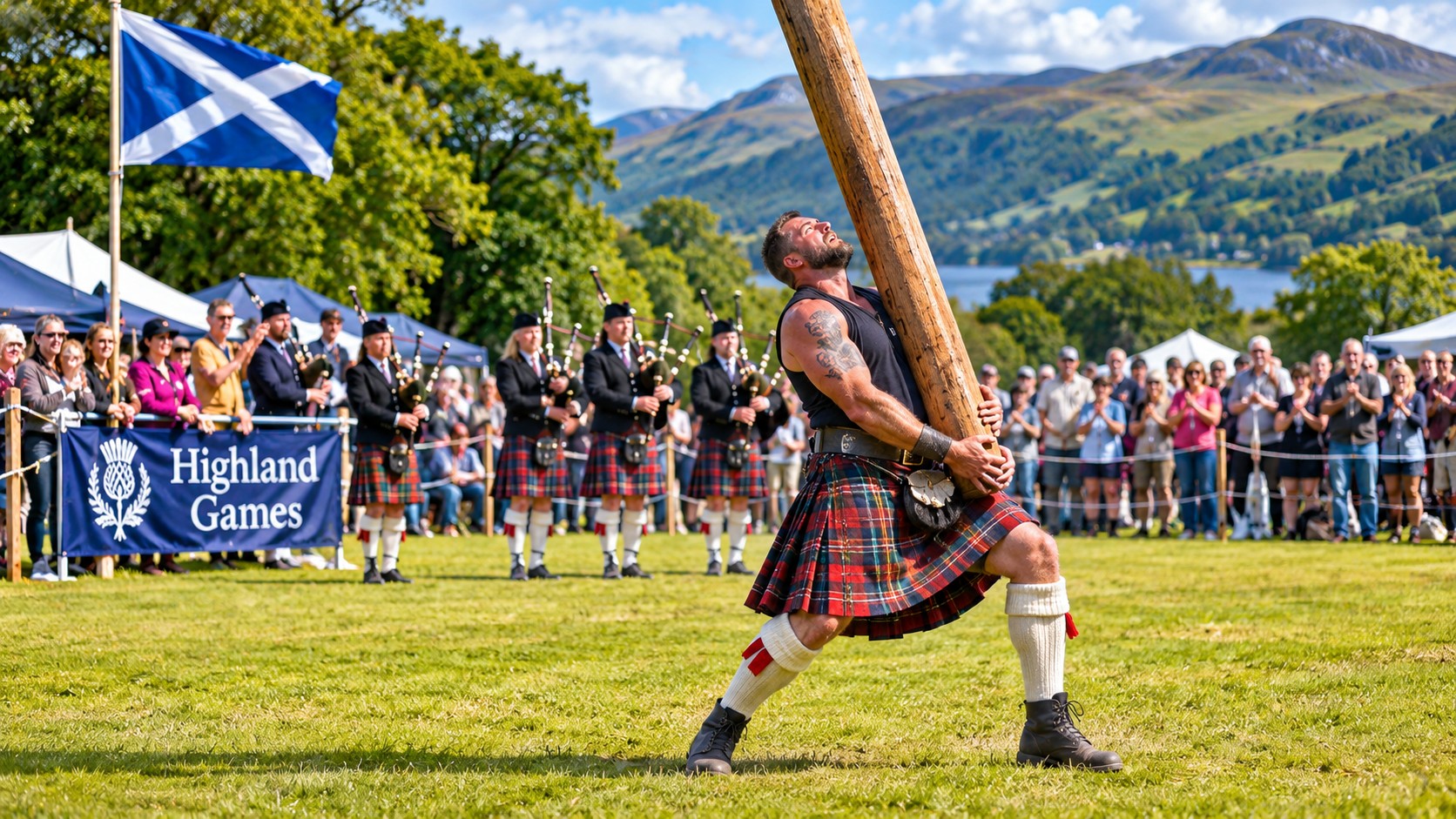
Scotland’s Highland Games bring together traditional athletic competitions, pipe bands, Highland dancing and community celebrations. The caber toss is one of the most recognisable events, reflecting Scotland’s distinctive cultural heritage and longstanding sporting traditions
☀️ June: Summer Ceremonies, Sporting Occasions and the Solstice
June marks an important period in Britain’s ceremonial, sporting and seasonal calendar. Longer daylight supports outdoor gatherings, while several major occasions attract visitors to particular destinations.
Trooping the Colour, the ceremonial celebration of the British monarch’s official birthday, is traditionally associated with June in London. Its military pageantry is distinctive, but public viewing arrangements, security restrictions and the annual date require confirmation.
Royal Ascot is another prominent June occasion, combining high-profile horse racing with established social traditions. Visitors interested in attending need to consider admission arrangements, dress requirements and the practical demands of travelling during a major sporting event.
June also brings the summer solstice, usually occurring around 20 or 21 June in Britain. Stonehenge is especially associated with solstice gatherings because of the monument’s astronomical alignments and cultural significance.
However, the astronomical event and any organised public access arrangements are separate matters. Visitors should not assume that normal admission procedures or unrestricted access apply.
Wimbledon, meanwhile, typically begins in late June or early July, illustrating why major sporting events cannot always be assigned exclusively to one month.
June can be rewarding for visitors seeking outdoor experiences, but popular occasions may create concentrated demand for accommodation, transport and access. Choosing the event first, then checking the practical arrangements, is particularly important.

Stonehenge’s summer solstice is one of Britain’s most recognisable seasonal celebrations. Visitors gather around the ancient monument to welcome the sunrise, connecting a modern cultural gathering with Stonehenge’s prehistoric significance and its relationship with the changing seasons
🎪 July: Summer Festivals, Sporting Highlights and Outdoor Celebrations
July is one of Britain’s busiest periods for outdoor cultural experiences. Longer days, generally milder conditions and the approach of school summer holidays create opportunities for festivals, performances and community celebrations.
The Wimbledon Championships are among Britain’s best-known sporting occasions, usually taking place across late June and July or within July, depending on the year’s calendar. Attendance requires attention to official ticketing and admission arrangements.
Beyond major sporting events, July brings music festivals, open-air theatre, arts programmes and local celebrations across England, Scotland and Wales.
Some events take place in city parks or established performance venues, while others use historic buildings, country estates or temporary outdoor festival sites. These settings can be part of the experience, but they also influence transport, accessibility and preparation.
For travellers, the main comparison is between large festivals with extensive programmes and smaller local events that may be easier to incorporate into an existing itinerary.
Summer conditions do not guarantee dry weather. Outdoor performances can be affected by rain, and festival grounds may require suitable footwear and contingency plans.
Where a particular performance or sporting occasion is the main reason for travelling, confirmed dates and admission arrangements should take priority over assumptions based on previous years.
🎨 August: Edinburgh Festival Season, Highland Games and Summer Holidays
August is particularly important in Scotland’s cultural calendar.
Edinburgh becomes a major international festival destination, with the Edinburgh Festival Fringe presenting an extensive programme of theatre, comedy, music and other performances. The Edinburgh International Festival also contributes to the city’s cultural season, although it is a separate event with its own programme.
Visitors should distinguish between the festivals rather than assuming that all Edinburgh performances operate under one organisation or admission system.
Elsewhere in Scotland, Highland Games gatherings celebrate traditions that may include Highland dancing, pipe bands and athletic competitions. Individual gatherings take place at different locations and dates, and the wider Highland Games season is not confined to August.
August also coincides with school summer holidays in much of Britain, making accommodation availability and local transport particularly important considerations in popular destinations.
Edinburgh’s festival atmosphere can be a compelling reason to organise a dedicated visit. By contrast, a Highland Games gathering may fit naturally into a wider Scottish journey, provided the location and date are suitable.
The central August decision is whether to embrace a major festival destination or seek a more regional cultural experience. Both can be rewarding, but they require different levels of planning.
🍂 September: Heritage Celebrations, Harvest Traditions and Early Autumn
September brings a different character to Britain’s events calendar. As the main summer holiday period draws to a close, heritage programmes, agricultural traditions and early autumn celebrations offer opportunities to explore places and communities beyond the busiest summer festivals.
One notable occasion is Heritage Open Days in England, a recurring programme that provides opportunities to discover historic buildings, cultural sites and places that may not ordinarily be accessible in the same way. Scotland and Wales have their own heritage-access initiatives, including Doors Open Days and Open Doors programmes, although their schedules and participating venues vary.
These events can be particularly rewarding for visitors interested in architecture, local history and lesser-known heritage.
September is also associated with harvest traditions. Agricultural shows, harvest festivals and community celebrations reflect Britain’s longstanding relationship with farming and the countryside.
However, harvest timing varies according to crops, geography and weather, and not every traditional observance is organised as a public visitor event.
For travellers, September offers an interesting choice between special heritage access and countryside cultural experiences. The essential preparation is to confirm participating venues, opening dates and whether advance reservations are necessary.
🎃 October: Autumn Festivals, Halloween and Seasonal Celebrations
October brings autumn celebrations, changing landscapes and increasingly atmospheric evening events.
Halloween on 31 October is widely recognised across Britain, although the ways it is celebrated vary considerably. Some communities maintain traditional activities, while visitor attractions may organise themed evenings, illuminated trails or family entertainment.
Historic buildings, castles and other heritage settings sometimes provide the backdrop for seasonal programmes. These can be enjoyable experiences, but their commercial Halloween activities should not be confused with longstanding local customs.
October is also associated with harvest-related celebrations and regional autumn festivals. In rural areas, these may reflect agricultural traditions, seasonal food and local community life.
As daylight becomes shorter, visitors attending evening events should consider transport arrangements, suitable clothing and the possibility of wet or cold conditions.
Autumn colour can enhance the setting for outdoor activities, although its timing and intensity depend on weather, tree species and location.
For visitors, the distinction is between experiencing a local seasonal tradition and attending an organised autumn attraction. Neither is inherently better; they simply offer different experiences.
🎆 November: Bonfire Night, Remembrance and the Festive Transition
November contains several important British occasions, ranging from community fireworks celebrations to national remembrance.
Bonfire Night on 5 November, also known as Guy Fawkes Night, commemorates the failure of the Gunpowder Plot of 1605. Organised fireworks displays and bonfires are familiar features in many communities.
Although the traditional date is fixed, public displays may take place on nearby weekends rather than on 5 November itself. Visitors should check local arrangements, particularly where admission, crowd controls or transport restrictions apply.
November also includes Armistice Day on 11 November and Remembrance Sunday, observed on the second Sunday of the month. These occasions commemorate those who have died in military service and are marked by ceremonies, wreath-laying and periods of silence.
Visitors may attend many public commemorations, but respectful behaviour and awareness of local arrangements are essential. These observances should be understood as acts of remembrance rather than entertainment events.
Later in November, some towns and cities begin their Christmas market programmes, festive illuminations and seasonal performances.
For travellers, November therefore offers contrasting experiences: historic traditions, solemn national commemorations and the gradual emergence of the festive season.
🎄 December: Christmas Markets, Winter Traditions and New Year Celebrations
December brings some of Britain’s most recognisable seasonal experiences, from Christmas markets and festive performances to community celebrations and preparations for New Year.
Cities and towns across Britain may host Christmas markets featuring seasonal food, crafts, decorations and entertainment. Their character varies considerably, from large organised markets to smaller community occasions.
Christmas markets do not all operate throughout December. Some begin in November, while others finish before Christmas Day. Dates, opening hours and admission arrangements should be checked individually.
Concerts, carol services, pantomimes and seasonal performances also form an important part of Britain’s festive cultural calendar.
Christmas Day and Boxing Day can bring substantial changes to transport, hospitality and attraction opening arrangements, making advance preparation particularly important.
Towards the end of December, attention turns to New Year celebrations. Scotland’s Hogmanay traditions are especially prominent, although individual public events and programmes differ between destinations and years.
Short winter days and the popularity of festive destinations can influence how much visitors comfortably fit into an itinerary.
For those travelling specifically for Christmas celebrations, the priority is confirming that the desired experiences will operate on their chosen dates. Visitors already spending December in Britain may instead discover that smaller local traditions offer some of the most memorable encounters with the festive season.
🧭 Practical Planning for Britain’s Seasonal Events
A successful event-focused visit depends on more than choosing an interesting occasion. Confirming the arrangements, understanding local conditions and allowing sufficient flexibility can make the difference between an enjoyable experience and an unnecessarily complicated journey.
📅 Confirm Dates, Programmes and Official Event Arrangements
Begin with the event organiser’s current information rather than assuming that last year’s arrangements will apply again.
Check the exact date, programme, venue, admission requirements and any restrictions affecting visitors. For festivals extending across several days or weeks, establish when the particular performances or activities you want to experience will take place.
Traditional celebrations may have fixed observance dates while their public events occur on nearby weekends. Similarly, a festival’s expected seasonal timing does not mean its next programme has been confirmed.
Treat provisional announcements and historical patterns as useful planning indicators, not guaranteed arrangements. Recheck essential details closer to departure, particularly for outdoor events.
🚆 Consider Transport, Accommodation and Regional Access
The location of an event can influence how practical it is to attend.
Large city festivals may be accessible by public transport but can place additional pressure on local services. Rural gatherings, historic sites and countryside events may involve limited transport options, temporary traffic arrangements or designated access routes.
Accommodation availability can also change substantially during major occasions. A destination that is relatively quiet during much of the year may become exceptionally busy for a particular festival or sporting event.
Check how you will reach the venue, whether you can return afterwards and whether the event affects your wider itinerary.
Public holidays require particular attention because transport and attraction operating arrangements can differ from ordinary weekdays.
🌦️ Prepare for Seasonal Weather, Daylight and Outdoor Conditions
Britain’s seasonal conditions can influence an event even when its date remains unchanged.
Winter celebrations may involve cold evenings and limited daylight. Spring gatherings can encounter changeable weather, while summer festivals may require preparation for both sunshine and rain. Autumn events often involve cooler evenings and increasingly early darkness.
Outdoor venues can also differ considerably. A paved city-centre ceremony presents different practical challenges from a Highland Games field or a gathering at an exposed historic monument.
Consider suitable clothing, footwear, shelter, accessibility and the amount of time you may spend outdoors.
For weather-sensitive occasions, check whether organisers have published contingency arrangements rather than assuming the programme will continue unchanged.
✅ Your British Seasonal Events Planning Checklist
Before finalising an event-related journey, work through these seven checks:
-
Identify the occasion and location. Confirm where the event takes place and whether it matches the experience you want.
-
Verify the current dates and programme. Check official information for the relevant year, including individual performances or activities.
-
Establish admission and viewing arrangements. Find out whether tickets, reservations or special access procedures apply.
-
Check transport and local access. Consider public transport, road restrictions, accessibility and your return journey.
-
Review accommodation and visitor demand. Allow for additional pressure during major festivals and popular celebrations.
-
Prepare for seasonal conditions. Consider daylight, weather, suitable clothing and the practical requirements of the venue.
-
Keep a realistic alternative. Understand what you could do if an outdoor event is cancelled, arrangements change or access becomes unavailable.
These checks are especially valuable when attending a particular occasion is the main reason for travelling.
📊 Britain’s Seasonal Events at a Glance
Britain’s annual celebrations offer different experiences depending on the month, location and type of occasion. Some are associated with established calendar dates, while others follow changing programmes or seasonal conditions.
The comparison below brings together representative occasions from across the year, helping visitors identify which months best match their interests and what practical arrangements may require attention.
📋 Twelve-Month Events and Visitor Planning Comparison
| Month | Representative occasions | Typical timing | Main geographic association | Visitor planning priority |
|---|---|---|---|---|
| January | New Year, Burns Night | New Year period; 25 January | Across Britain; especially Scotland | Check celebration programmes and winter arrangements |
| February | Shrove Tuesday, pancake races | Movable; February or March | England and other local communities | Confirm dates and public participation |
| March | St David’s Day, St Patrick’s Day | 1 and 17 March | Wales; Irish communities across Britain | Check local celebrations and programmes |
| April | Easter, spring garden events | Easter movable; spring displays variable | Across Britain | Check holiday dates, opening and flowering conditions |
| May | May Day, flower shows | 1 May; annually scheduled shows | England and other regions | Confirm event dates, admission and access |
| June | Trooping the Colour, Royal Ascot, summer solstice | Usually June; annual dates vary | London, Berkshire, Wiltshire | Check tickets, viewing and access restrictions |
| July | Wimbledon, outdoor festivals | Late June–July; programmes vary | London and across Britain | Plan around event demand and admission |
| August | Edinburgh festivals, Highland Games | Annually scheduled; wider Games season | Scotland | Check festival dates and accommodation |
| September | Heritage Open Days, harvest traditions | Annual programmes; seasonal timing | England, Scotland and Wales | Check participating sites and reservations |
| October | Halloween, autumn celebrations | 31 October; other dates vary | Across Britain | Confirm programmes and evening arrangements |
| November | Bonfire Night, Remembrance | 5 November; 11 November and Remembrance Sunday | Across Britain | Check local dates, access and respectful attendance |
| December | Christmas markets, festive performances, Hogmanay | Variable festive programmes; year-end | Across Britain; especially Scotland for Hogmanay | Check opening periods, transport and availability |
This table describes customary dates and typical seasonal patterns, not confirmed schedules for a particular year. Major events, admission arrangements and local programmes should be checked before travelling.
🎯 Choosing Which British Events to Experience
Knowing what happens throughout the year is only the starting point. The more important decision is whether a particular occasion deserves to shape your journey or whether it would be better enjoyed as part of an itinerary you already have in mind.
🧳 Planning a British Holiday Around a Particular Event
Some occasions provide a compelling reason to choose specific travel dates. Edinburgh’s festival season, a major sporting championship or a distinctive cultural gathering may be central to the experience you want.
In these circumstances, establish the event’s confirmed dates and admission arrangements before making other commitments. Consider how much time you want at the event itself and whether the surrounding destination offers enough additional interest for your stay.
A famous occasion is not necessarily the best choice for every visitor. Restricted viewing, expensive accommodation or complicated transport may reduce its appeal if your main interest is simply experiencing the atmosphere.
🔎 Finding Events That Fit Your Existing Travel Dates
If your travel dates are already fixed, begin with the places you intend to visit rather than trying to reorganise the journey around an event.
Look for local celebrations, heritage programmes, performances and seasonal traditions that coincide naturally with your route.
A small community festival or special heritage opening can add considerable character to a visit without requiring major changes to your plans.
The key is to distinguish an attractive opportunity from an essential commitment. Not every interesting event needs to become the centrepiece of a holiday.
🎭 Major Festivals or Local Traditions: Which Experience Suits You?
Major festivals often offer extensive programmes, established visitor facilities and a lively atmosphere. They can also involve substantial crowds, advance ticketing and competition for accommodation.
Smaller regional celebrations may provide a closer connection to local customs, but they can have limited facilities, shorter programmes or less predictable arrangements.
Neither scale guarantees a better experience nor does a smaller gathering automatically offer greater authenticity.
Choose according to the experience you want: organised entertainment, cultural discovery, community atmosphere or the opportunity to witness a particular tradition.
📅 Find Events That Fit Your British Journey
Britain’s seasonal celebrations can either shape your holiday dates or add something memorable to a journey you are already planning. The best approach depends on whether your travel arrangements are flexible or a particular event is your main reason for visiting.
🧳 Your Travel Dates Are Already Fixed
Start with your itinerary.
Look for festivals, heritage activities and local traditions taking place in the destinations you already intend to visit.
Planning priority: Choose celebrations that fit naturally into your route without creating unnecessary detours or transport complications.
🎭 A Particular Event Is Your Priority
Start with the occasion.
Identify the celebration you want to experience, then establish its confirmed dates, programme, location and visitor arrangements.
Planning priority: Check admission, viewing restrictions and local availability before committing to accommodation or transport.
🌍 Explore Britain’s Seasonal Celebrations
Use the Seasonal Events Calendar to discover celebrations and seasonal experiences that may suit your preferred destinations, interests and travel dates.
✅ Before confirming your plans: Seasonal calendars help identify possible experiences, but they are not guarantees of dates, admission or availability. Always check the relevant year’s programme with the official organiser and confirm any tickets, access arrangements or transport requirements before making non-refundable bookings.
⚖️ Popular Event Dates, Crowds and Travel Flexibility
Major events can create intense demand in specific destinations, even during months that might otherwise be relatively quiet.
Accommodation, local transport and visitor facilities may be affected, particularly when an event attracts large numbers of people to a concentrated area.
Travellers with flexible dates may find it useful to compare the main event period with nearby alternatives. Those attending specifically for an occasion should consider arriving with sufficient time to manage transport or access complications.
Where plans depend on an outdoor event or an annually changing programme, having a realistic alternative can make the overall journey more enjoyable.
🎟️ Before You Commit to a British Event
Found a celebration worth travelling for? Before making important bookings, establish whether the experience you want is confirmed, accessible and practical to attend. These four checks can help you decide whether your plans are ready to move forward.
📅 1. Confirm the Event Dates
Has the organiser announced the relevant year’s dates, venue and programme?
Check before booking: Confirm that the particular performance, ceremony or activity you want will take place during your intended visit. Traditional dates do not always match public event schedules.
🎟️ 2. Establish Visitor Access
Can visitors attend or view the occasion in the way you expect?
Check before booking: Establish whether admission, advance reservations, designated viewing areas or special access procedures apply. Public celebrations do not always mean unrestricted entry.
🚆 3. Test Your Travel Arrangements
Can you reach the event, stay nearby if necessary and return comfortably afterwards?
Check before booking: Review transport schedules, local restrictions, accommodation demand and accessibility. Major festivals can place considerable pressure on services.
🌦️ 4. Prepare for Changes
What happens if weather, access restrictions or programme changes affect your plans?
Check before booking: Look for organiser contingency arrangements, consider seasonal daylight and conditions, and identify a realistic alternative activity.
✅ Your booking-readiness decision: If the dates, access and essential travel arrangements are confirmed, you can plan with greater confidence. If a crucial detail remains uncertain, consider flexible arrangements and avoid making non-refundable commitments that depend on an unconfirmed event.
🧭 Practical Planning for Britain’s Seasonal Events
A successful event-focused visit depends on more than choosing an interesting occasion. Confirming the arrangements, understanding local conditions and allowing sufficient flexibility can make the difference between an enjoyable experience and an unnecessarily complicated journey.
📅 Confirm Dates, Programmes and Official Event Arrangements
Begin with the event organiser’s current information rather than assuming that last year’s arrangements will apply again.
Check the exact date, programme, venue, admission requirements and any restrictions affecting visitors. For festivals extending across several days or weeks, establish when the particular performances or activities you want to experience will take place.
Traditional celebrations may have fixed observance dates while their public events occur on nearby weekends. Similarly, a festival’s expected seasonal timing does not mean its next programme has been confirmed.
Treat provisional announcements and historical patterns as useful planning indicators, not guaranteed arrangements. Recheck essential details closer to departure, particularly for outdoor events.
🚆 Consider Transport, Accommodation and Regional Access
The location of an event can influence how practical it is to attend.
Large city festivals may be accessible by public transport but can place additional pressure on local services. Rural gatherings, historic sites and countryside events may involve limited transport options, temporary traffic arrangements or designated access routes.
Accommodation availability can also change substantially during major occasions. A destination that is relatively quiet during much of the year may become exceptionally busy for a particular festival or sporting event.
Check how you will reach the venue, whether you can return afterwards and whether the event affects your wider itinerary.
Public holidays require particular attention because transport and attraction operating arrangements can differ from ordinary weekdays.
🌦️ Prepare for Seasonal Weather, Daylight and Outdoor Conditions
Britain’s seasonal conditions can influence an event even when its date remains unchanged.
Winter celebrations may involve cold evenings and limited daylight. Spring gatherings can encounter changeable weather, while summer festivals may require preparation for both sunshine and rain. Autumn events often involve cooler evenings and increasingly early darkness.
Outdoor venues can also differ considerably. A paved city-centre ceremony presents different practical challenges from a Highland Games field or a gathering at an exposed historic monument.
Consider suitable clothing, footwear, shelter, accessibility and the amount of time you may spend outdoors.
For weather-sensitive occasions, check whether organisers have published contingency arrangements rather than assuming the programme will continue unchanged.
✅ Your British Seasonal Events Planning Checklist
Before finalising an event-related journey, work through these seven checks:
-
Identify the occasion and location. Confirm where the event takes place and whether it matches the experience you want.
-
Verify the current dates and programme. Check official information for the relevant year, including individual performances or activities.
-
Establish admission and viewing arrangements. Find out whether tickets, reservations or special access procedures apply.
-
Check transport and local access. Consider public transport, road restrictions, accessibility and your return journey.
-
Review accommodation and visitor demand. Allow for additional pressure during major festivals and popular celebrations.
-
Prepare for seasonal conditions. Consider daylight, weather, suitable clothing and the practical requirements of the venue.
-
Keep a realistic alternative. Understand what you could do if an outdoor event is cancelled, arrangements change or access becomes unavailable.
These checks are especially valuable when attending a particular occasion is the main reason for travelling.
♻️ Responsible Seasonal Travel and Event Attendance
Britain’s seasonal celebrations are part of the cultural life of its communities. Enjoying them responsibly means recognising that festivals, ceremonies and traditional gatherings are not simply visitor attractions: many have important local, historical or religious significance.
🌱 Respecting Local Communities, Traditions and Busy Destinations
Popular celebrations can bring substantial numbers of visitors into residential streets, historic centres and smaller communities.
Respect local access arrangements, follow organisers’ instructions and avoid obstructing residents, businesses or essential services.
Cultural sensitivity is particularly important at religious celebrations, remembrance ceremonies and community traditions. Observe any guidance concerning photography, participation and appropriate behaviour.
Supporting local businesses can contribute positively to a visit, but responsible attendance also means recognising the pressures that large events may place on their host communities.
Travelling outside the busiest periods can sometimes reduce pressure on popular destinations, although quieter-season travel is not automatically more sustainable.
🚆 Choosing Practical Transport and Protecting Event Locations
Where suitable services are available, public transport can reduce the need for additional vehicles around busy event venues.
However, the most practical option depends on the location, operating arrangements and accessibility requirements. Rural celebrations may need more careful transport planning than city-centre festivals.
Historic monuments, gardens and natural landscapes require particular care during large gatherings. Stay within permitted areas, follow designated routes, dispose of waste responsibly and respect conservation restrictions.
At countryside events, avoid damaging vegetation, disturbing wildlife or entering private land without permission.
Responsible seasonal travel is about enjoying an occasion while respecting the people, traditions and places that make it possible.
❓ Frequently Asked Questions About Britain’s Seasonal Events
❓ Do Britain’s Major Festivals Take Place on the Same Dates Every Year?
Not necessarily. Some traditional observances have fixed dates, such as Burns Night on 25 January and Bonfire Night on 5 November. Others, including Easter and Shrove Tuesday, move each year.
Major cultural festivals and sporting events generally announce their schedules for each edition. Even when an event traditionally takes place in a particular month, its exact dates and programme should be confirmed before travelling.
❓ Which British Events Are Free to Attend?
Some community celebrations, public processions, heritage activities and traditional gatherings can be enjoyed without an admission charge. However, access arrangements vary between events and locations.
Major festivals may combine free public activities with ticketed performances, while ceremonies and sporting occasions can have restricted viewing or admission arrangements.
Always check the organiser’s current information rather than assuming that an event is free because it takes place in a public location.
❓ Are There Important Differences Between Events in England, Scotland and Wales?
Yes. Each nation has distinctive cultural traditions, celebrations and seasonal programmes.
Scotland is particularly associated with Burns Night, Highland Games and Hogmanay. Wales celebrates St David’s Day, while England has numerous regional customs, historic ceremonies and local festivals.
Public holidays and school holiday arrangements can also differ. Within each nation, local traditions may be just as distinctive as nationally recognised occasions.
❓ Can Visitors Experience British Traditions Without Attending a Major Festival?
Absolutely. Smaller community celebrations, local heritage activities, seasonal performances and traditional gatherings can offer rewarding cultural experiences.
Visitors may encounter May Day customs, harvest celebrations, Christmas traditions or regional events without attending a nationally prominent festival.
The important consideration is whether the activity welcomes visitors and whether any arrangements or cultural expectations should be respected.
❓ How Far Ahead Should You Plan for Popular British Events?
The appropriate lead time depends on the occasion.
Major festivals, high-profile sporting events and celebrations attracting substantial numbers of visitors may require earlier decisions about admission, accommodation and transport.
Smaller local events may involve fewer advance arrangements, although limited capacity or remote locations can still make planning important.
Rather than relying on a universal booking period, check when the organiser publishes its programme and when relevant admission arrangements become available.
❓ What Should Visitors Check Before Attending an Outdoor Seasonal Event?
Check the organiser’s latest information, including weather-related arrangements, access restrictions and any changes to the programme.
Consider suitable clothing, footwear, daylight hours and the amount of time you may spend outdoors. For events in rural or exposed locations, transport and accessibility can require additional preparation.
Where an occasion is particularly important to your journey, having an alternative activity can help if conditions or arrangements change.
❓ Is It Better to Plan a British Holiday Around an Event or Find Events After Choosing Travel Dates?
Both approaches can work well.
If attending a particular festival, ceremony or sporting occasion is your main priority, establish its confirmed dates and admission arrangements before organising the rest of your journey.
If your travel dates are already fixed, look for celebrations and cultural activities that fit naturally into your itinerary.
The best approach depends on whether the event is the principal purpose of your visit or an additional experience you would enjoy along the way.
🌟 Conclusion: Experience Britain Through Its Annual Celebrations
Britain’s seasonal events reveal the country’s changing annual rhythms, from winter traditions and spring celebrations to summer festivals, autumn gatherings and festive occasions.
The calendar offers opportunities to experience national heritage, regional identity and local community life throughout the year. Yet the most rewarding choice is not necessarily the largest or best-known event. It is the occasion that matches your interests, travel dates and preferred way of exploring.
Use the monthly guide to identify possibilities, then confirm the relevant year’s dates, programmes and visitor arrangements before making commitments.
With thoughtful planning and respect for local traditions, Britain’s celebrations can add memorable cultural experiences to a journey in any season.
🌟 Continue Exploring Britain’s Seasonal Celebrations
Britain’s celebrations are part of a much wider travel story. Explore the changing seasons, discover regional traditions and historic occasions, or consider a journey that complements your interests.
|
🍃 Britain & Europe Through the Seasons Understand how seasonal changes influence destinations, travel experiences and planning choices across Britain and Europe. |
🏴 Scotland Events Calendar Discover Scotland’s festivals, Highland traditions and seasonal celebrations, with a regional focus to help shape your visit. |
|
☀️ Stonehenge Summer Solstice Guide Explore one of Britain’s best-known seasonal occasions, including its significance, visitor experience and essential planning considerations. |
🧳 UK & Ireland Tours Browse organised journeys through Britain and Ireland, with opportunities to explore historic destinations, landscapes and cultural attractions. |
🧭 Plan with confidence: Explore the experiences that interest you, then check current event dates, admission arrangements and relevant tour details before committing to travel.