


Christmas in Europe: Best Destinations, Traditions & Festive Travel Planning
14th November 2026
✨Christmas in Europe: Best Destinations, Traditions & Festive Travel Planning

Vienna’s festive streets capture the atmosphere of a European Christmas city break, combining historic architecture with seasonal illuminations
Christmas in Europe is not one holiday experience. In some cities, the weeks before Christmas bring illuminated squares, music and outdoor gatherings; elsewhere, the attraction is a quiet historic centre, a family-centred celebration or a winter landscape far from the crowds. Choosing well means thinking beyond the prettiest photograph. Do you want lively Advent streets, cultural traditions, snow-covered scenery or a comfortable city break with museums and restaurants? Just as importantly, will those experiences be available on your actual dates? This guide compares the character of different European regions, explains how the festive calendar changes a visit and shows what to check before travelling. The aim is not to find a universal “best” Christmas destination, but the one that suits your interests, pace and practical needs.
✨ 1. What Makes Christmas in Europe Special?
Europe’s festive appeal comes from the interaction between local customs and familiar places transformed for the season. Yet Christmas is also an important religious and family occasion, not simply a visitor festival. The balance between public celebration and private observance differs by destination.
🕯️ Advent, Christmas Eve, Christmas Day and New Year
Advent is the period of preparation before Christmas, associated in many communities with wreaths, music, services and festive gatherings. Public programmes often concentrate on the weeks before 24 December. Christmas Eve can be especially important for family celebrations in countries including Germany and Finland, while 25 December may be quieter for sightseeing. The days after Christmas bring another change: some decorations and winter attractions remain, but other events have finished. New Year celebrations have their own schedules and sometimes very different crowds. Check the calendar for the specific city rather than assuming the entire festive season operates continuously.
🎶 Traditions, Celebrations and Experiences Beyond Christmas Markets
Look for the details that give a destination its identity: nativity displays, choral music, traditional baking, seasonal dishes, illuminated streets or local craft. In Germany, Advent wreaths and calendars are well-established customs; in Finland, Christmas sauna and family meals form part of the traditional celebration. These are examples, not a claim that every resident participates or that every custom is available as a tourist activity. For visitors, a concert, an exhibition, a guided cultural visit or an evening walk can offer a more rounded Christmas holiday than market stalls alone.
🌍 2. Best European Destinations for Different Christmas Experiences
The strongest destination choice begins with the type of Christmas you want. A grand capital offers museums and a broad range of neighbourhoods; a compact historic city may be easier to explore on foot; a northern winter break demands more preparation but offers a very different landscape. The examples below are starting points for comparison, not a ranking or a promise of particular annual events.
🇩🇪 Germany and Austria: Traditional Festive Cities
Germany and Austria suit visitors who imagine Christmas among historic streets, decorated squares, seasonal food and long-established Advent customs. Nuremberg and Dresden are associated with distinctive German festive traditions, while Vienna combines an imperial city setting with concert halls, cafés and cultural attractions. Smaller cities may appeal if you prefer a manageable centre over the scale of a capital. German Christmas celebrations place considerable importance on Christmas Eve, so a visit built around lively public festivities may work better earlier in December than on 24 or 25 December.
Choose this region if atmosphere, architecture and traditional seasonal culture matter more than a guaranteed winter landscape. Expect regional differences: an Austrian Alpine village is not the same experience as central Vienna, and snow in either city cannot be assumed. Check the dates of each event separately; one city may offer several programmes with different closing days.
🇫🇷 France and Belgium: Historic Streets, Festive Culture and City Breaks
France and Belgium can offer a pleasing combination of festive streets, distinctive regional food and year-round city attractions. Strasbourg and Alsace have a particularly recognisable Christmas identity, while Brussels and Bruges offer contrasting urban settings: a major capital with broad cultural choices versus a smaller historic centre whose canals and squares create a different atmosphere. Paris may suit visitors who value museums, shopping, architecture and restaurants as much as seasonal events.
The decision here is less about finding the biggest celebration than about matching the city to your preferred pace. Larger cities provide more alternatives if an outdoor event is cancelled or finishes before your arrival. Regional traditions should not be presented as identical across France or Belgium, and the existence of a recurring Christmas programme does not establish its dates for a future year.
🇨🇿 Central Europe: Historic Squares and Winter Atmosphere
Prague offers an attractive example of a Central European Christmas city break: a dramatic historic setting, walkable central districts and opportunities to combine outdoor festive atmosphere with architecture and indoor cultural visits. Other cities in the region offer their own traditions and visitor conditions, but they should not be treated as interchangeable. For many travellers, the appeal is the setting itself rather than a long list of scheduled attractions.
Think carefully about crowds and walking conditions. Popular old-town routes may be busy, steps and cobbles can slow sightseeing, and cold evenings can make an overfull itinerary tiring. If your main goal is a particular concert, exhibition or market, check the organiser’s current programme before making it the centrepiece of the trip. Central European Christmas should be experienced as a collection of local cultures, not a single uniform tradition.
❄️ Northern Europe: Winter Landscapes and Nordic Traditions
Northern Europe appeals to travellers who want winter scenery, cosy interiors and a sense of seasonal darkness. Helsinki offers a city-based Finnish experience, while Finnish Lapland offers a markedly different holiday focused on northern landscapes and winter activities. Visit Finland describes Christmas sauna, gingerbread and warm spiced drinks as part of Finnish festive culture. In the far north, very short daylight or a period without sunrise is an important planning consideration, not a minor detail.
A northern trip is not automatically a snow holiday. Snow conditions differ greatly between southern coastal cities and higher-latitude inland destinations, and even northern winter activities depend on weather and local operations. Choose a city if cultural sightseeing and transport convenience are priorities; consider a northern landscape holiday if cold-weather preparation and limited daylight are part of the experience you want. Do not build the entire trip around an assumed aurora sighting or guaranteed snow.

From Strasbourg’s historic festive streets to the snowy landscapes of Finnish Lapland, Europe offers very different ways to experience Christmas
🇮🇹 Southern Europe: Christmas Traditions and Milder City Experiences
Southern Europe offers a useful alternative to the familiar image of a snowy Christmas market. Rome can combine historic streets, churches, seasonal religious observances and major cultural sights; other Italian cities and towns may offer distinctive nativity traditions and regional festive foods. Visitors interested in architecture, food and cultural heritage may find this more rewarding than searching for a northern-style winter scene.
“Milder” is comparative, not a forecast. Southern cities can still be wet, windy or cold, and mountain areas are very different from coastal or lowland destinations. Christmas services may be meaningful to worshippers and subject to specific access arrangements; ordinary sightseeing admission should never be confused with participation in religious observances. If your visit falls on a major holiday, confirm restaurant reservations, transport and attraction access rather than assuming normal city-break routines.
Comparing European Christmas experiences
| Destination or region | Christmas character | Seasonal conditions | Best suited to | Timing consideration |
|---|---|---|---|---|
| Germany and Austria | Traditional Advent atmosphere and historic festive cities | Often cold; city snow uncertain | Traditional culture, decorated streets and urban breaks | Many public festivities concentrate before Christmas |
| France and Belgium | Regional traditions, historic centres and varied city attractions | Cool to cold, often damp | Food, architecture and flexible short breaks | Confirm each city’s programme and holiday openings |
| Central Europe | Historic squares and atmospheric city sightseeing | Cold conditions possible; snow variable | Walkable heritage breaks and cultural visits | Popular central areas may be crowded in Advent |
| Northern Europe | Nordic customs and, in some areas, winter landscapes | Short daylight; snow varies strongly by latitude | Winter scenery and distinctive northern experiences | Check daylight, activity operations and transfers |
| Southern Europe | Religious and regional traditions with cultural city breaks | Often milder in lowlands, but variable | Heritage, food and less snow-focused holidays | Holiday worship and venue access need separate checks |
📅 3. When Is the Best Time to Visit Europe for Christmas?
Decide whether your priority is the run-up to Christmas, the holiday itself or the period before New Year. Each offers a different mix of atmosphere, access and practical challenges.
🎁 Early December and the Advent Season
Early December often suits travellers who want streets at their most festive while everyday sightseeing remains part of the trip. In many destinations, seasonal stalls, concerts and displays operate during Advent, but opening dates vary and some programmes begin later than others. Weekends can be particularly busy in popular centres. Check the official calendar before choosing travel dates; a photograph from a previous December is not evidence that an attraction will run this year.
📅 Explore Europe’s Christmas & Seasonal Events
Christmas celebrations and festive programmes vary by destination and year. Explore seasonal events to help decide when and where to travel.
Use the calendar for initial planning, then confirm event dates, opening arrangements and admission details with the official organisers before booking your journey.
🕯️ Christmas Eve and Christmas Day
Christmas Eve and Christmas Day require a different approach. These dates are central to family and religious observance in many countries, and shops, attractions, restaurants or local transport may operate reduced services or close. Travellers who want to spend Christmas Day abroad should arrange meals and confirm at least one realistic activity rather than relying on spontaneous sightseeing. Respect worship services as observances, not ordinary tourist performances; admission and access may be controlled separately.
🎆 Between Christmas and New Year
The days after Christmas can be appealing for a longer winter break, but they should not be treated as an extension of every Advent programme. Some festive attractions continue, others end before Christmas, and New Year preparations may affect crowds or transport. If you are staying across 31 December and 1 January, verify both the celebration you hope to attend and the journey home. A flexible itinerary with indoor alternatives is more robust than one dependent on a single event.
🌨️ 4. European Christmas Weather, Snow and Daylight
Winter weather is part of the atmosphere, but it also determines how comfortably you can explore. Compare the actual destination and its geography, not a romanticised image of an entire country. Pack for the conditions you may encounter and leave room to adjust plans.
☃️ Where Is a White Christmas More Likely?
Northern inland areas and higher mountain locations generally offer stronger prospects of settled winter snow than lowland western or southern European cities. Finnish Lapland, for example, has a different winter climate from coastal Helsinki. Even so, snow cover is not a contractual feature of a Christmas holiday: the timing and depth of snowfall vary, and weather can disrupt outdoor activities. If snow is central to your decision, examine long-term local climate information and the operator’s arrangements for poor conditions. Do not mistake a seasonal average for a forecast.
🌤️ Cold Cities, Northern Darkness and Milder Destinations
Cold weather is not the only consideration. In northern Finland, daylight can be extremely limited around Christmas; elsewhere, short afternoons still affect outdoor sightseeing. Southern destinations may offer longer daylight and relatively milder lowland conditions, but rain and chilly evenings remain possible. Plan the most demanding walks for daylight hours, include warm indoor breaks and consider footwear suitable for wet or slippery surfaces. For travellers with mobility needs or young children, shorter days and cold waiting times may influence the destination choice as much as the headline temperature.
🧳 5. How to Plan a Christmas Holiday in Europe
Good festive travel planning begins with a short list of non-negotiables: the experience you want, the dates you can travel and the arrangements that must work even if an event is cancelled or the weather turns. Once those are clear, build the trip around realistic journeys and confirmed opening information.
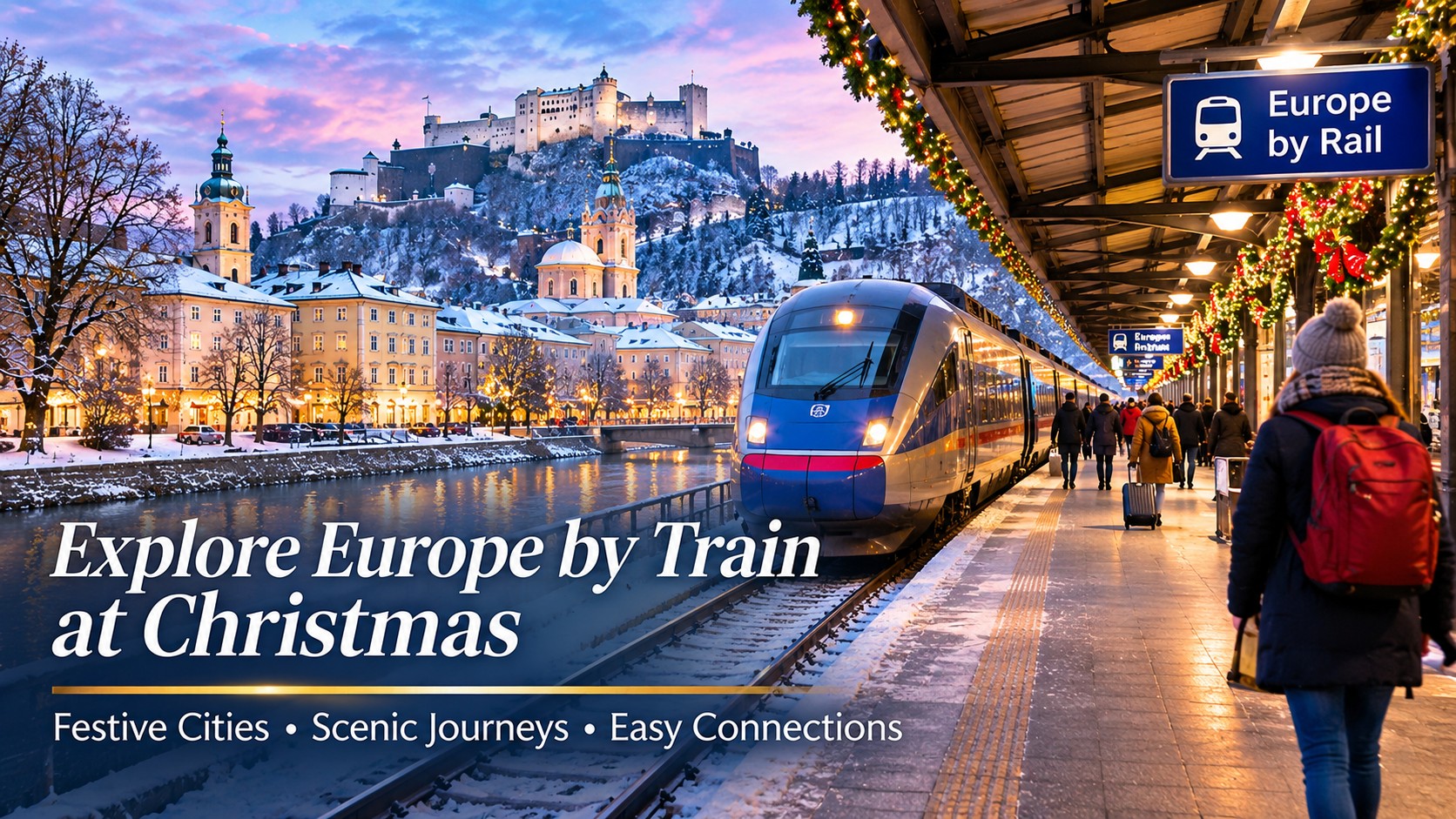
European rail journeys can connect festive destinations, but Christmas and New Year timetables should always be checked before travelling
🚆 Transport and Travelling Around Public Holidays
Check your international arrival and departure alongside the local journey to your accommodation. For journeys on 24–26 December and around New Year, never assume normal weekday service frequencies. Look directly at the relevant operator’s date-specific timetable and allow sensible transfer margins. If you are moving between cities, consider whether the journey itself will consume the best sightseeing hours. Rail may be convenient on some corridors, but the right choice depends on route, luggage, accessibility and actual service availability.
🏨 Accommodation, Restaurants and Attraction Opening Times
Choose accommodation for location and practical access, not festive decoration alone. Check reception arrangements, meal options and whether restaurants accept bookings on your chosen holiday dates. Museums, churches, viewpoints and winter attractions may each follow different schedules. Where an experience matters enough to shape the trip, obtain confirmation from its operator rather than relying on general city listings. Keep at least one enjoyable alternative that does not depend on a ticketed event.
🗺️ One Destination or a Multi-City Festive Itinerary?
A single base often provides the strongest short Christmas break: less packing, fewer transfers and more time to enjoy streets after dark. A multi-city journey can reveal contrasting traditions, but it becomes less attractive if every second day is spent travelling or if holiday services are reduced. For a longer holiday, pair destinations only when the connection and travel dates are practical. Avoid designing a route around multiple unverified festive events. The quality of the experience matters more than the number of places visited.
♿ Accessibility, Crowds and Comfortable Winter Sightseeing
Historic centres can combine cobbles, steps, steep approaches and dense crowds. Outdoor stalls may have limited seating or shelter; icy surfaces and cold evenings add difficulties for some visitors. Check step-free station access, accessible transport, accommodation entrances and venue facilities directly. Families may prefer shorter outdoor sessions and easy indoor breaks. Travellers who find crowds tiring should consider quieter visiting hours or less concentrated neighbourhoods. Accessibility information is often venue-specific, so a city’s general reputation cannot replace individual checks.
Practical Christmas travel checklist
♻️ 6. Sustainability and Responsible Christmas Travel
A thoughtful Christmas trip need not be complicated. Choose a sensible number of destinations rather than adding transfers simply to collect more festive stops. Where the route and your circumstances allow, compare practical rail and local public transport options, but check holiday operations before relying on them. Staying longer in one place can also create more time for neighbourhood businesses, independent cafés and cultural experiences beyond the busiest squares.
Respect the people for whom Christmas is a religious or family occasion. Follow local guidance in places of worship, avoid obstructing services for photographs and support genuine local craft where possible. Sustainability claims should remain proportionate: no single transport choice or shopping decision makes a whole holiday impact-free. The aim is a rewarding visit that is considerate of local communities and practical for the traveller.
❓ 7. Frequently Asked Questions About Christmas in Europe
Are European Christmas Markets Open on Christmas Day?
Operating periods vary: some markets finish before Christmas, while others may continue into the wider holiday period or close on 25 December. There is no Europe-wide rule. Check the official dates and hours for the exact market and year before making travel plans around it.
Is Christmas a Good Time for a First Visit to Europe?
Yes, if you value festive atmosphere and can accommodate shorter days, winter weather and holiday closures. First-time visitors may find one well-connected city easier than an ambitious multi-country itinerary, particularly when travelling over Christmas Eve or Christmas Day.
Can You Visit European Attractions on Christmas Eve and Christmas Day?
Sometimes, but opening arrangements differ by venue and date. Museums, churches and other attractions may close, shorten hours or restrict access during services. Verify the specific attraction’s official notice; ordinary admission and special religious or festive events are not interchangeable.
How Far Ahead Should You Plan a European Christmas Trip?
Begin once you know your preferred destination and dates, especially if you need particular accommodation, accessible facilities or a Christmas Day meal. There is no reliable universal booking deadline. Confirm essential services before committing to a tightly timed itinerary, and recheck operational details nearer departure.
✨ 8. Conclusion: Choosing Your Christmas Experience in Europe
The best Christmas destination in Europe is the one whose traditions, setting and practical arrangements suit the holiday you want. Traditional Advent cities, atmospheric historic centres, northern winter landscapes and southern cultural breaks offer different rewards. First choose the experience, then select dates that match it, and finally verify the events, transport and openings that matter most. Seasonal event research can help narrow your options, but official destination and operator information should settle the details. With realistic expectations and a little flexibility, Christmas in Europe can be memorable for far more than its decorations.
🧭 Continue Planning Your European Christmas Holiday
Explore festive traditions, compare European seasonal events or discover organised Christmas and New Year touring options as you develop your travel plans.